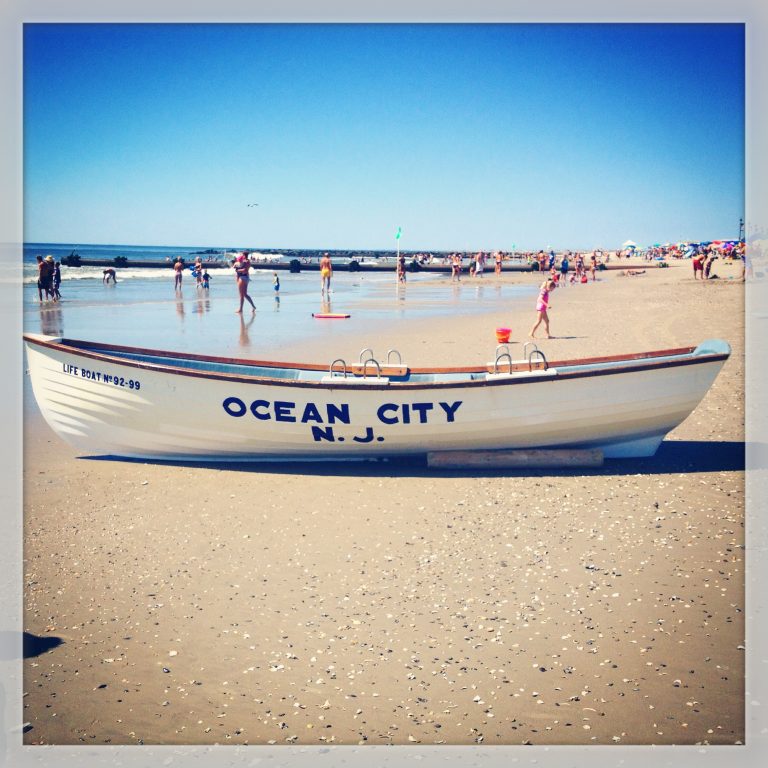
Megalodon Tooth Hunting in Florida: Best Dive Sites, Beaches & Fossil Hunts
Fossil hunting is not for the faint of heart, or spirit, but for those who can spend hours staring into dizzying natural strata hoping the next black triangle sticking out of the sand belonged to a 50-foot prehistoric shark, this type of adventure travel is for you.
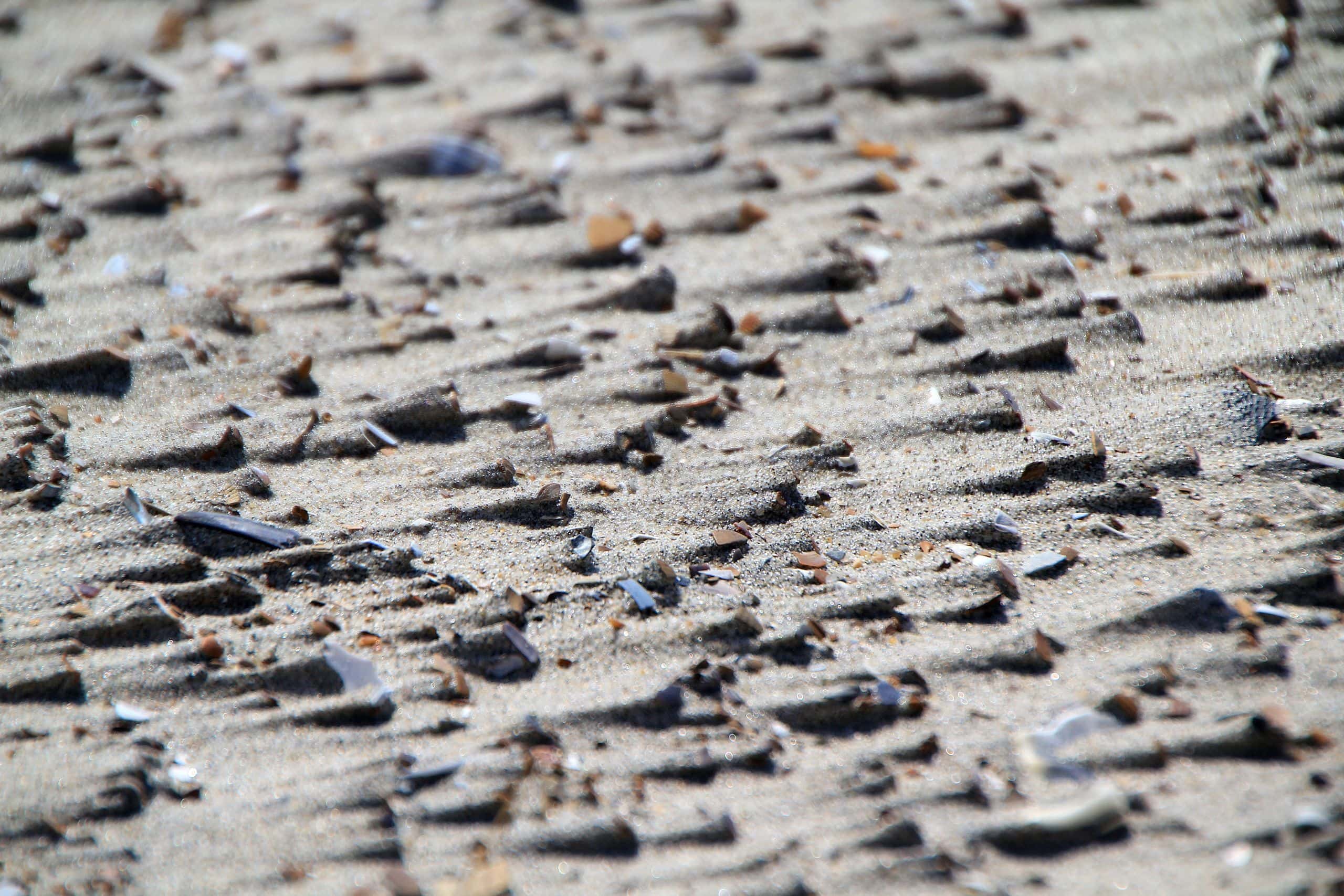
Welcome to fossil hunting in Florida.
Florida is one of the best places in the United States to hunt for a variety of fossilized shark teeth, including teeth from the legendary Megalodon. Venice, a gulf-coast town south of Tampa, has earned the nickname “Shark Tooth Capital of the World,” and for very good reason. Diving off the of Venice coastline with dreams of black-gold spoils has become a popular activity in the area, with the sport bringing as much as $15 million in tourism revenue.
But you do not have to be a scuba diver, own a boat or even get completely underwater to find fossils here. While scuba diving the offshore fossil beds is one of the best methods to find large megs, sifting through shell piles at local beaches, or traveling inland to the Peace River will also offer gravel deposited over millions of years.
And Megalodon teeth are only part of the story.
Depending on where and how you search, Florida’s fossil beds can produce teeth from numerous species of prehistoric sharks as well as fossilized material from whales, dugongs, horses, bison, mammoths, mastodons, turtles, rays and other animals that inhabited Florida millions of years ago.
Below you will find everything you need to know about fossil hunting in Florida, including Megalodon tooth scuba diving in Venice with three of the area’s primary dive charter options that I have personally hunted with, beach sifting at Venice Beach, Caspersen Beach and Manasota Key, Peace River fossil hunting, Florida’s Bone Valley, and more.

Why Are There So Many Fossils in Florida?
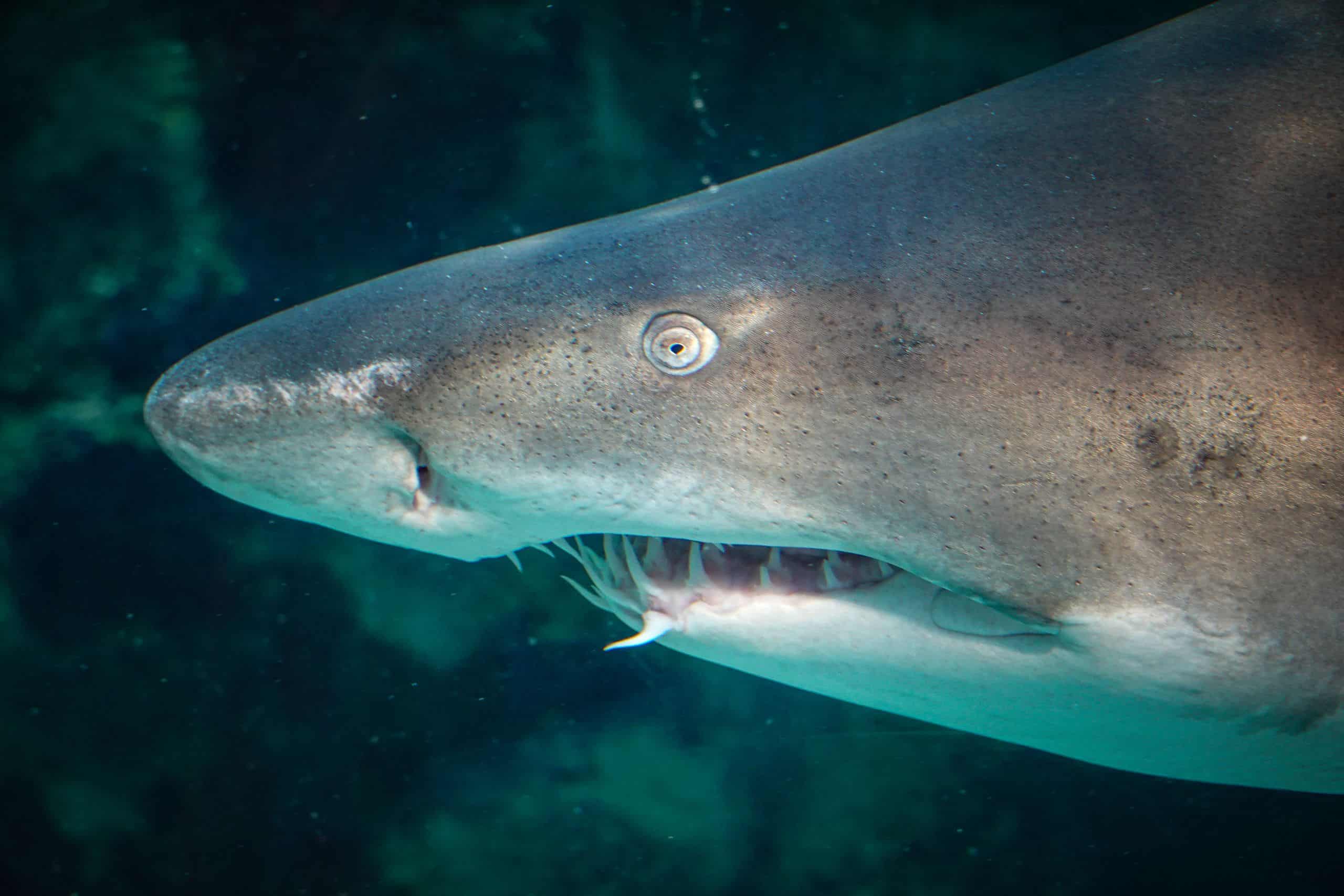
To understand why Florida is such an incredible fossil-hunting destination, you have to understand that the Florida we see today is nothing like the historic Florida penninsula.
Sea levels have risen and fallen repeatedly over millions of years. Areas that are dry land today were once underwater, while coastlines shifted dramatically as glaciers expanded and retreated. That geological history left Florida with extensive deposits of marine fossils.
Sharks continuously lose and replace their teeth throughout their lives (one shark can shed thousands of teeth). Multiply millions of sharks over millions of years, and you can only imagine how many teeth have been buried in the ever-changing sediment. And, exactly why fossilized shark teeth are still being found throughout Florida today.
The cool thing is water does some of the excavation for you as storms and simple erosion continue exposing fossil-bearing layers all the time.
That is why beaches, creeks and rivers can be continuously productive.
Five-Inch Meg or Bust: The Ultimate Florida Fossil Find
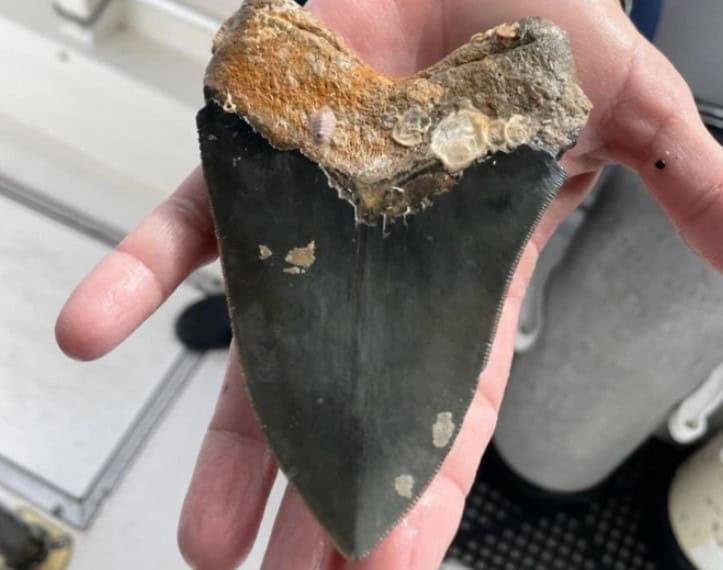
You can find plenty of shark teeth in Florida without ever finding a Megalodon tooth, and that is worth understanding before you book a trip expecting to come home with a five-inch Meg.
Otodus megalodon lived approximately 23 million to 3.6 million years ago and was one of the largest predatory sharks ever to inhabit the world’s oceans. Its enormous teeth have become prized by fossil hunters and collectors. But finding a giant, museum-quality specimen is rare.
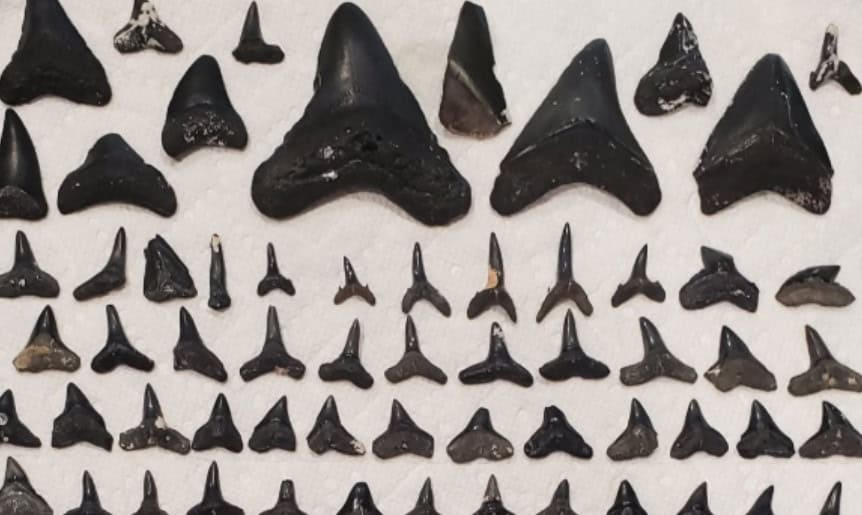
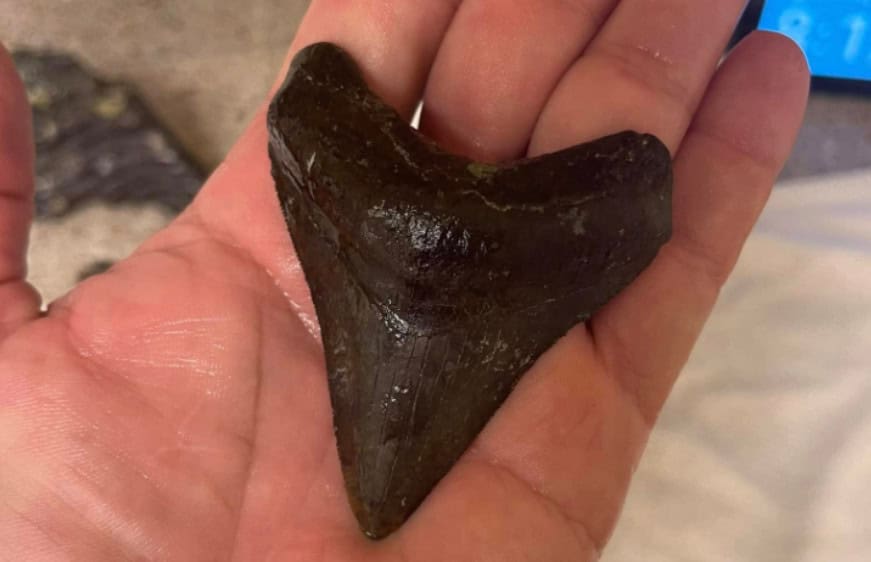
I’ve personally been on more than a handful of Venice trips and have yet to find a meg larger than two inches (I have 3 between 1.5 to 2-inches). Not that I’m complaining. It is extremely exciting to find a meg tooth, no matter the size, and I’ve also walked away with many other really cool fossils, a few of which I’ve pictured below. Still, I’ll make many more trips to the coast seeking that five-incher!
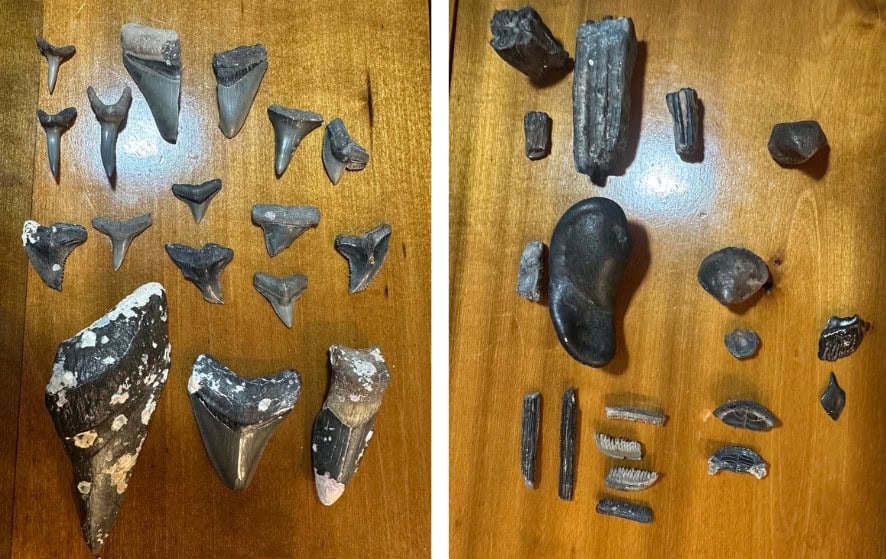
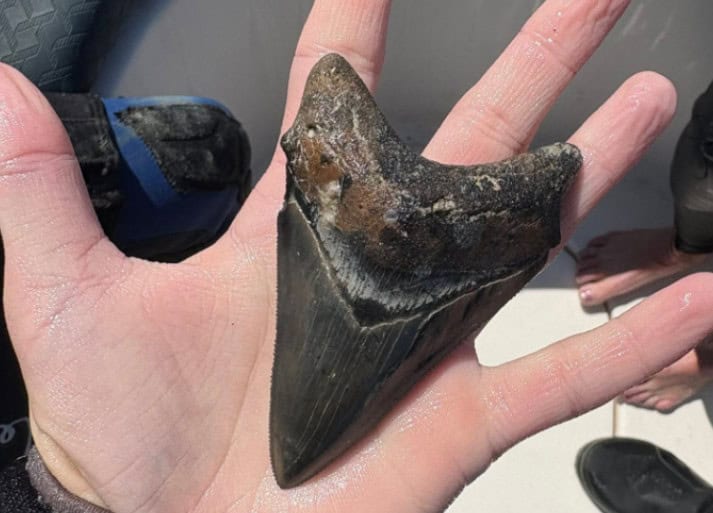
A large, intact Meg tooth is unmistakable. The triangular crown can be several inches long, with serrated edges and a substantial root with two large lumps. Most are in shades of black and grey; rarer are the teeth in shades of brown and gold. And most are covered in some kind of growth so that they blend seamlessly into the substrate, making for an invigorating game of hide-and-seek.
Much more commonly, Florida fossil hunters find smaller shark teeth, partial Meg teeth (of which I have many, including the 4 pictured left above), referred to as heartbreakers, mammal bones and teeth, stingray barbs and plates, and teeth from other prehistoric shark species such as the snaggletooth.
A prehistoric shark tooth does not need to be enormous to be fascinating. In fact, one of the reasons I recommend going into your first fossil trip without a “five-inch Meg or bust” mentality is that you will appreciate far more of what you find. Just remember, no matter the find, you are holding something that may have been sitting beneath Florida’s sand for millions of years.
That is pretty incredible regardless of its size.
Venice, Florida: The Shark Tooth Capital of the World
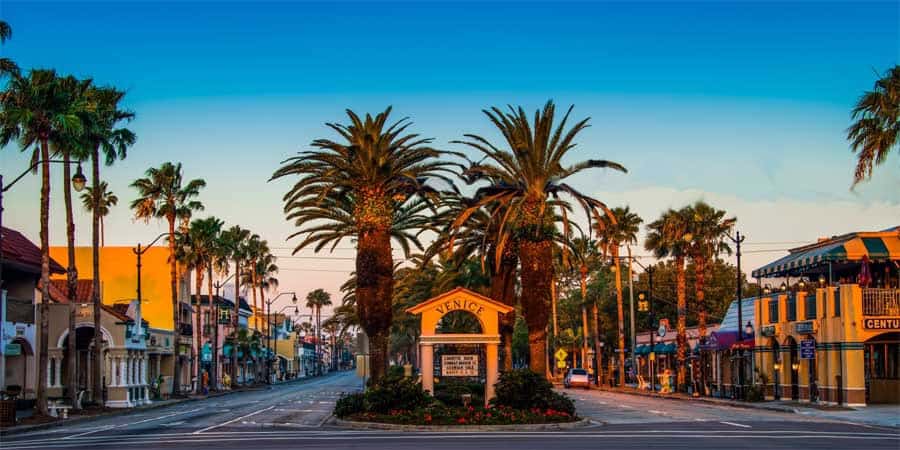
If you want to build a Florida vacation specifically around shark teeth, Venice is where I would start.
Located on Florida’s Gulf Coast south of Sarasota, Venice has become synonymous with fossil shark tooth hunting. There are fossil stores, shark tooth souvenirs, local exhibits and even an annual Shark Tooth Festival.
But the real attraction is not buying a fossil. It is finding your own!
There are two primary ways to do it: Go underwater or search from shore.
Certified scuba divers have access to offshore fossil beds that beach hunters simply cannot reach. Non-divers can sift through the shell beds and surf along Venice’s beaches.
And if you want to do both?
Even better.
Megalodon Tooth Scuba Diving in Venice
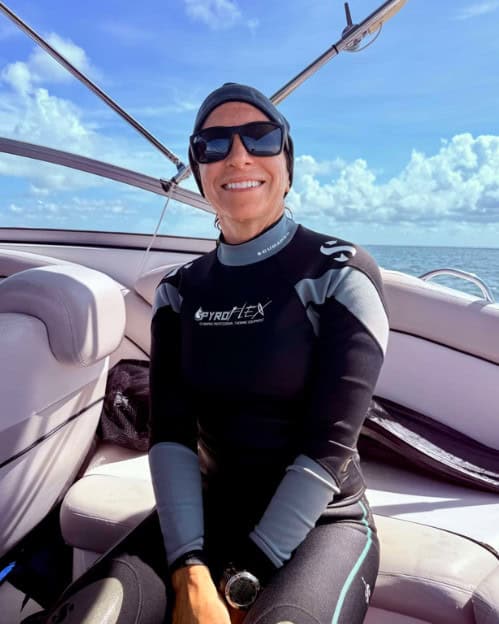
For certified scuba divers, Venice is particularly special.
The offshore dives are shallow, typically somewhere around 20 to 40-feet, which means your dive can last a surprisingly long time. Many Venice fossil charters do not impose a traditional 45- or 60-minute dive-time limit. If your gas consumption is good and conditions cooperate, a single tank can potentially give you 90 minutes or more of fossil hunting underwater.
That is a lot of time to search for a Meg.
As an experienced scuba diver and instructor, I find this style of diving fascinating because it changes your entire purpose underwater. You are not following a reef or waiting for the Divemaster to point out a turtle. You are nose-to-the-substrate hunting.
On a meg tooth dive, every dark object deserves a second look. Every partially exposed edge could be something incredible and ancient. And eventually, if you are lucky, you realize the black triangle sticking out of the sediment is not another rock.
A three-tank fossil charter could potentially give an efficient diver several hours of actual underwater search time in a single day. When you are hunting for something as elusive as a Meg tooth, more search time is a major advantage.
It’s also important to understand that dive time depends entirely on the diver, and self-awareness and responsibility are key. Your gas consumption, tank size, breathing rate, workload, current, depth, experience and required reserve all matter. If you normally burn through an aluminum 80 in 40 minutes, Venice does not magically turn it into a bottomless tank, and it is important to monitor your gas usage diligently, especially while distracted by fossil hunting. But if you are an experienced, relaxed diver with good air consumption, these shallow fossil dives can be wonderfully long.
What Is a Venice Fossil Dive Actually Like?
Do not picture yourself gliding effortlessly over crystal-clear white sand while giant black Meg teeth sit neatly on top of the bottom waiting to be collected.
I wish.
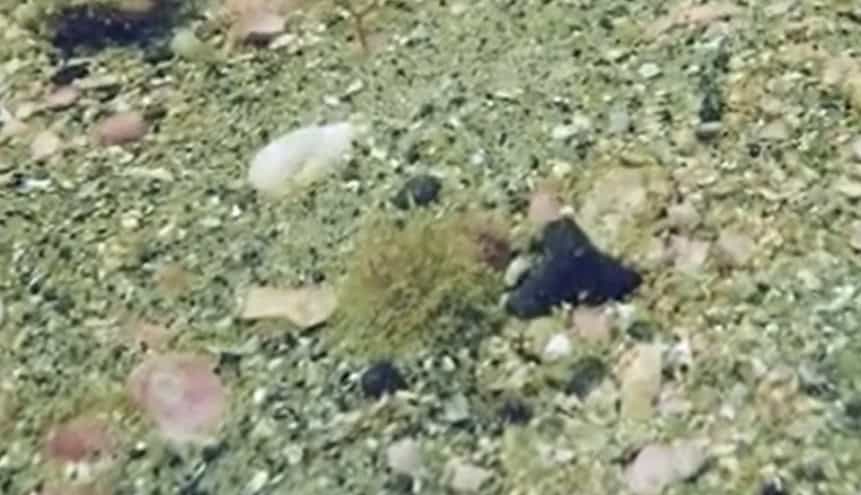
Fossil diving is more like underwater treasure hunting. Your job is to move slowly and look meticulously. The bottom itself may contain sand, shells, limestone, gravel, sediment and fossil material. Finning and buoyancy are essential skills to keep from stirring up the substrate and avoiding benthic creatures that may sting or bite if disturbed.
First, it is important to understand how Venice Megalodon and fossil dives differ from typical guided reef dives:
- Longer dive times: Many fossil operators allow you to continue searching as long as your gas supply and dive plan permit rather than calling the entire dive at an arbitrary time. This means that many divers will spend 90-minutes or more underwater, especially when the water temperature is agreeable. Just remember to be cognizant of all of the divers on board when it comes to dive length and come to the surface with no less than 500psi (50 bar) in your cylinder.
- Do not expect a guide: Your captain and/or divemaster will brief you onboard, but do not expect an underwater guide. Tip: brush up on navigation skills prior to your trip and start off by running tight search patterns around the boat in order to avoid long surface swims later.
- Solo diving is typical: Expect many divers to explore the seabed solo. If this concerns you, bring a buddy, there is no hard and fast rule that says you shouldn’t, just know that with the typical low visibility and the distraction of hunting, it is very easy to find yourself separated from your buddy.
- Diving with a SMB is optional: Many operators do not require that you dive with a surface marker buoy deployed. Use your best judgement. If you are staying close to the boat this may not be a concern, but if you plan on exploring further you may want to dive with your SMB deployed so your boat and other boats know where you are. Also, consider that if you get turned around underwater you may want to pop your head above the surface to orient yourself to the boat, which is safer with an SMB. Either way, make sure your captain knows your preference. If you pop an SMB and they are not expecting it, they may assume something is wrong.
- Visibility is wretched: Do not go on a meg tooth dive expecting 50-foot visibility. On a good day you’ll be lucky to get 15-feet, but more than likely it will be closer to between 5 and 10-feet. On a really rough day, you’ll be lucky to see your hand in front of your face. I’ve experienced all of these scenarios and all I can say is prepare for the worst, hope for the best, and embrace the adventure.
And then there is the problem every fossil hunter eventually encounters:
Meg fever.
This is when you become so focused on searching that you forget you are still scuba diving. When the thought of that perfect Meg being just around the corner makes you forget basic diver safety.
Don’t.
You still need to monitor your gas, depth, buddy (if you have one), dive computer, direction and surroundings. A fossil is not worth compromising basic dive safety.
How Do You Spot A Meg Tooth?
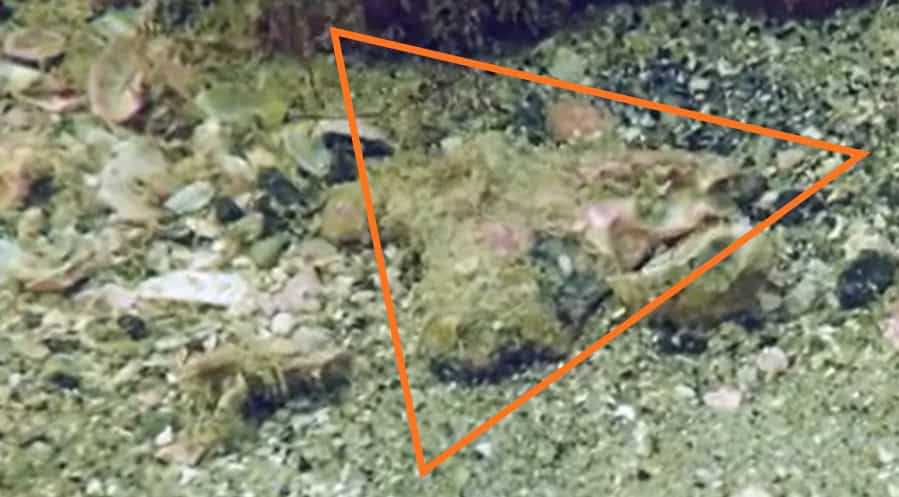
Learning how to recognize fossils underwater takes practice.
Experienced fossil divers learn to recognize shapes, textures and subtle differences in color. You also begin to understand where material tends to collect.
My best advice is to dive with an experienced charter and listen carefully to the briefing. Your captain and/or divemaster will tell you everything you need to know about how and where to find fossils. Some will even have fossils on board, so you know exactly what to look for.
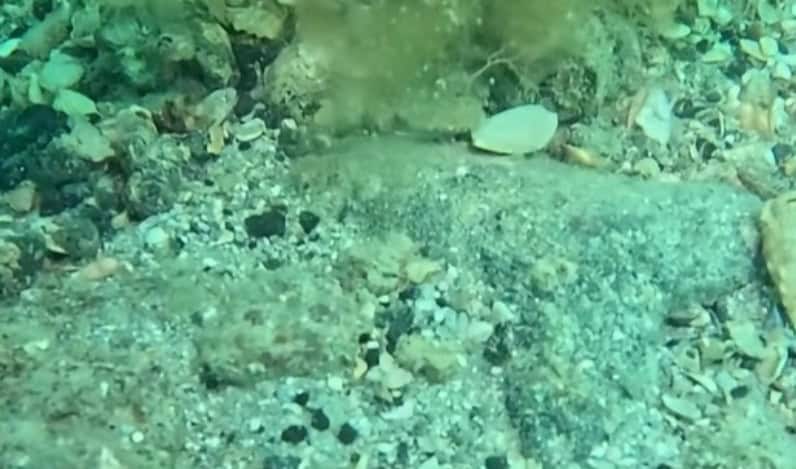
These are the basics that I have picked up over several trips:
- Especially when you are just starting out, pick up almost anything black. When you get back on the boat your captain will tell you what you’ve found.
- When it comes to Megs, keep your eyes peeled for basic shapes, such as a triangle sticking up out of the ground, or lying flat on the substrate. It will most likely be covered in growth or debris, but the shape will be the tell-tale sign.
- Megs may also be half buried. Look for sharp edges or the rounded knobs of the root sticking out of the substrate.
- Find a seam and follow it. The tides and surge create ripples in the seabed where fossil beds collect as the sand is pushed away, but the heavier materials like fossils and shells get trapped. You’ll find these seams peppered with black debris. If you find even small teeth and fossils you may be on to something.
Three Venice Fossil Dive Operators I Trust
If you are a diver, I highly recommend an experienced charter to increase your chances. Of course, it does not mean you are guaranteed to find a Meg. And keep in mind when you are choosing your charter that no reputable fossil operator will or can guarantee what nature has buried beneath the Gulf.
However, someone showing you what different fossils look like, explaining where to search and giving you a better understanding of the bottom can save you a lot of time staring suspiciously at ordinary rocks.
There are many dive operators serving Venice, but these three are my personal favorites if you are looking for the classic Venice fossil-diving experience.
Aristakat Charters
Best for: A shorter two-tank introduction to Venice fossil diving
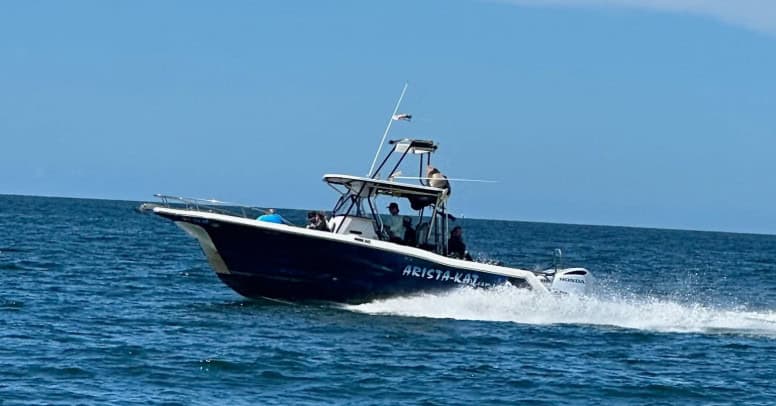
Aristakat is one of the established names in Venice diving and offers dedicated shark tooth and fossil charters. This trip is a two-tank charter, roughly 4-hours long and runs twice daily. It’s a good choice for someone who wants to try Meg hunting without committing to a full three-tank day, and Captain Jamie and his crew are happy to teach you the ropes of fossil hunting.
Typical price: Around $140 per diver
Number of dives: 2
Typical depth: Approximately 25–40 feet
Certification: Open Water or higher
Good for: First-time Venice fossil divers and travelers who want a half-day experience.
Fossil Junkies
Best for: Divers who want a full three-tank fossil-hunting day
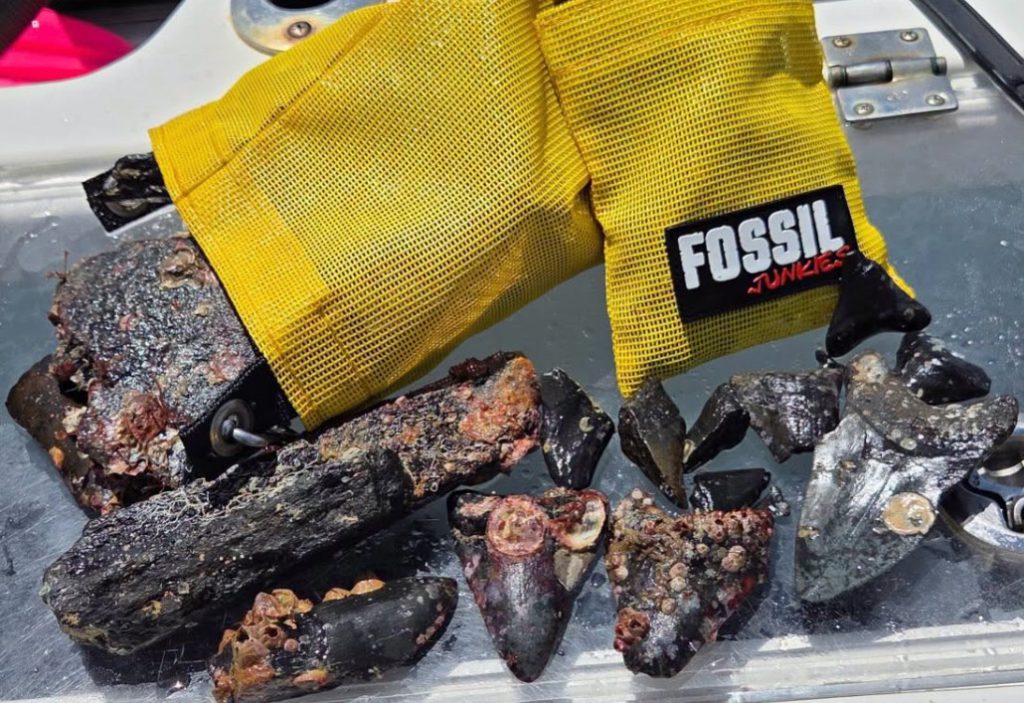
Fossil Junkies takes the Venice experience a step farther with a dedicated three-tank offshore fossil charter promoted as a “trophy hunt,” targeting areas known to produce larger, higher-quality Megalodon teeth. The day typically begins around 7:00 a.m. and can run until approximately 4:00 p.m.
The company requires Open Water certification and recommends that participants either have around 15 logged dives or be very comfortable underwater, a recommendation that I think is sensible. Fossil diving itself is not technically difficult, but low or changing visibility, task loading and spending long periods focused on the bottom can be disorienting for someone who is still struggling with basic dive skills.
For someone with a little more experience that can handle being on the water all day, three tanks give you substantially more searching time than a typical two-tank excursion, and these guys are the real deal.
Typical price: Around $225 per diver
Number of dives: 3
Included: Tanks, weights, snacks and drinks
Certification: Open Water minimum
Recommended experience: Approximately 15 logged dives or strong comfort underwater
Good for: Divers traveling specifically to Venice to hunt fossils.
Aquanutz Dive Charter
Best for: The classic three-tank Venice Meg-hunting experience
Aquanutz is another longtime name among Venice fossil divers and my personal favorite to dive with when they have availability (they are popular with the locals and typically book out way in advance). They offer a daily three-tank fossil-hunting charter for considerably less than competitors.
This is a small-boat operation focused specifically on the kind of diving fossil hunters come to Venice to experience: no-limit dive times, and friendly, experienced crew that put you directly on fossil beds. They also include the use of fossil collection bags, and the crew provides detailed instruction and briefings before the dives.
If this is the primary reason for your Venice trip, I would not wait until you arrive to look for space, book these guys well ahead.
Typical price: $180 per diver on weekends; $170 per diver on weekdays
Number of dives: 3
Typical depth: Often around 20–40 feet, depending on site
Included: Tanks, weights and fossil collection bags
Boat: 26-foot World Cat
Good for: Divers who want a full three-dive day and maximum time searching for fossils.
Not a Scuba Diver? You Can Hunt Shark Teeth Right From the Beach
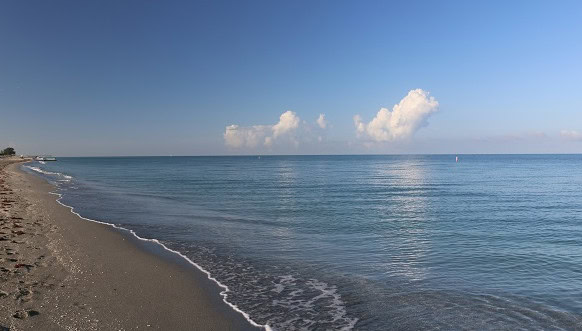
One of my favorite things about Venice: You do not need scuba certification to find fossilized sharks teeth!
You do not need a boat. You do not even need a guide. You can literally just go to the beach and start looking.
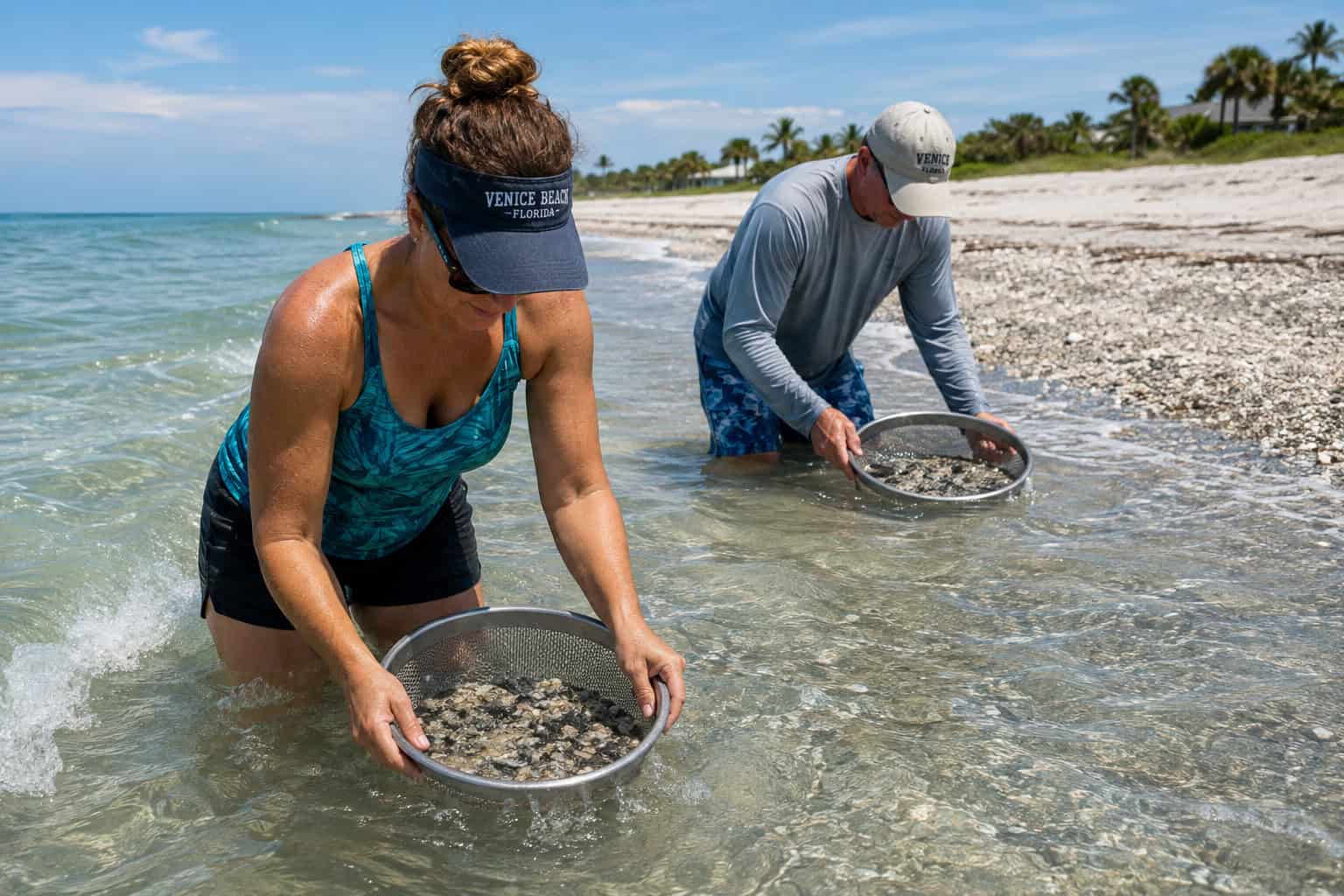
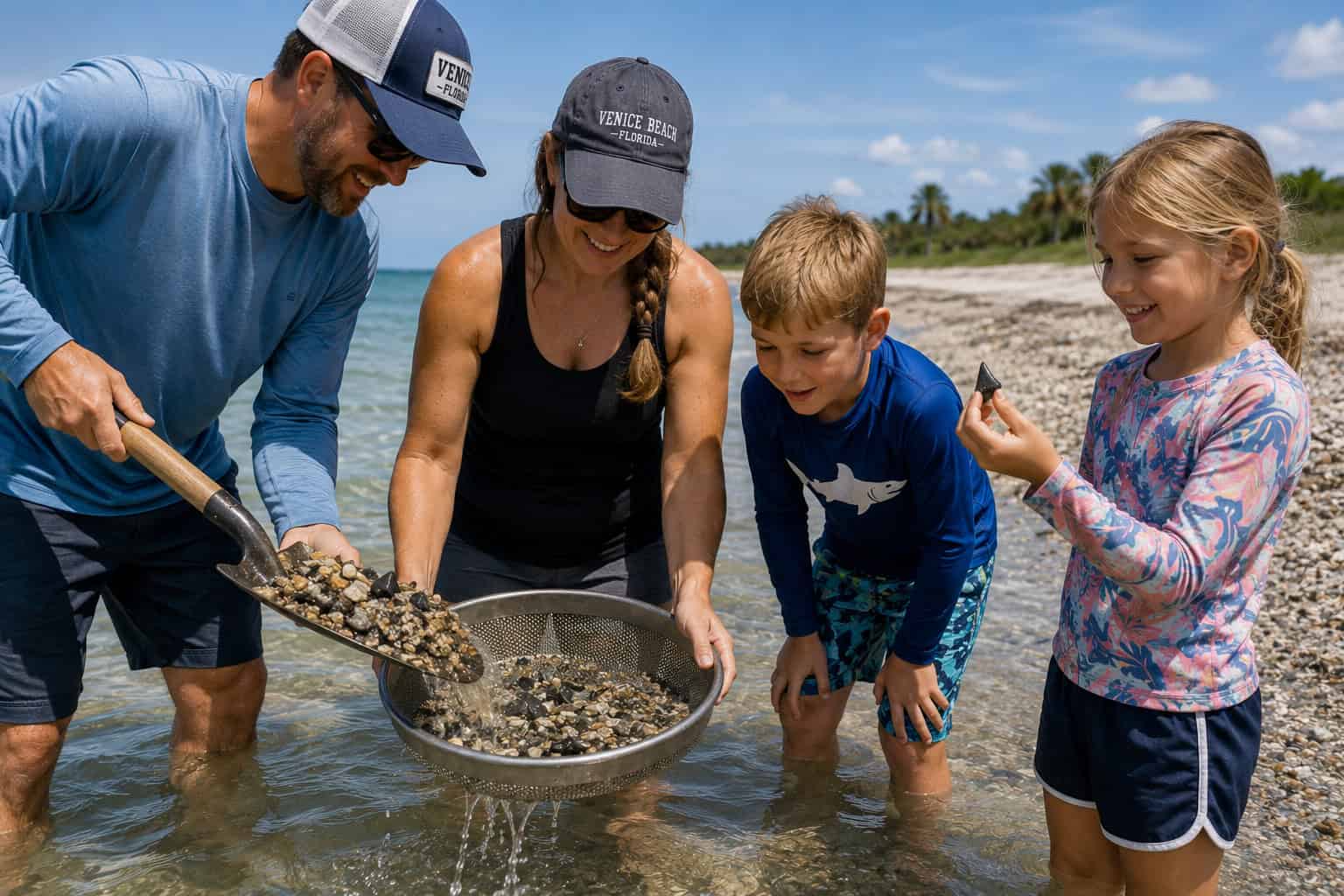
Florida’s Gulf Coast continuously exposes and redistributes fossil material through waves, tides and storms. Small fossilized shark teeth wash into shell beds along the shoreline where beach hunters can find them by walking, wading or sifting. And unlike offshore Meg diving, this activity is accessible to almost anyone.
How to Sift for Shark Teeth
You do not need complicated equipment.
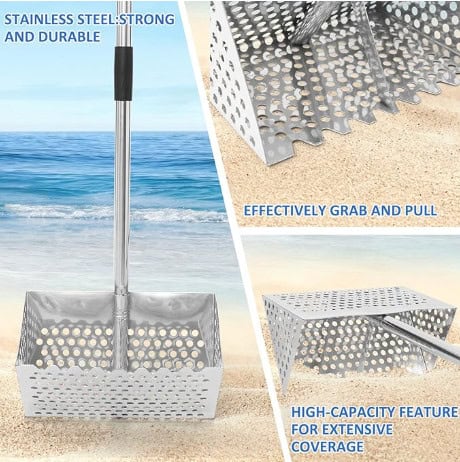
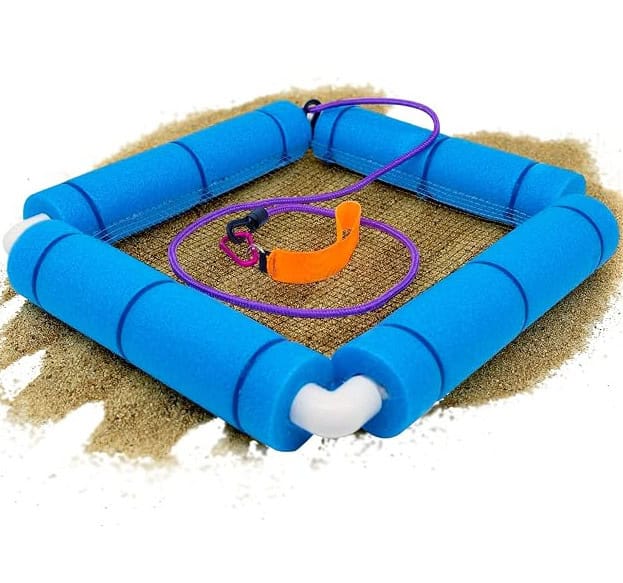
A basic shark-tooth sifter, often called a Florida snow shovel, is essentially a basket or screen attached to a handle. People also build their own sifters using PVC pipe, pool noodles, metal screening and zip ties.
If you want to make it easy on yourself these are the tools I use, and I ordered them directly on Amazon (click the images below).
Once you have the right tools, the process is simple:
- Walk into shallow water.
- Scoop into an area containing shells and gravel.
- Lift the sifter and let the sand wash through.
- Then start looking through what remains.
- If you have the floating sifter, simply shovel your gravel directly onto the sifter and move side-to-side until the sand and small stuff falls through.
Take your time and start with small amounts of gravel. At first, you may not see anything. Then your eyes adjust, and suddenly a small black triangle jumps out. Then another. And another.
This is where fossil hunting gets dangerous. And I don’t mean physically dangerous. More like “I was supposed to leave the beach two hours ago” or “I’ve been sifting for 4 hours and haven’t reapplied my sunscreen” dangerous.
Caspersen Beach: The Classic Venice Shark Tooth Beach
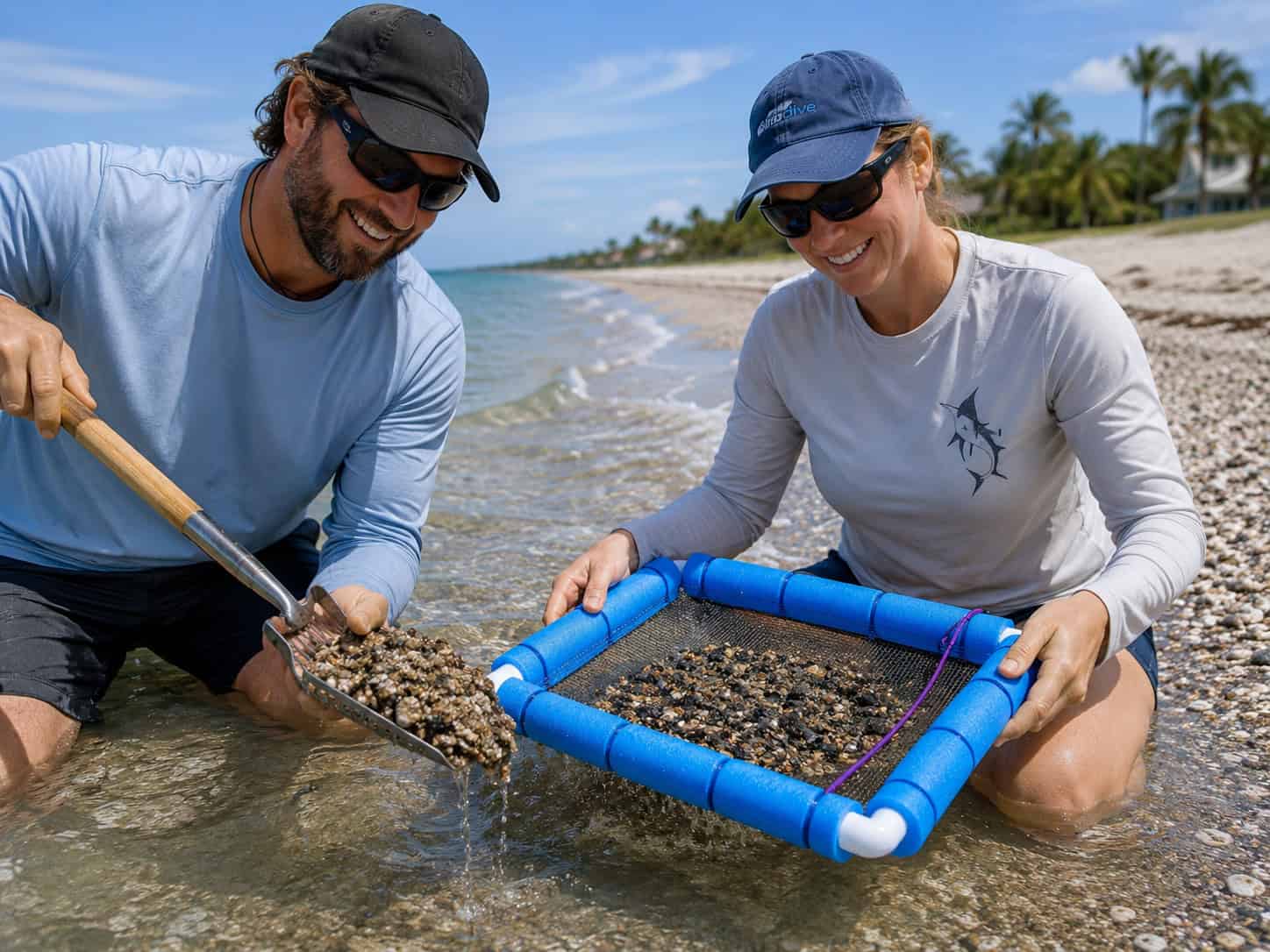
If you ask where to look for shark teeth in Venice, Caspersen Beach is going to come up again and again, and for good reason. Caspersen is well known for its dark sand, shell deposits and fossilized shark teeth and is where I go anytime I’m not diving.
Important to note however, that as of this writing the road to Casperson beach has been washed out by storm surge and is closed. This doesn’t mean you can’t reach the beach; it just takes considerably more effort. Your best bet is to park at Sharky’s at the Pier or nearby and walk the beach about 20-25 minutes to Casperson.
Luckily, you don’t even have to walk all the way to Casperson Beach to find teeth. You’ll see people waist deep in the surf from Sharky’s all the way down the beach sifting. If you don’t want to make the full walk, simply join them. There are enough small teeth for everyone.
You can simply walk the waterline and look down, but you’ll be more successful sifting.
Can You Find a Megalodon Tooth on Caspersen Beach?
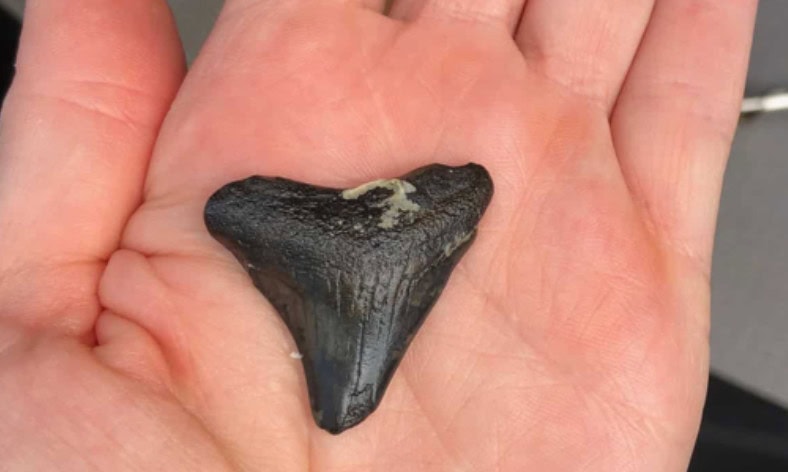
Yes, but manage your expectations. Most beach finds are considerably smaller, but can be just as exciting. Megalodon teeth and more likely fragments can be found along the Venice shoreline, but they tend to be far more beat up by the crashing surf than the ones found while diving.
Large, complete Meg teeth are prized precisely because they are uncommon. If finding a substantial Meg is your primary goal and you are scuba certified, offshore diving gives you access to fossil beds that beach hunters cannot reach.
If your goal is simply to find your own fossilized shark teeth? Caspersen is fantastic.
And the price for a fun day of hunting is hard to beat.
Cost to hunt: Essentially free, aside from parking or equipment expenses where applicable.
Manasota Key: Another Excellent Beach-Fossil Area
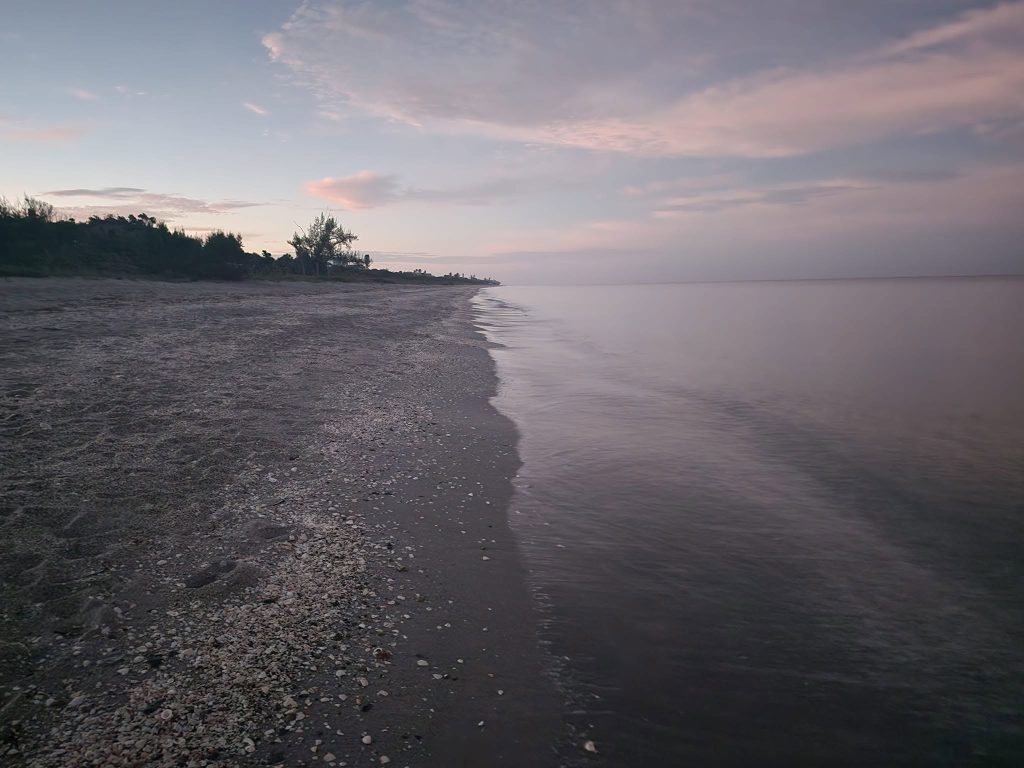
Do not stop your search at Venice city limits. Continue south toward Manasota Key and Englewood, where beaches can also produce fossil shark teeth.
Manasota Key has several beach-access areas worth exploring. One particularly productive strategy is the same one you would use at Caspersen: sifting.
Instead of wandering across pristine empty sand, look for the messy areas where waves have deposited shell fragments, gravel and darker material. Shell beds are your friend.
That is where I would start .
Blind Pass Beach on Manasota Key is particularly known for shells and fossil shark teeth, while Stump Pass Beach State Park is also known for shark teeth washing ashore.
There is an important caveat here, though. Florida’s beaches, parks and protected areas do not all operate under identical collecting rules. Always check the rules for the specific beach or park before digging, sifting or removing anything. Picking up an exposed shark tooth is not necessarily the same thing as digging into protected sediment.
There is also a protected underwater archaeological site offshore of Manasota Key containing a prehistoric Native American burial site; obviously, legally protected. Never disturb or remove anything from an archaeological site.
Fossil hunting is not archaeology, and the two should never be confused.
When Should You Search?
Low tide. Early mornings. After Storms.
Low tide can expose productive shell deposits on the beach, while storms and rougher Gulf conditions can rearrange sediment and uncover new material, especially for divers. Early morning is also appealing simply because fewer people have already searched the beach.
Seasonality is also a factor, especially for divers. Summer and early Fall are productive due to frequent storms, and the water temperature is very comfortable for longer diving or beach wading. The down side is that the same storms that churn up the bottom and uncover new material will also keep boats docked. So, if your timing is not right, you may not get out at all. This has happened to me a few times too many.
The winter months, between December and March, can bring much cooler water temperatures and few big storms, which means it’ll be harder to stay down for those longer dives and the substrate doesn’t get churned up as often. However, there are also generally less people hunting during this time, so there is usually more for the taking for those who brave the cold.
But there is no magical hour or time of year that guarantees teeth. You are working with constantly changing natural conditions. I will say that I have hunted at all times of the day and throughout the year and have never walk away empty handed, especially when I plan a boat day and a beach day.
Beach Hunting vs. Scuba Diving: Which Is Better?
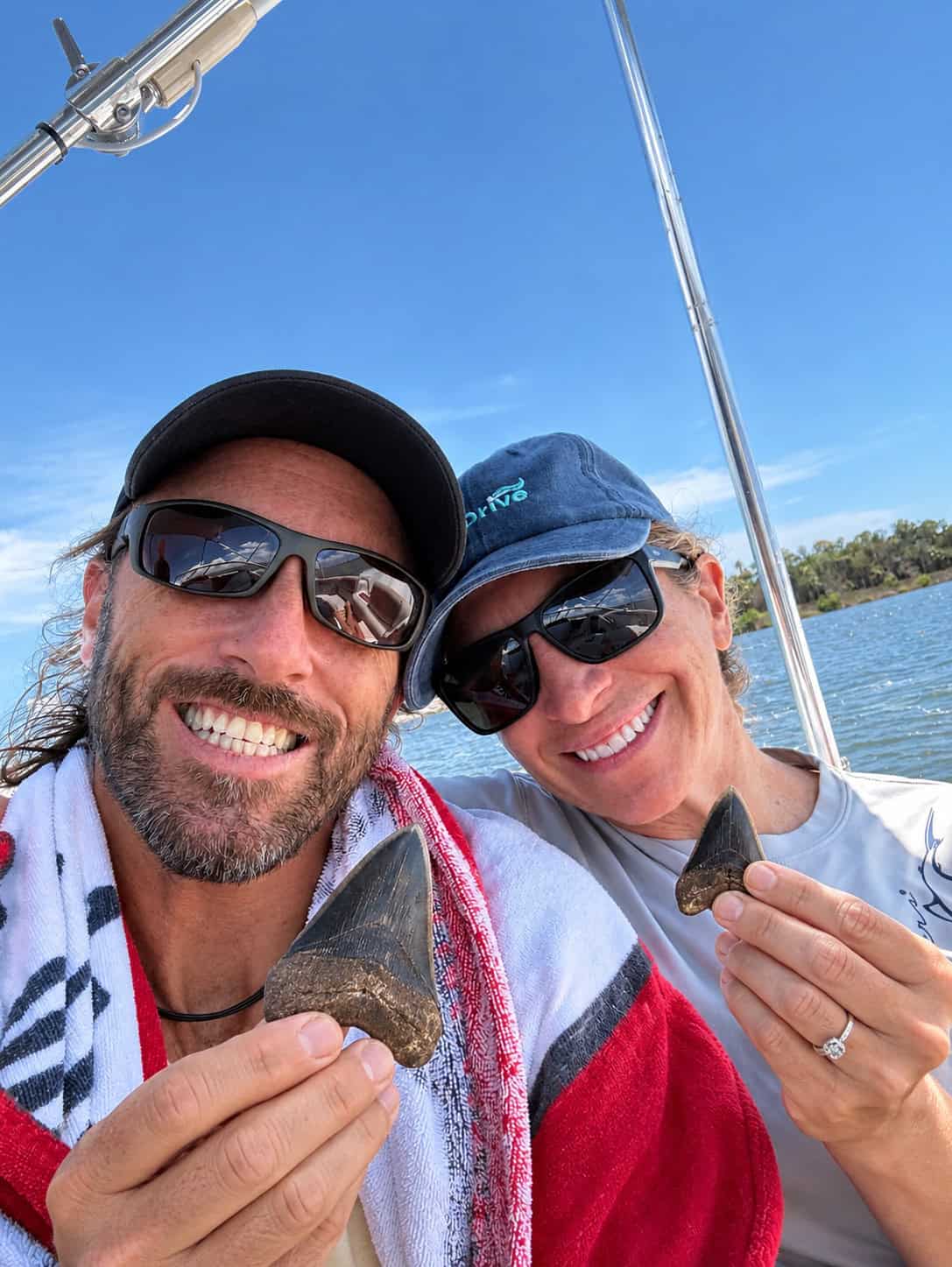
It depends entirely on what you want.
Beach hunting is better if:
- You are not scuba certified.
- You are traveling with children.
- You want a free or inexpensive activity.
- You only have a few hours.
- You enjoy beachcombing.
- You are happy finding smaller shark teeth.
Scuba diving is better if:
- You are certified and experienced.
- You specifically want to hunt Megalodon teeth.
- You want access to offshore fossil beds.
- You are willing to spend $150 to $200+ on the experience.
- You want the thrill of underwater treasure hunting.
- You are comfortable with variable visibility.
- You want several hours of dedicated search time.
Personally? I would, and do, do both.
Spend a day offshore diving and use the following morning to sift Caspersen Beach. There is something very satisfying about comparing what you can find 30 feet underwater with what the Gulf deposits directly at your feet.
Where to Stay in Venice, Florida
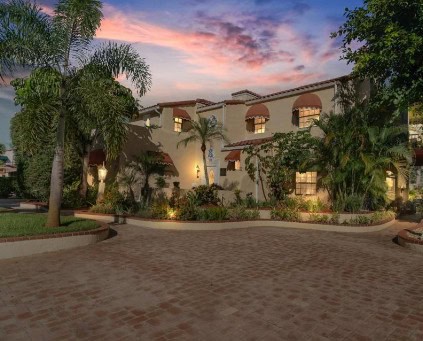
This is my absolute favorite property in Venice. It is perfectly located close to Casperson and boat piers. The decor takes you back in time and the owners are wonderful and accommodating. They even offer coolers, ice, sifters and bikes for guest to use, and have a 24-hr snack bar for your convenience.
Tropical Villas of Venice Beach
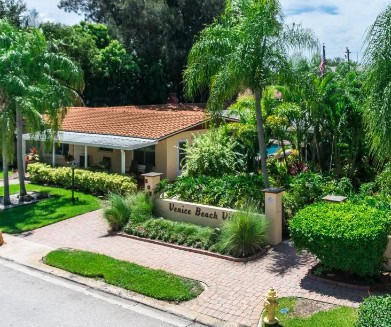
This property is within walking distance to Venice beach and is also a close driving distance to any boat pier or Casperson Beach. The location is also convenient to Venice’s main strip, Venice Ave., where you will find shops, restaurant and bars.
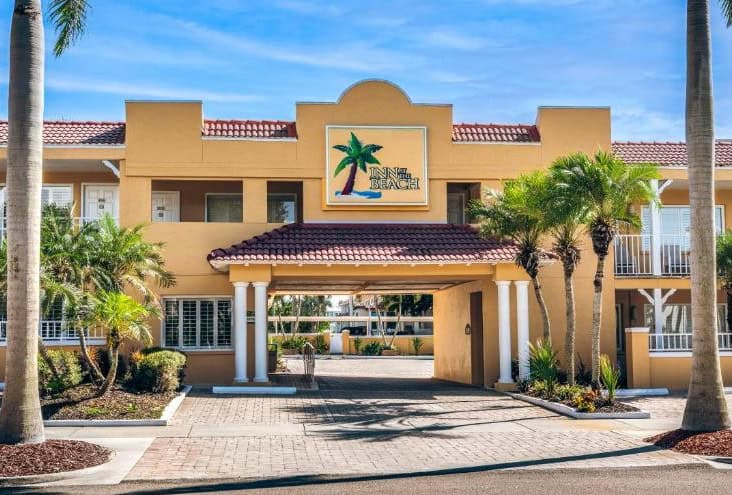
This property is on Venice Ave., a short walk from restaurants and nightlife and right across the street from Venice Beach. It’s a great spot if you want to do a shore dive from Venice Beach and is a short drive to boat piers and Casperson. Beach.
Peace River Fossil Hunting: Florida’s Inland Alternative
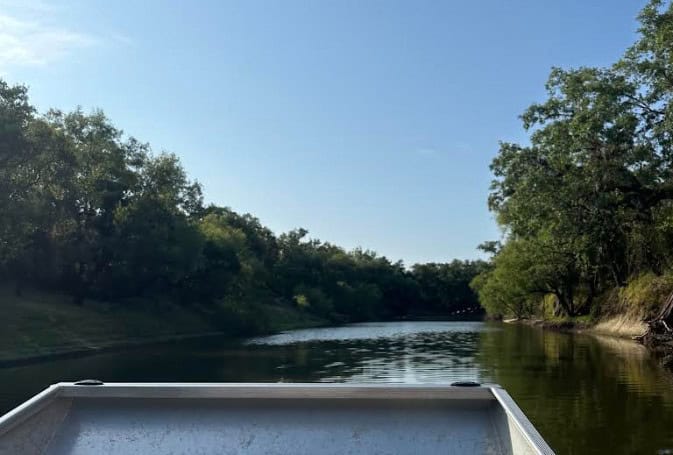
Venice gets most of the attention for shark teeth, but Florida fossil hunting is not limited to the coast. Travel inland and you can hunt the Peace River, one of the state’s classic fossil destinations.
This is a completely different experience. Instead of swimming over the bottom looking for exposed fossils, you physically sift through river gravel. And the potential finds go far beyond sharks.
Peace River material can include fossils from prehistoric marine animals as well as mammals that inhabited Florida during different geological periods.
That can include:
- Shark teeth
- Ray material
- Horse teeth
- Bison fossils
- Turtle fossils
- Mastodon material
- Mammoth fossils
- Dugong fossils
- Other prehistoric vertebrate remains
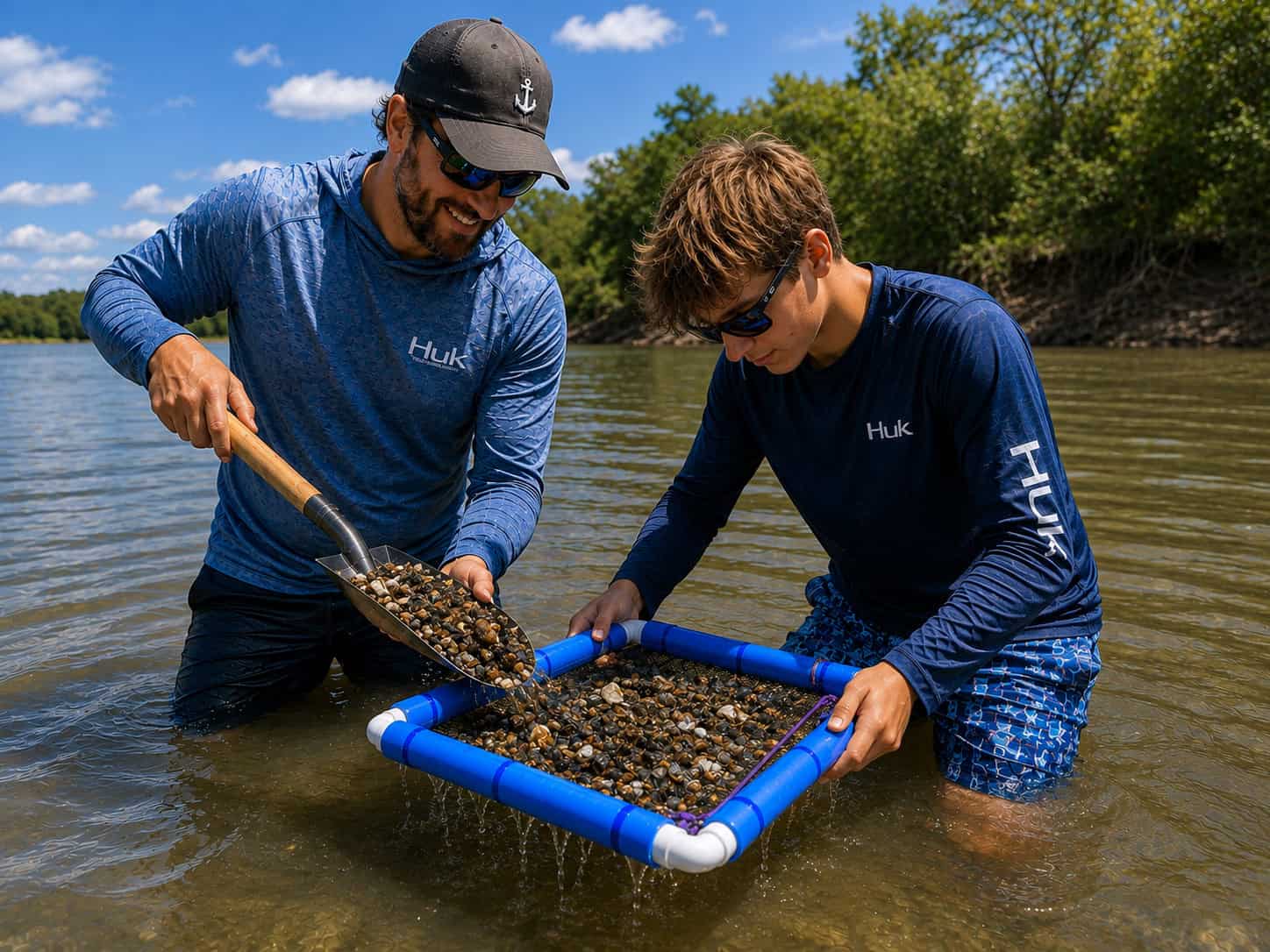
Fossil Junkies, mentioned in the diving section above, also operates a non-diving airboat and fossil-hunting experience on the Peace River. Their guided half-day airboat fossil-hunting adventure lasts approximately four hours and costs about $200 per person.
Guests travel by airboat through the river before stopping in shallow areas to dig and sift for fossils. This is one of my favorite options for families or mixed groups because you get several experiences rolled into one.
- You are taking an airboat ride through Old Florida.
- You are outdoors.
- You are getting into the river.
- And you are actually hunting for prehistoric material.
No scuba certification is required.
It is also beginner friendly, with guides helping guests understand what they are looking at rather than simply handing them a screen and wishing them luck.
I would 100% recommend this activity for a family with children, or a group of friends with interest in fossil hunting. I did this excursion with my parents, in their 60’s, and they had an absolute blast. My father even found a 2.5-inch Meg!
Fossil Recovery is another operation that runs a similar trip for only $155, plus other fossil-hunting options from river hunting to dry digging that run anywhere from $125 to $250 per person. I haven’t experienced one of their trips yet, but perhaps I will soon, and will update this post when I do.
You can also camp, kayak and sift the river on your own, though I do not recommend this option if you have never been on the river before. If you are up for the adventure, Brownville Campground is a great place to launch from.
But what about alligators?
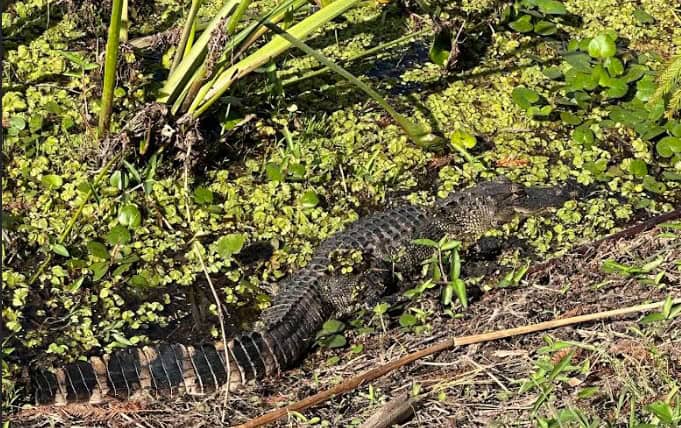
We are talking about a freshwater excursion in Florida, so there absolutely will be gators present. If this is something you are wildly concerned about, this may not be the option for you. However, it is unlikely you will see alligators and less likely you will interact with one, especially when you are with a professional tour group.
First, your guides will be well versed in gator behavior, territory and seasonality concerns. Additionally, while there are no guarantees when entering a wild animal’s habitat, it is pretty unlikely that a gator will approach or want to be anywhere near a group of people digging into the riverbed. Just be sure to listen to your guides at all times, and it never hurts to remain aware of your surroundings.
Florida’s Bone Valley: A Different Kind of Fossil-Hunting Experience
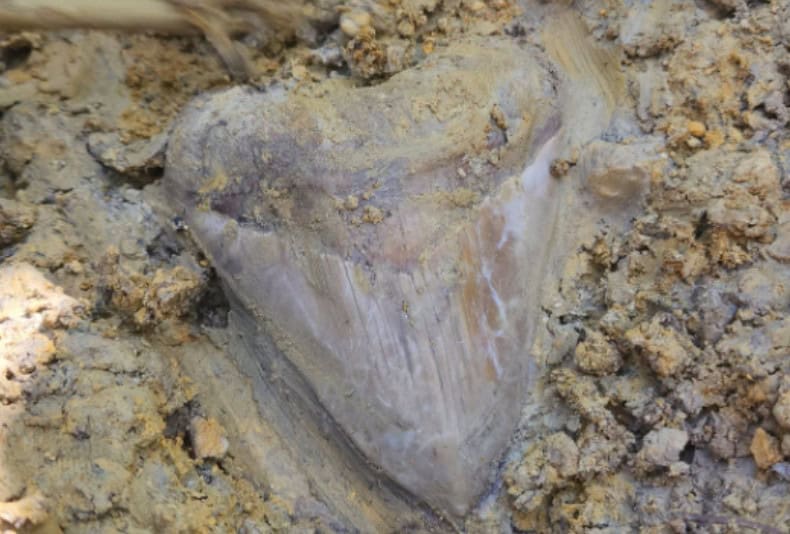
If scuba diving for Megalodon teeth sounds a little too ambitious and beach sifting feels too dependent on luck, there is another Florida fossil-hunting experience worth knowing about: Bone Valley.
Bone Valley is not actually a single valley. It is the name given to a roughly 1.3-million-acre phosphate-mining region in Central Florida. The area is extraordinarily rich in phosphate deposits and fossil material, and today it is considered one of Florida’s most important vertebrate fossil-producing regions.
Bone Valley material has produced fossils from Megalodon, mako, tiger, bull and other sharks, as well as stingrays, whales, dolphins, dugongs, turtles, alligators, horses, mammoths, mastodons, peccaries and even rhinoceros relatives.
It is also famous among collectors for those lovely brown and gold fossils.
The problem is access. Much of the Bone Valley fossil layer is associated with active or former phosphate-mining land, meaning you cannot simply pull off the highway, walk onto a mine and start digging. Fossil hunting on private mining property without permission is trespassing, and access to productive deposits can be extremely difficult for the average traveler.
That is where commercial fossil-hunting operations like Bone Valley Fossil Farm and Bone Valley Experience come in. They provide legal access to genuine Bone Valley fossil-material without requiring you to know someone who owns a phosphate mine. These operations excavate piles of natural fossil-bearing material for guests to sift through. And while you’re not guaranteed a Meg, you’ll definitely find some beautiful fossils.
The main difference between these two operations is that the $220 Bone Valley Fossil Farm dig includes the use of hoses to wash away the dirt, while the roughly $160 Bone Valley Experience is a completely dry dig. Either way though, expect to get dirty.
Do You Need a Fossil Permit in Florida?
Florida does not require a fossil permit simply to collect fossil shark or ray teeth from locations where collecting is otherwise legal. That means your shark tooth from Caspersen Beach does not suddenly require paperwork simply because it is several million years old.
However, Florida treats other vertebrate fossils differently.
If you are collecting vertebrate fossils from eligible state-owned lands, you generally need a Florida Fossil Permit administered through the Florida Museum of Natural History. It currently costs $5 and is valid for one year.
Shark and ray teeth are exempt. So are plant fossils and invertebrate fossils. Other vertebrate fossils, however, may require the permit. This becomes particularly important on a Peace River hunt because you may encounter fossilized material from mammals, reptiles and other vertebrates rather than only shark teeth. If you have any questions, reach out to a tour operator for guidance.
There are also places where fossil collecting is prohibited altogether. State parks, national parks, wildlife refuges, archaeological sites and other protected areas can have separate restrictions.
Always know where you are and what rules apply before removing anything.
What Should You Bring Fossil Hunting
Your operator should give you a specific equipment list, and you should follow that first.
Dive specific:
- Dive Certification card, Mask, Fins, Regulator, BCD, Dive Computer
- Appropriate exposure protection (you are near or on the substrate so even if you don’t think you need it for warmth, a rash guard is advisable)
- Gloves
- Surface signaling device (SMB)
- Seasickness medication (if needed)
Tip: I recommend bringing your own personal kit. Fossil hunting creates enough task loading without adding unfamiliar rental equipment into the equation.
In general:
- Fossil collection bag if the operator does not provide one
- Towel and Dry clothes
- Drinking water and snacks
- Sunscreen and/or Bug spray
- Hat and/or sunglasses
- Waterproof case or dry bag
- Camera if you want to document the experience
- Shark-tooth sifter or Florida snow shovel (for the beach)
You can buy shark-tooth sifters throughout the Venice area or on Amazon at the links I provided above. If you are going with a tour provider, they will have everything you need.
Tip: If you are traveling with children, give each child a separate container. Trust me. Nobody wants to spend the afternoon litigating who technically found which shark tooth.
How Can You Improve Your Chances of Finding a Megalodon Tooth?
There is no secret formula. But there are ways to improve your odds.
Give yourself more time.
A three-tank charter gives you more search time than a single shore dive.
A full morning at Caspersen gives you more opportunity than walking the beach for 20 minutes.
Learn what you are looking for.
Study examples before your dive or even sift.
Look at images or samples of Meg teeth, other shark teeth, dugong bone and common fossil material. Once your brain starts recognizing the shapes, searching gets easier.
Listen to local fossil hunters.
Your captain, divemaster or tour provider knows the area better than you do.
If they tell you to search a particular type of bottom, listen.
Slow down.
This is probably the biggest beginner mistake.
You are not sightseeing. Covering more distance does not necessarily mean finding more fossils. Search carefully.
Manage your expectations.
You may find a Meg on your first dive. You may do three dives and not find one.
That is the deal.
If everyone were guaranteed a five-inch Meg, they would not be nearly as exciting to find.
How I Would Plan the Ultimate Florida Fossil-Hunting Weekend
If I were planning this specifically for someone who is already scuba certified, I would make Venice the base and give the trip at least three days.
Day 1: Caspersen Beach
Start on land.
Pick up a sifter and spend a few hours at Caspersen learning what fossil shark teeth look like. This sounds almost too simple, but it gives you practice recognizing fossil material before you start searching underwater.
Then spend the rest of the day exploring Venice.
Day 2: Three-Tank Megalodon Dive
Book Fossil Junkies or Aquanutz and make this your big fossil day. Three tanks and your best opportunity to really immerse yourself in the hunt.
Day 3: Manasota Key
Keep the final morning flexible.
Head south toward Manasota Key and spend a few hours walking and sifting the beach.
It is inexpensive, relaxing and gives you another chance to add to your collection before heading home.
Have another day?
Add the Peace River or Bone Valley.
Then you have experienced Florida fossil hunting from three or four completely different environments:
- The Gulf floor.
- The beach.
- The river.
- The valley.
That is a much more interesting trip than simply booking one Meg dive and leaving.
Is Florida Fossil Hunting Worth It?
Absolutely, especially if you enjoy scuba diving, sharks, paleontology, beachcombing or any activity involving the possibility of discovering something yourself.
But the reason I like it so much is not simply the fossils. It is the hunt.
Sure, you can buy a beautiful Megalodon tooth online. You can walk into a fossil store in Venice and choose one from a display case. But, finding one requires patience and perseverance.
You may spend hours in the water finding small teeth and pieces of bone. Then suddenly there is something sticking vertically out of the sediment. You reach down. You pull. And a Megalodon tooth comes out of the Gulf floor.
That tooth has been sitting there for millions of years, and you found it! There is something incredibly special about that.
For non-divers, the same thrill happens on a smaller scale. You scoop a pile of shells from the surf at Caspersen Beach, shake away the sand and suddenly see the unmistakable triangular shape of a fossilized shark tooth. It may only be half an inch long, or smaller, but you will still pick it up. You will still inspect it. And then you will immediately start sifting for another one.
That is how fossil hunting gets you. You start by wanting to find a shark tooth. Then you want a bigger one. Then you want a Meg. And before long you are booking a three-tank dive charter in Venice and spending 90 minutes at a time staring at the bottom of the Gulf of Mexico.
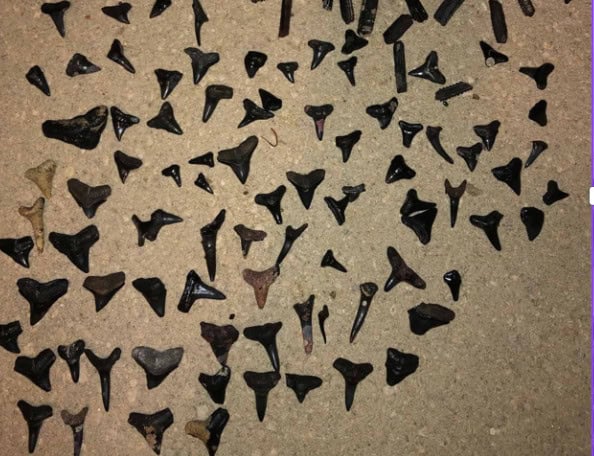
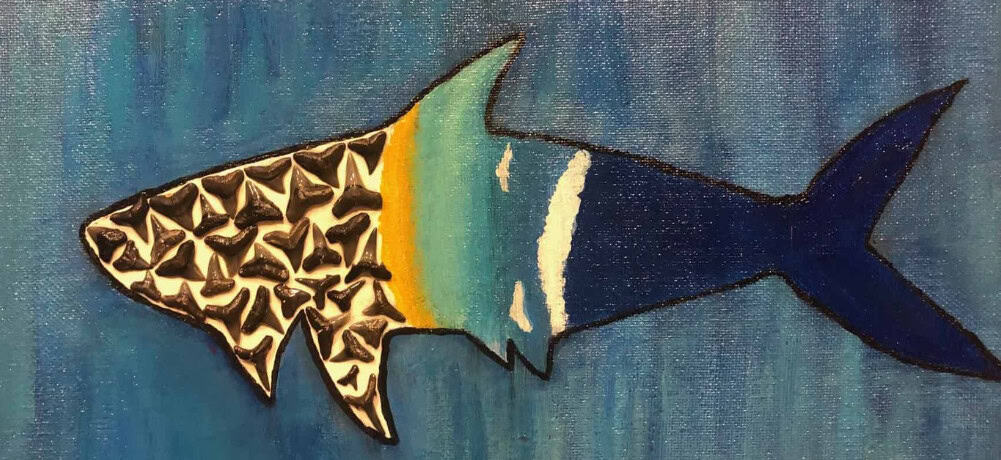
I’ll tell you one thing. I’m hooked. And you’ll find me in Venice several times a year diving and sifting until I find the elusive, perfect Meg. In the meantime, I’ll collect as many littles as I can and continue to make fun art pieces with them like the one pictured above.
Ready to Plan a Florida Fossil-Hunting Trip?
Whether you want to scuba dive for Megalodon teeth off Venice, spend a morning sifting Caspersen Beach, explore Manasota Key or head inland for a Peace River fossil hunt, Florida offers options for almost every type of traveler.
And you do not have to choose just one.
I can help you turn a single fossil excursion into a complete Florida itinerary, including accommodations, dive charters, transportation, restaurants and activities for the non-divers traveling with you. Just click the banner below to explore my services page.
Because if you are traveling all the way to the Shark Tooth Capital of the World, you might as well give yourself more than one chance to find the big one.