Your Guide to Planning the Ultimate Trip to Oktoberfest
If there’s one celebration that sits high on the bucket list of travelers worldwide, it’s Oktoberfest in Munich. With beer stein holding competitions, pretzels bigger than your head, Bavarian folk music, lederhosen, and a general atmosphere of camaraderie, Oktoberfest is one of those rare events that feels both deeply rooted in tradition and unabashedly festive.
As magical as the experience is, planning a trip to Oktoberfest takes a bit of strategy. This is not the kind of trip you want to just wing—unless, of course, you’re okay with sleeping on a train station bench and missing out on the best tents. When I was backpacking across Europe in 2013 I did not plan ahead and nearly did just that.
So you don’t make a similar mistake, I’ve gathered everything you need to know to plan the ultimate Oktoberfest trip. From when to start booking, where to stay, how to get there, and insider tips to make the most of your beer-fueled Bavarian adventure, consider this your complete guide.
Munich is calling, and Oktoberfest is waiting. If you would like my help planning your trip, whether it’s your debut or you are a seasoned “Oktoberfestian”, visit my service page and contact me today!
Where and When Oktoberfest Takes Place

Oktoberfest takes place in Munich, Bavaria’s capital city in southern Germany. The festival grounds, known as the Theresienwiese (locals simply say “Wiesn”), are transformed into a sprawling carnival of massive beer tents, amusement rides, food stalls, and parades. The location is central and easy to reach, just southwest of Munich’s Old Town.
While Oktoberfest is the main event, don’t overlook the rest of Munich during your stay. The historic Marienplatz square, the English Garden (one of the largest urban parks in the world and a great place to recover and unwind), and the Residenz Palace are all within easy reach and worth exploring between stein-hoisting sessions.
As far as timing, the dates change every year. The festivities typically begin at the end of September and run for two weeks into the beginning of October. The easiest way to plan properly is to Google something along the lines of “Munich Oktoberfest [Year] dates”. Once you have your dates, choose a mid-week visit to avoid the weekend crowds and the premium pricing for flights and at lodging.
The 2026 Oktoberfest celebration kicks off on September 19th and runs to October 5th. A great planning resource is the official Oktoberfest website.
How to Get There

By Air
The easiest way to reach Munich is by flying into Munich International Airport (MUC), which has direct connections from major cities across Europe, North America, and Asia. From the airport, it’s a 40-minute ride on the S-Bahn train (lines S1 or S8) into the city center.
By Train
If you’re already in Europe, Germany’s excellent rail system makes Munich an easy destination. High-speed trains (ICE) connect Munich to cities like Berlin, Frankfurt, and Vienna in just a few hours. The main train station, Hauptbahnhof, is walking distance to the Theresienwiese grounds.
By Car
Driving in can be convenient if you’re road-tripping through Germany, but be warned: parking in Munich during Oktoberfest is a headache. Unless you’re staying on the outskirts and commuting in, I’d recommend sticking to trains and public transport.
When to Start Planning
Here’s the golden rule: the earlier, the better.
- Book accommodation 9–12 months in advance. Munich hotels fill up almost instantly once dates are announced. Prices surge, and options dwindle quickly. If you miss out, don’t panic—there are always Airbnb, hostels, or stays in nearby towns like Augsburg or Ingolstadt (both less than an hour away by train). Or, if you are really last minute like I was, try Füssen, a quaint village that is also home to the famed Neuschwanstein Castle (2 hours away by train).
- Reserve beer tent tables 6–9 months in advance. Each large brewery tent accepts group reservations (usually in increments of 8–10 people). If you’re traveling solo or in a small group, you can often sneak into open seats, but securing a reservation guarantees entry and service.
- Flights or trains: Try to book flights 4–6 months in advance for the best fares. Better yet, once you have your dates set create an alert using one of the travel apps I recommend here. Trains are more flexible but can get crowded, so reserve seats if possible.
How Long to Stay
A weekend, 2-3 days, is enough for most first-time visitors. My recommendation, if you want to soak it all in (and recover between festive days), is to plan for 4–5 nights. Recovery days can easily be spent:
- Sightseeing in Munich – Marianplatz, Bavarian National Museum, or Theatine Church
- Relaxing and soaking in the sun at the English Garden
- Taking a day trip to Füssen to see Neuschwanstein and Hohenschwangau Castles.
- Day trips to other quaint villages such as Bamberg, Würzburg or Nuremberg.
- Salztberg, Austria is only a roughly 2-hour train ride from Munich.
What to Wear
While you can absolutely attend Oktoberfest in your everyday clothes, half the fun is dressing the part.

For women: A dirndl is the classic Bavarian dress. You’ll find versions ranging from budget-friendly to couture-quality around Munich. The bow on your apron matters: tied on the left means single, right means taken, center means “it’s complicated,” and tied at the back means widowed or a waitress.
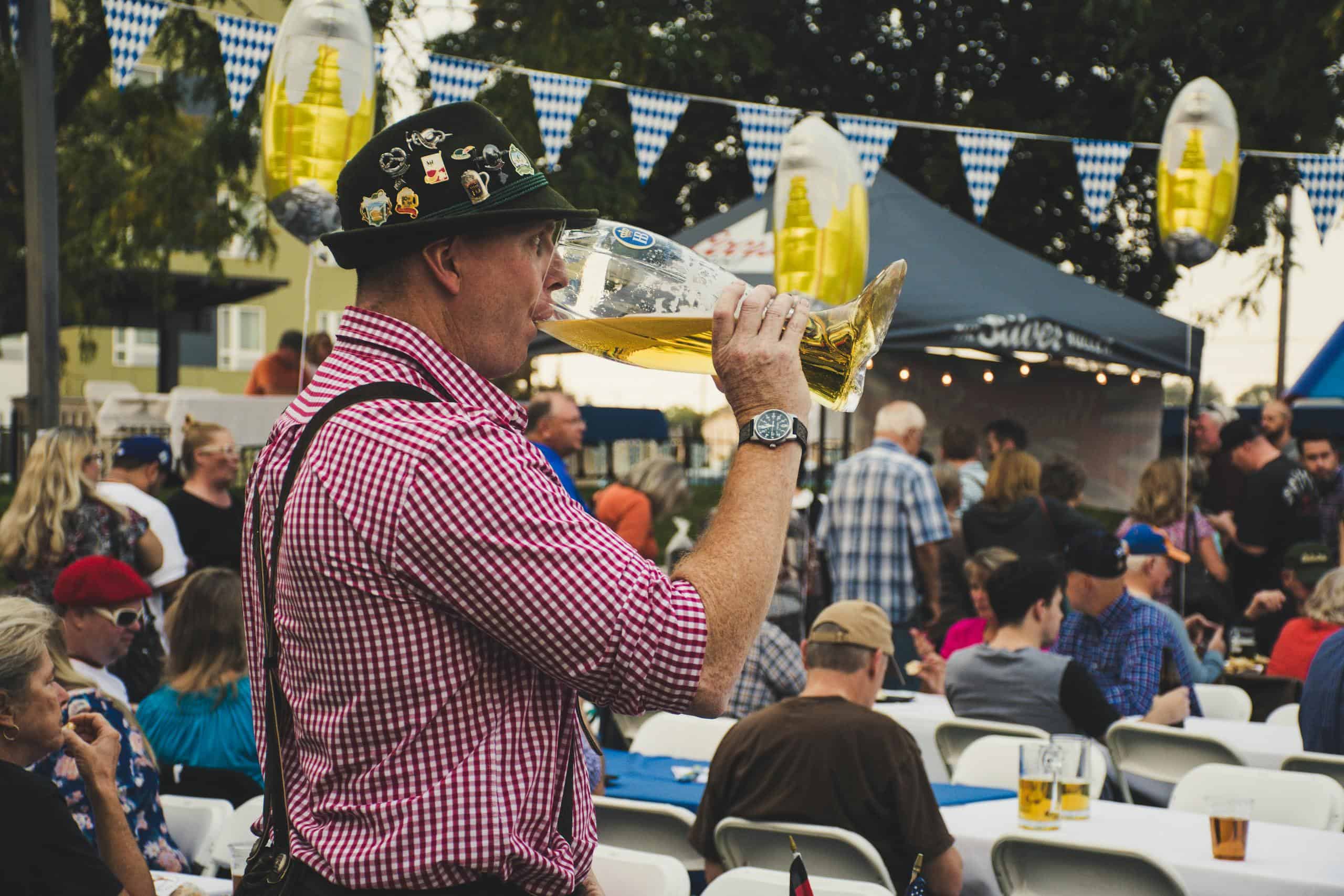
For men: Lederhosen (leather shorts with suspenders) paired with a checkered shirt, knee-high socks, and sturdy shoes is the traditional look. Do I think it’s unfair that men don’t wear the same relationship symbolism, absolutely! But I don’t make the rules. Perhaps we can come up with some kind of feather in the cap, or kerchief in the pocket symbol.
Pro tip: If you don’t want to splurge, you can buy affordable outfits at department stores like C&A in Munich or even rent a set for the week. Amazon, while far less authentic, will also have some options.
Tips for Oktoberfest First-Timers

- First Day Activities: The Trachten- und Schützenzug (costume and hunters’) parade begins at 10:00 AM from the Max II monument on Maximilianstraße and ends at Theresienwiese. Following the parade, the ceremonial tapping of the first keg is held in the Schottenhamel tent. (Note: the morning is dry before this ceremony.)
- Last Day Activities: At noon on the last day of festivities there is a Bavarian gun salute, and in the Hackerzelt tent the traditional farewell song, “Sierra Madre”, is sung by all in attendance (brush up on the lyrics here).
- Pace yourself: Whether you are spending two days or 2two weeks, Oktoberfest is a marathon, not a sprint. Drink water in between beers and don’t skip meals.
- Bring a small bag: Backpacks are restricted; opt for a small crossbody bag to carry essentials (cash, ID, phone).
- Mind the schedule: Tents close by 11:30 PM, so plan your evenings accordingly. After-parties can be found in Munich’s beer halls and clubs.
- Transportation: The U-Bahn (subway) is the easiest way to get around. Theresienwiese station drops you right at the festival grounds.
- Safety: Like any major event, keep an eye on your belongings and stick with your group.
Insider Tips for the Oktoberfest Tents

The beer tents are the heart of Oktoberfest, and knowing how they work can make or break your experience.
- Go early. Even without a reservation, you can often snag a table if you arrive before noon. Afternoons and evenings are packed.
- Cash is king. Servers only take cash for beers and food. Bring small bills for tips (it’s customary to round up generously).
- Beer = one liter. All beer is served in hefty one-liter mugs called Maß. Pace yourself—they’re stronger than you think!
- Order food. Eating pretzels, roast chicken (Hendl), or pork knuckle is not only delicious but helps keep you steady after a couple of steins.
- Stay for the music. Each tent has live Bavarian bands that get the whole place singing, swaying, and standing on benches by evening.
Oktoberfest Activities Beyond the Beer

As incredible as the beer tents are, Oktoberfest is much more than drinking.
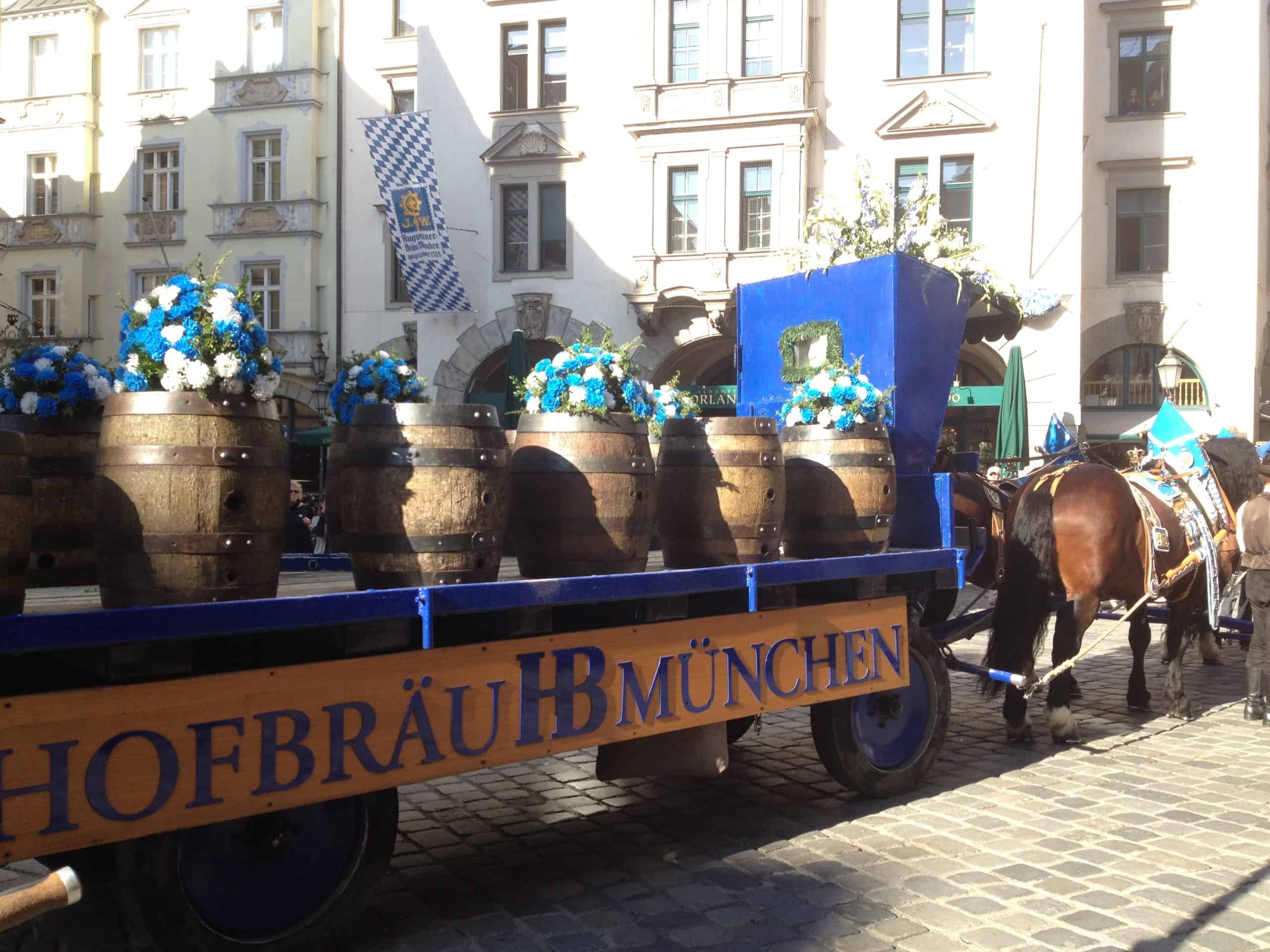
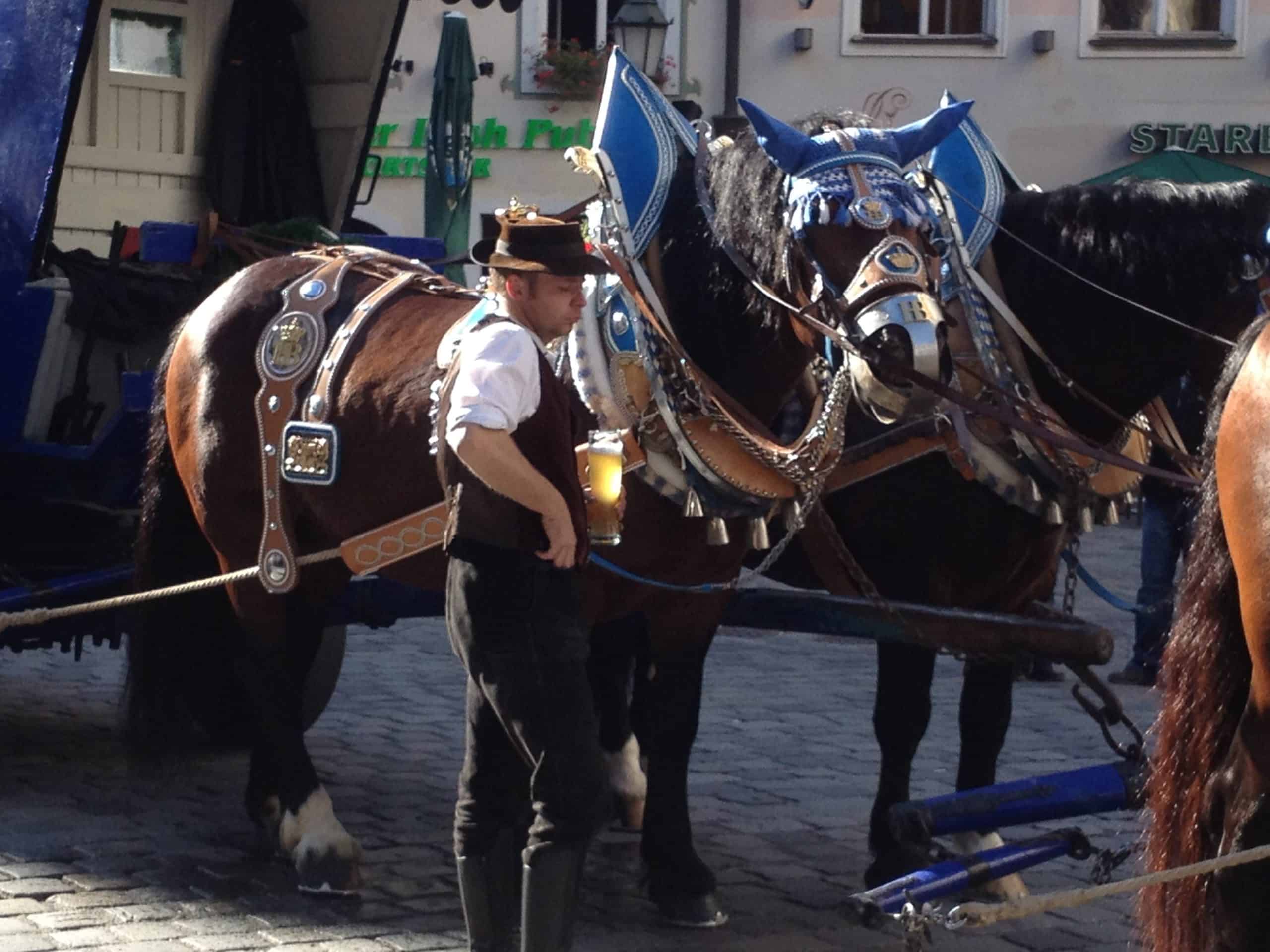
- The parade: The opening parade features traditional costumes, floats, and horse-drawn brewery wagons. A must-see if you’re there on day one.
- The rides: Think ferris wheels, roller coasters, and carnival games—yes, after a few steins, this feels like an adventure in itself.
- Food stalls: Try Bavarian delicacies like sausages, roasted almonds, gingerbread hearts (Lebkuchenherzen), and schnitzel sandwiches.
- Don’t be afraid to take a break: If you’re spending more than a few days, Munich is a perfect jumping-off point. Neuschwanstein Castle (the Disney inspiration) is a two-hour train ride away, Dachau Memorial is just outside Munich, and the Bavarian Alps are within easy reach.
Oktoberfest Insider Tips
- Best tents for atmosphere: There are 14 large tents and more than 20 small ones, so there are plenty to choose from:
- Hofbräu-Festzelt is popular with the younger international crowd and has a rowdy vibe. It is also one of the only tents with a standing-room-only area.
- Augustiner-Festhalle, a tent with local vibes which pours Munich’s beloved Augustiner beer from traditional wooden kegs.
- Paulaner Festzelt is the largest tent–serving nearly 11,000 guests–yet has been described as cozy.
- Weinzelt and Schützen-Festzelt tents are on the smaller side but are a must visit for any non-beer drinkers.
- Festzelt Tradition and Herzkasperlzelt are part of the Oide Wisen, an area of Oktoberfest that will transport you back in time, where early 19th-century tradition reins true.
- Book a weekday visit: Weekends are packed shoulder-to-shoulder, while weekdays offer a slightly calmer, more authentic experience.
- Learn a phrase or two: A cheerful Prost! (cheers) goes a long way, as does ordering “eine Maß, bitte” (one beer, please).
- Stay central if possible: Walking back to your hotel or hopping on the U-Bahn is much easier than long commutes after a long night (Trust me on this – I commuted over 2 hours).
Final Thoughts from Your Travel Consultant

Oktoberfest is one of those global festivals that’s impossible to fully describe until you’re standing inside a tent, beer in hand, singing arm-in-arm with strangers from around the world. The energy is infectious, the traditions charming, and the sense of community truly unforgettable.
With a little planning—booking your accommodations early, deciding on tents to target, and pacing yourself—you’ll be ready to dive into one of the world’s most iconic celebrations. So, dust off those lederhosen, lace up that dirndl, and get ready to raise a stein.
Prost!
Munich is calling, and Oktoberfest is waiting. If you would like my help planning your trip, whether it’s your debut or you are a seasoned “Oktoberfestian”, visit my service page and contact me today!