My Experience: Trekking the Annapurna Circuit in Nepal’s Western Himalayas
A Complete Itinerary and Planning Guide for Trekking the Annapurna Circuit
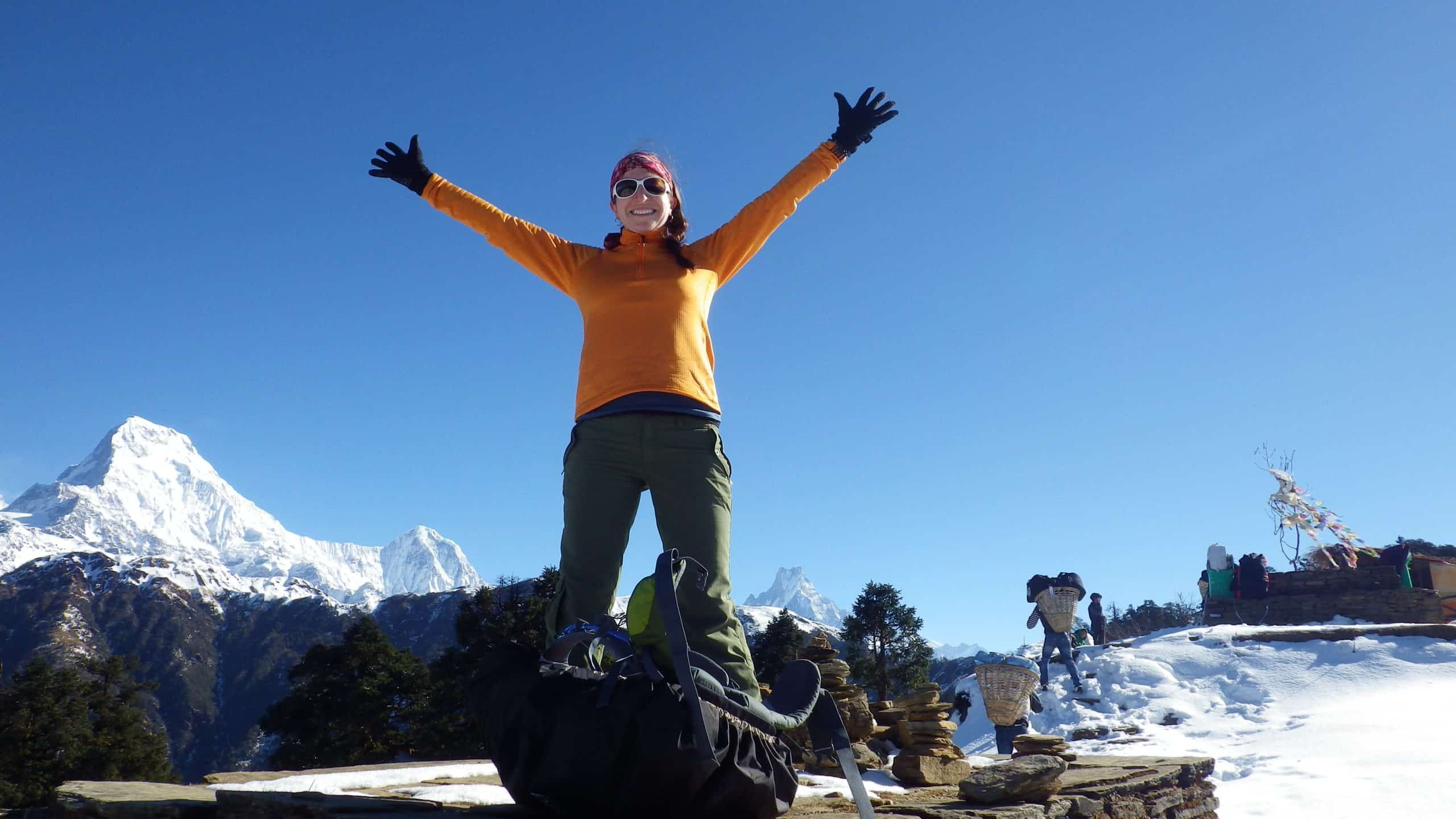
If there’s one adventure that stays with you long after your hiking boots have cooled, it’s trekking the Annapurna Circuit. Back in 2013, I set out on a 9-day guided journey through Nepal’s Himalayan heartland with OneSeed Expeditions, and what unfolded was more than just a trek; it was an unforgettable experience filled with natural beauty, cultural richness, personal growth, and the kind of connection that only happens when you’re off the grid and deep in the mountains, relying on the generosity of strangers and your own sheer will to put one foot in front of the other.
This post recounts my experience on the Annapurna Circuit, along with tips for those dreaming of taking on this journey themselves. Whether you’re an experienced trekker or new to long-distance, high-altitude hiking, Nepal’s Annapurna region promises to steal your heart — just like it did mine.
✈️ Ready to take on the Annapurna Circuit but not sure where to start? I specialize in crafting seamless adventure itineraries that blend expert logistics with authentic local experiences. Let’s design your perfect Nepal trek—click here to explore my travel planning services.
Why Hike the Annapurna Circuit?
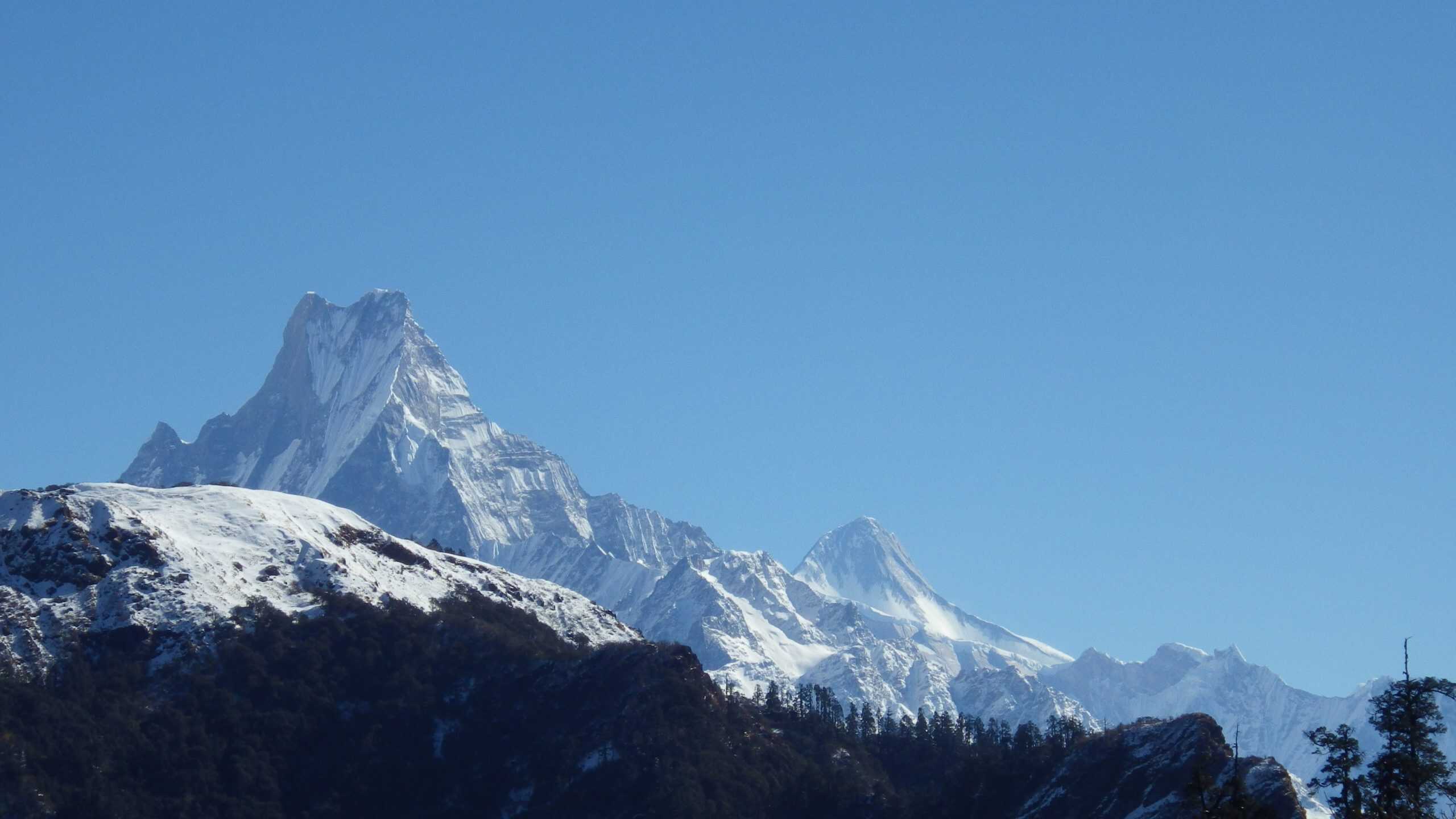
Imagine waking up to the sound of birds instead of your alarm clock. You’re surrounded by mossy forests one moment and barren alpine passes the next. In just a few days, you cross through multiple ecosystems, from subtropical jungles to snow-covered peaks, from terraced villages to challenging mountain passes. This is the magic of the Annapurna Circuit.
If I’m being honest, I knew none of this when I planned my trip. I was looking for an escape that would take me out of my comfort zone, and I was very impulsive. This was the first trip that I would take to a non-English speaking country, and the very first stop of my year-long backpacking trip across the globe. Needless to say, for as much preparation as I tried to take, everything I learned about this lovely place I did on the fly and through the support of Oneseed’s excellent, on the ground, team.
The Annapurna trek is famous for its varied scenery, welcoming local villages and tea houses, and the chance to cross one of the world’s highest mountain passes, Thorong La (17,769 feet). While the full circuit can take upwards of three weeks, OneSeed’s guided 9-day discovery trek offers a condensed but still incredibly immersive version, ideal for travelers short on time but big on adventure.
Kathmandu and Trekking Logistics
First Impressions on Kathmandu
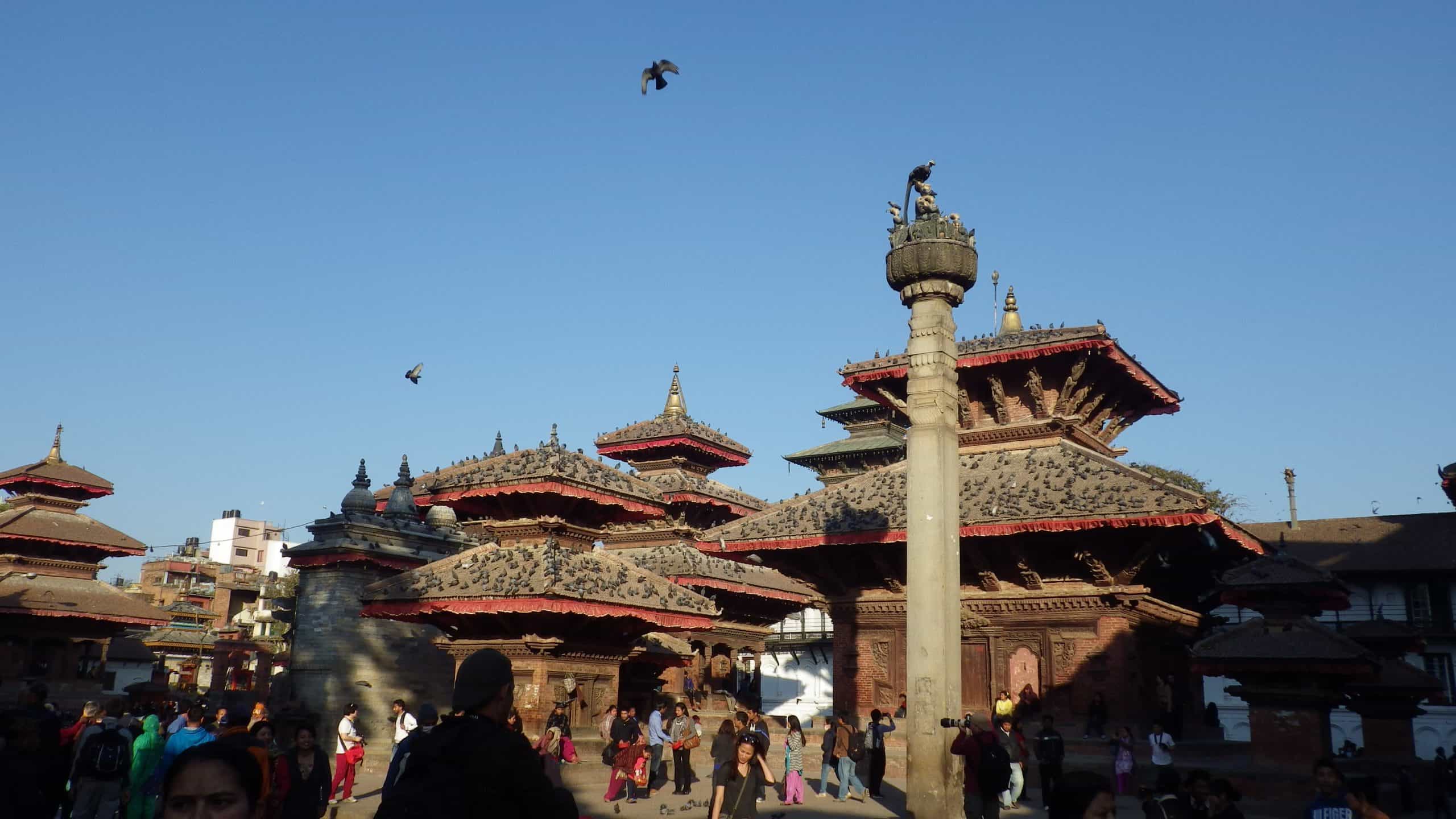
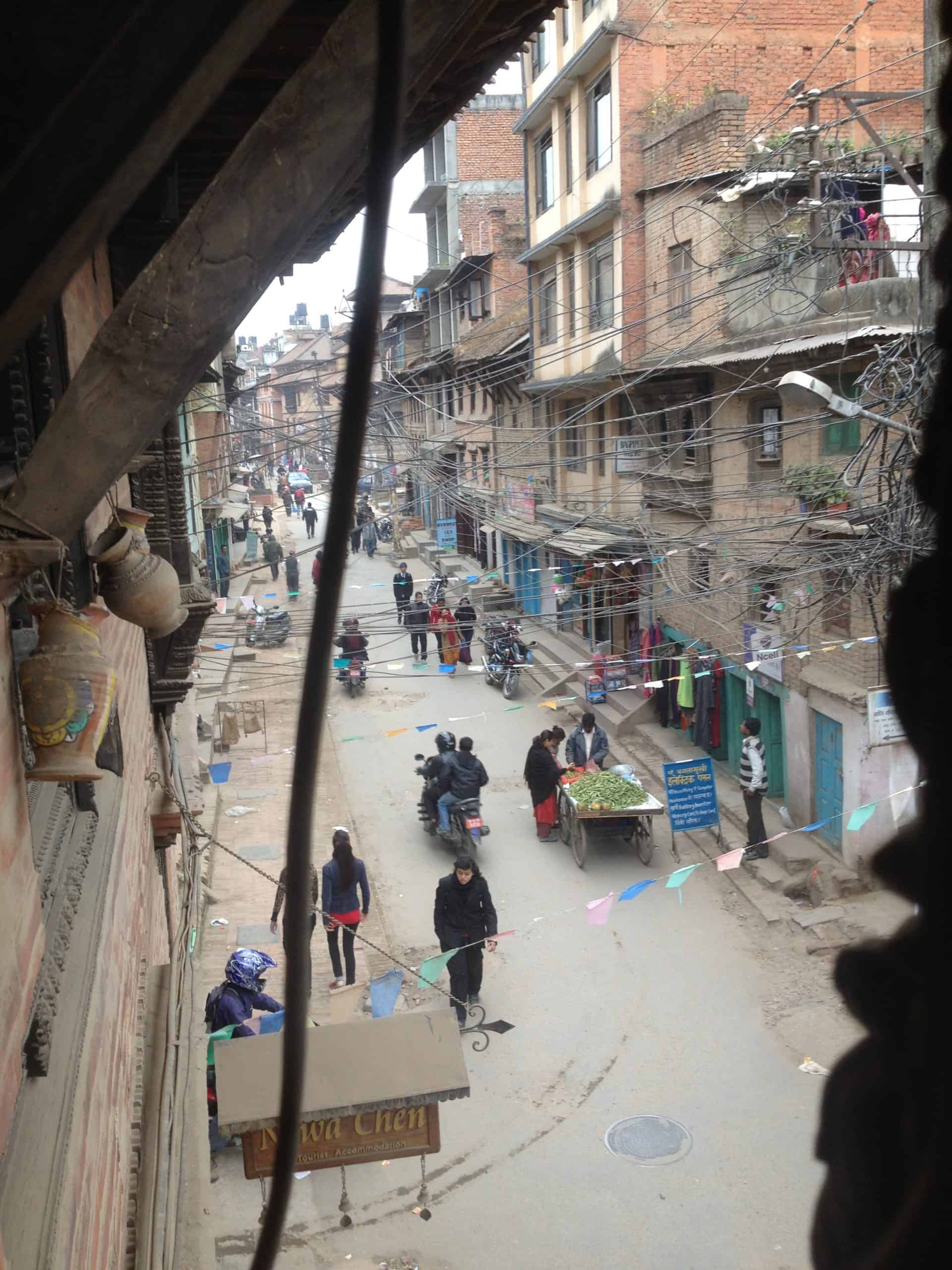
I arrived in Kathmandu, a city pulsing with energy and charm, a few days ahead of the trek. Spending my time wandering the lively streets of Thamel, the city’s buzzing backpacker hub, was filled with colorful sights and unusual sounds and smells. There was dust being kicked up by motor bikes in the streets, shops selling tourist trinkets that were more like ancient relics than your typical tchotchkes, cafés with rich scents wafting from dim candle lit interiors, and adventure outfitters selling anything and everything you might need to trek the most challenging mountain passes in the world. It was overwhelming for a first timer.
Meeting the Oneseed Team
When the “official” trip began, I was greeted by Tek and Bishnu from the OneSeed team, and I was more than happy to let them take the reins from there.
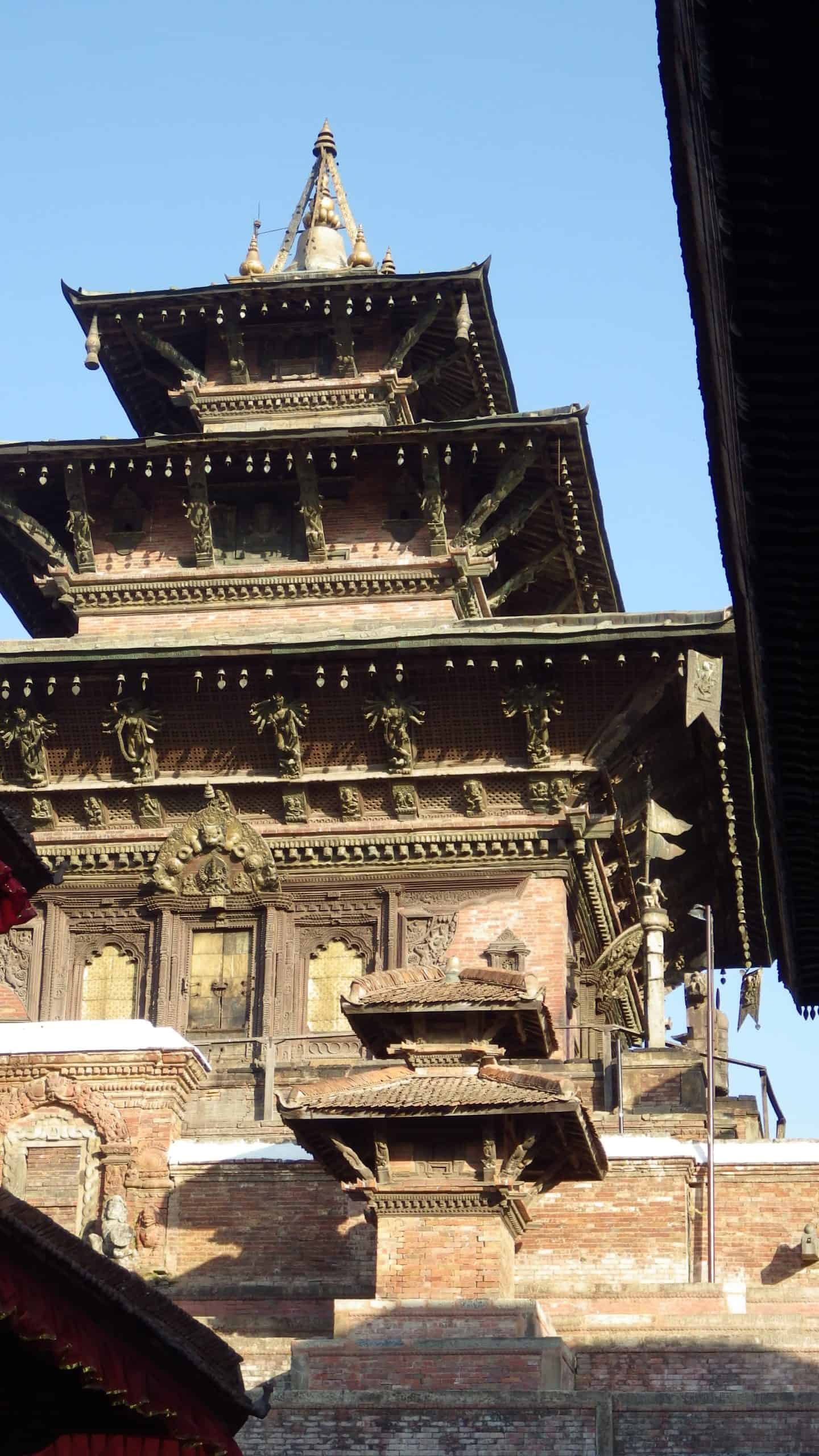
Our group was transferred to the quieter Patan district, a historic suburb known for its ancient architecture, skilled artisans, and Durbar Square; one of the Kathmandu Valley’s UNESCO World Heritage Sites. This part of the city offered a calmer pace and a rich cultural atmosphere, ideal for adjusting to our new surroundings.
OneSeed built in extra time to help us acclimate to the altitude, knowing that not everyone in our group had arrived early, like me. They arranged a couple of days in the city with guided cultural excursions, which added a deeper layer to the experience.
A Tour of Kathmandu’s Temples and Stupas
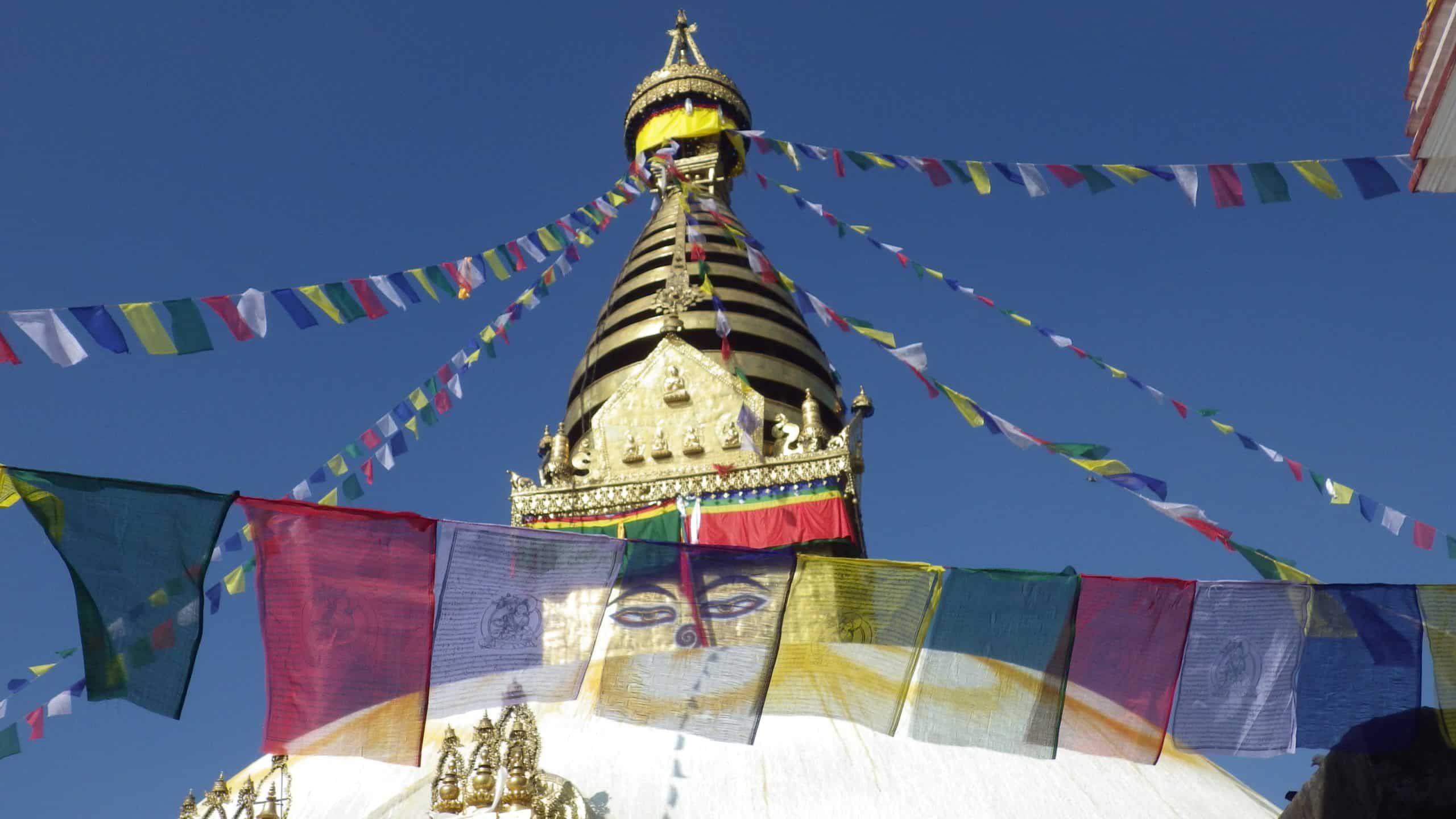
My personal favorite was Swayambhunath, often called the “Monkey Temple.” It’s both a sacred site for Buddhists and Hindus, and an unforgettable visual landmark atop a tall hill on the outskirts of the city. Yes, there really are monkeys everywhere, but the true highlight is the massive white stupa surrounded by prayer wheels and panoramic views over the city.
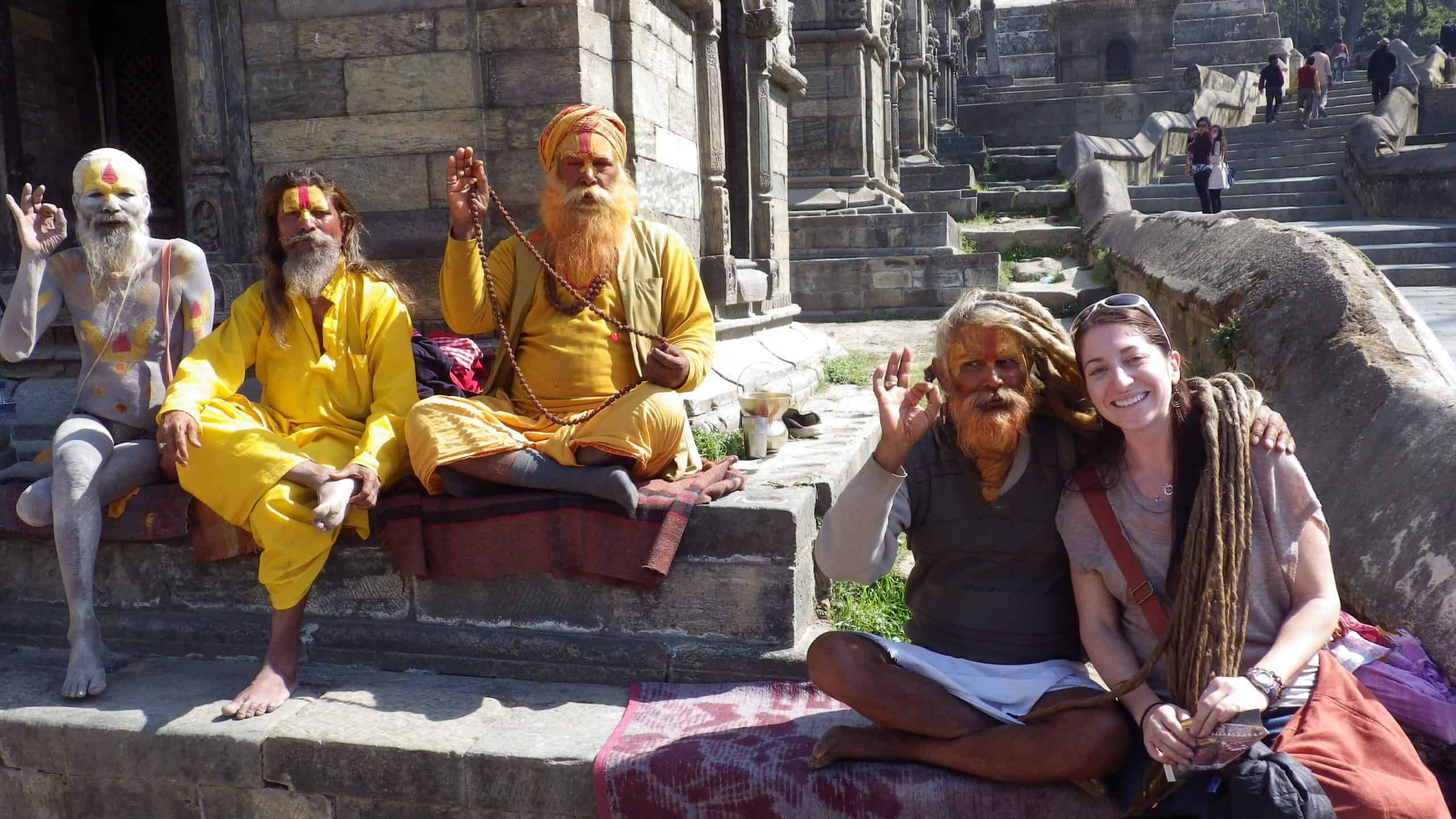
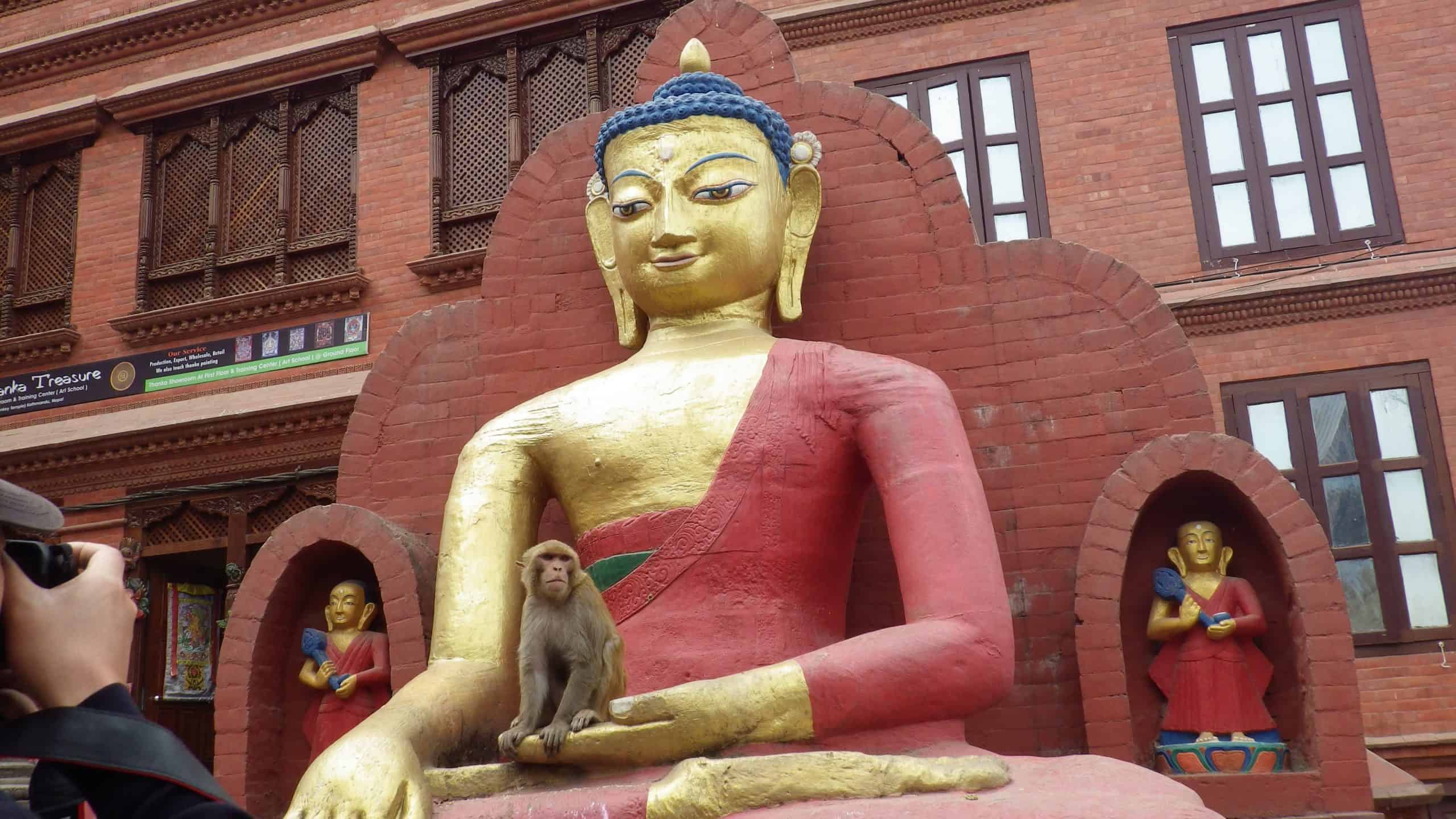
We also explored Boudhanath Stupa, one of the largest stupas in the world, Pashupatinath Temple, a major Hindu pilgrimage site along the Bagmati River, and two historic Durbar Squares—Bhaktapur and Patan—each with its own distinct character and architectural wonders.
Pre-Trek Accommodations
Our pre-trek accommodations were at the charming Newa Chen, a restored Newari home with traditional craftsmanship and a peaceful garden courtyard. Its blend of local design and modern comfort made it the perfect base to prepare for the adventure ahead. I was especially touched to learn that the guesthouse supports a nearby orphanage, something that made me appreciate the stay on a whole other level.
Preparations and Travel Logistics
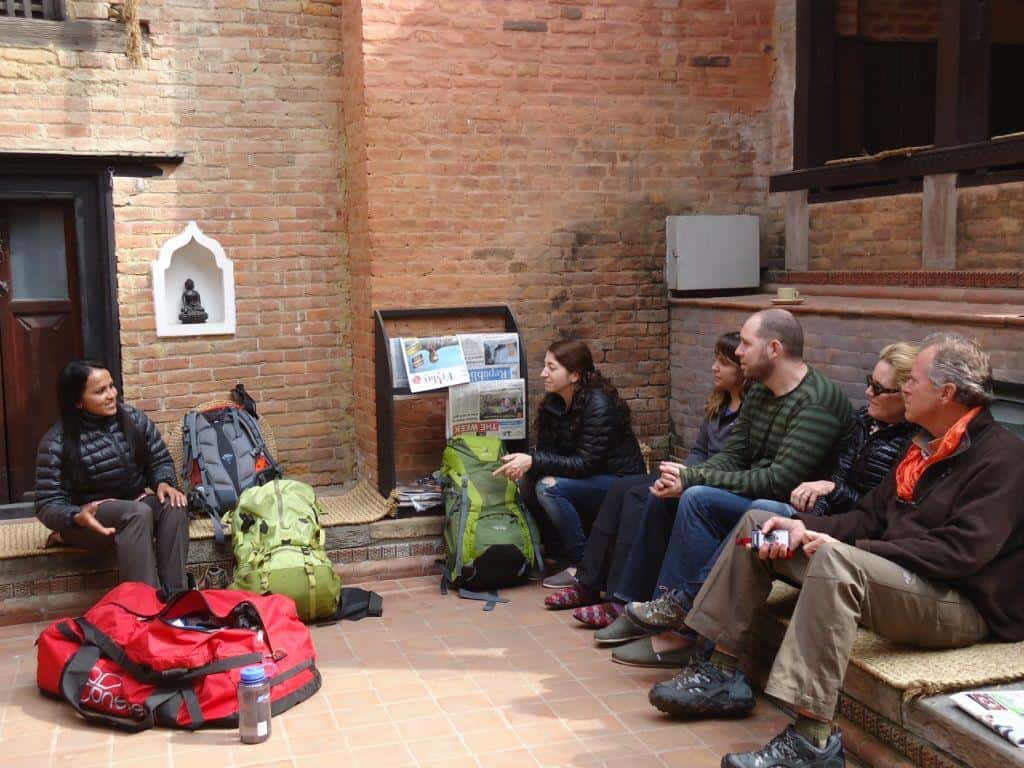
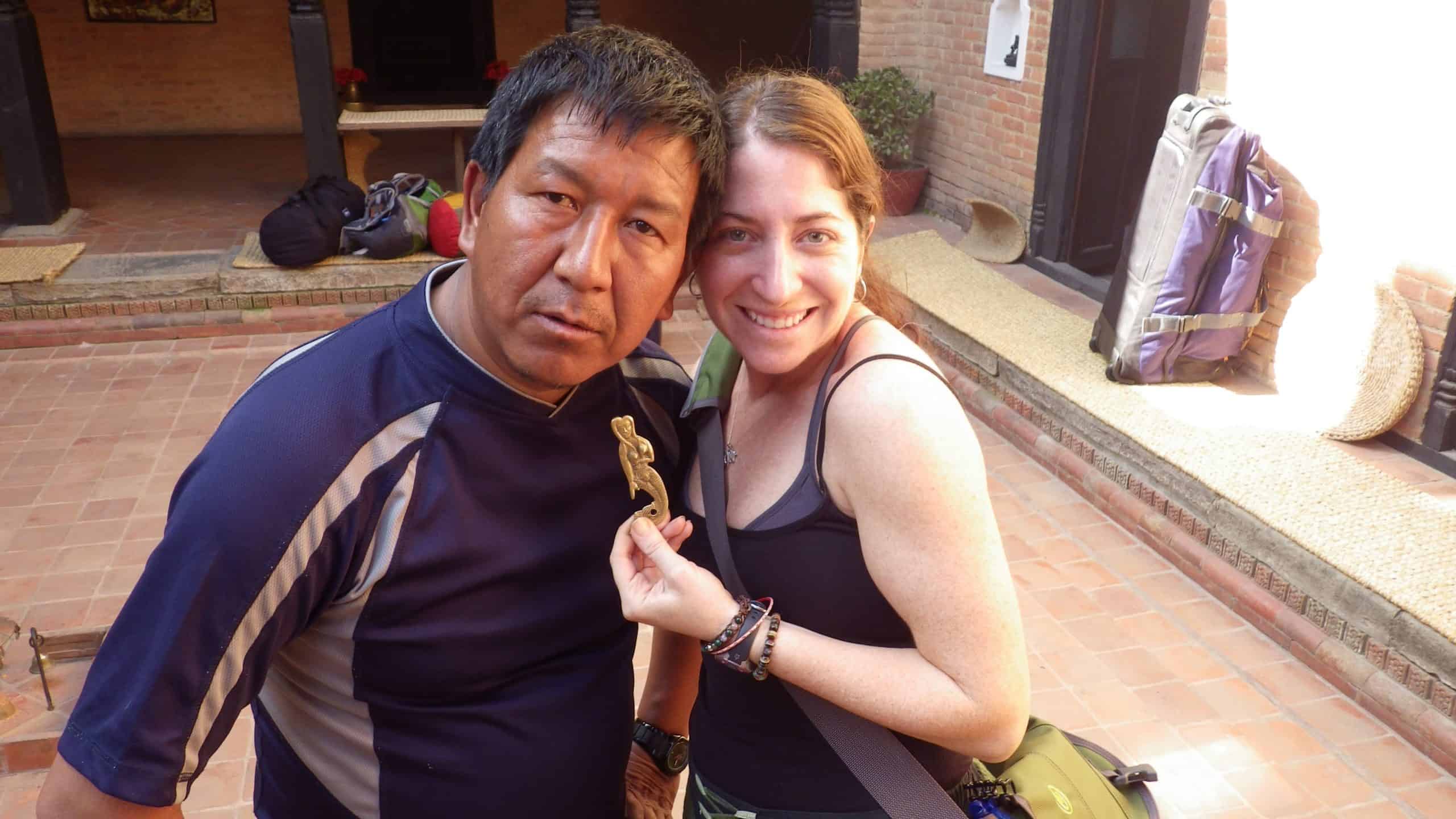
It was in the inner courtyard of Newa Chen that we met our trekking guides, Kale and Meena, who patiently walked us through every detail of the days to come, making sure we were well prepared and confident.
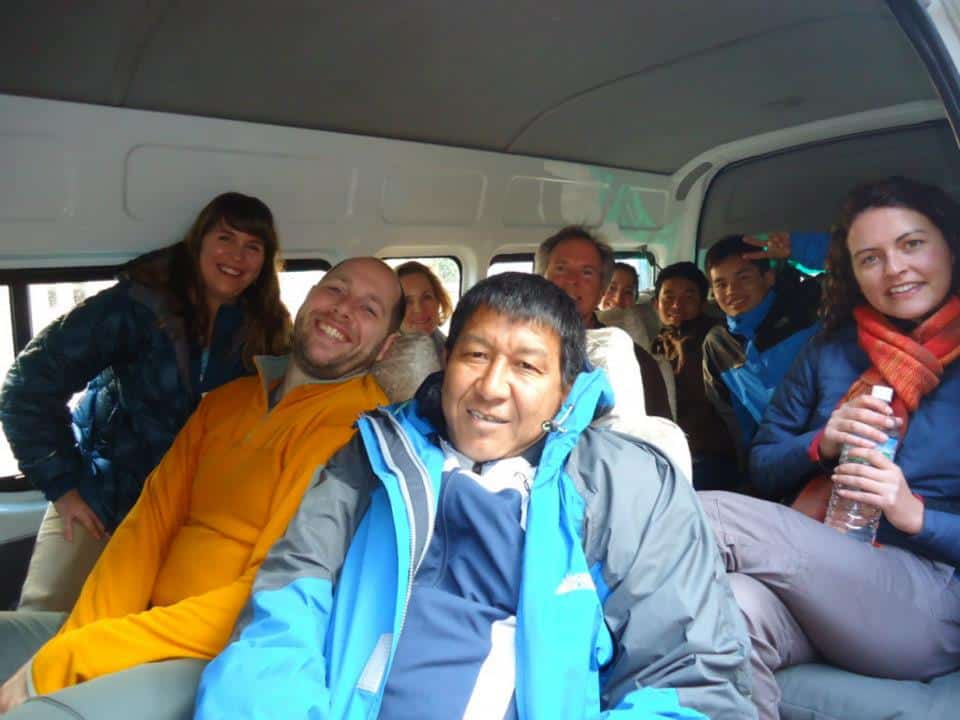
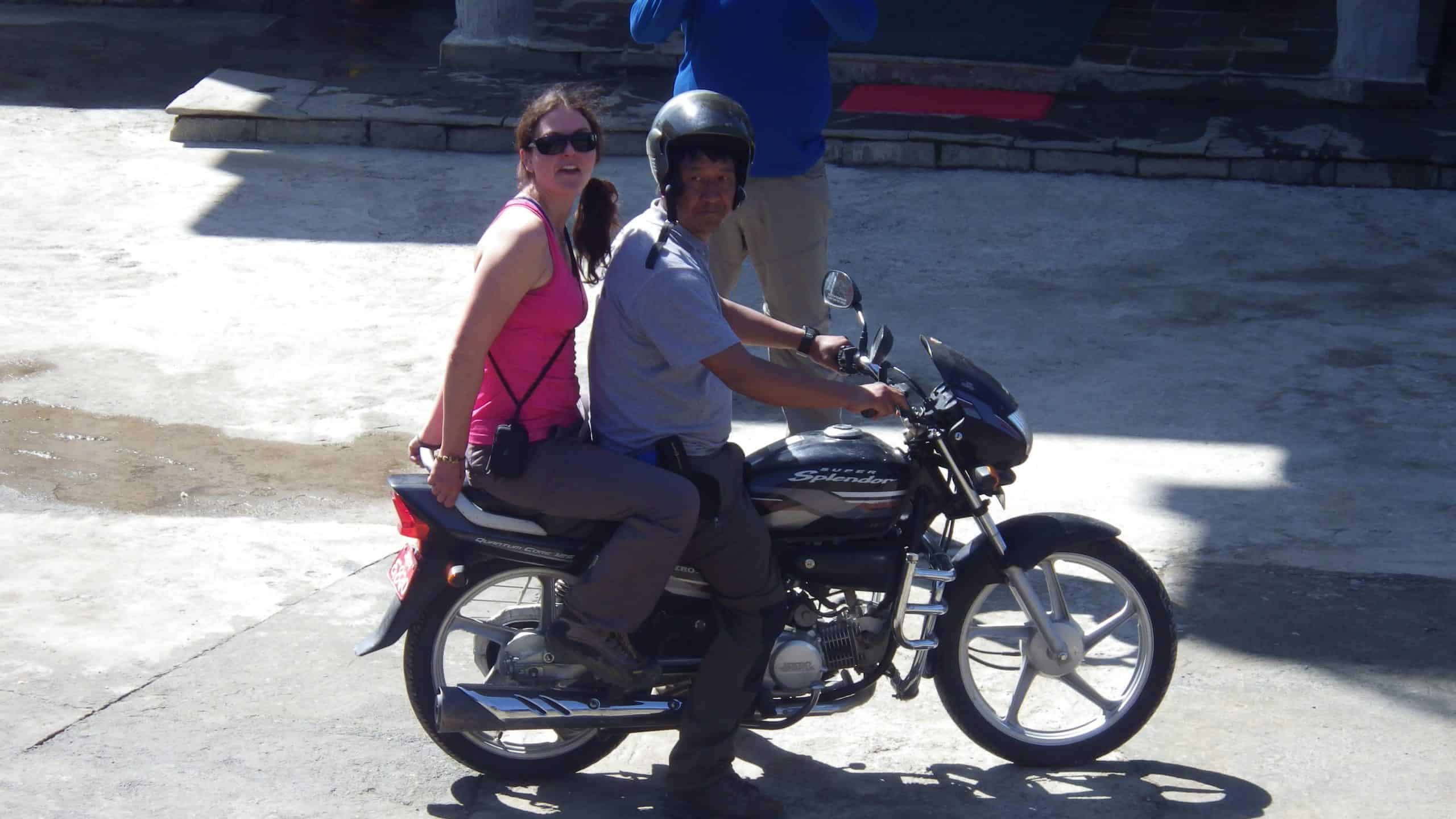
From Patan, we loaded up in a small van and drove west toward Birethanti, the trailhead for our trek. The drive itself felt like a warm-up for the adventure ahead with its winding, narrow mountain roads, dramatic drop-offs, and ever-changing landscapes. The ride certainly kept us captivated and in complete awe with a hint of fearing for our lives as we quite literally were living on the edge. We hadn’t even set foot on the trail yet, but the spirit of adventure had already taken hold.
OneSeed Expeditions: A Trek with Purpose
One of the reasons I chose OneSeed Expeditions was their strong commitment to ethical tourism. Based out of Denver, Colorado, this company directs a portion of every trek’s cost toward supporting women-run businesses in Nepal. They also treat their team with deep respect, training their porters to become future guides.
Oneseed Expedition Guides
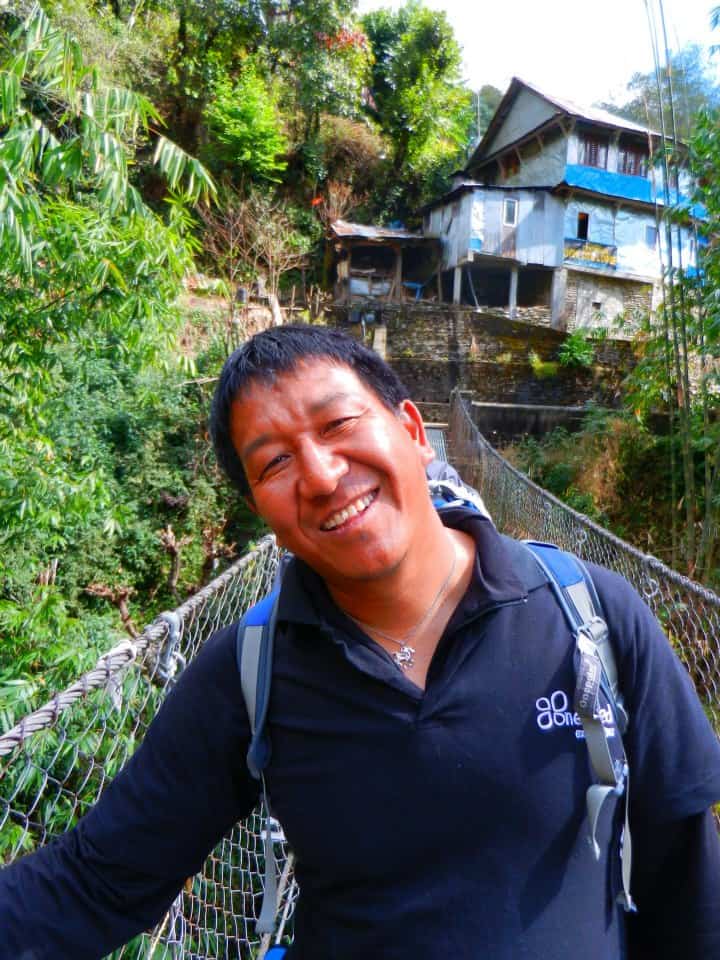
On our trip, we were supported by Kale Sherpa and Meena Karkee, two phenomenal guides. Kale, a jokester with deep local knowledge, kept us laughing with his “Come on!” and “Like Gangnam Style!” catchphrases, while Meena led with calm confidence, teaching us Nepali phrases and singing traditional songs like Reesham Firiri as we hiked.
Oneseed Porters / Guides-in-Training
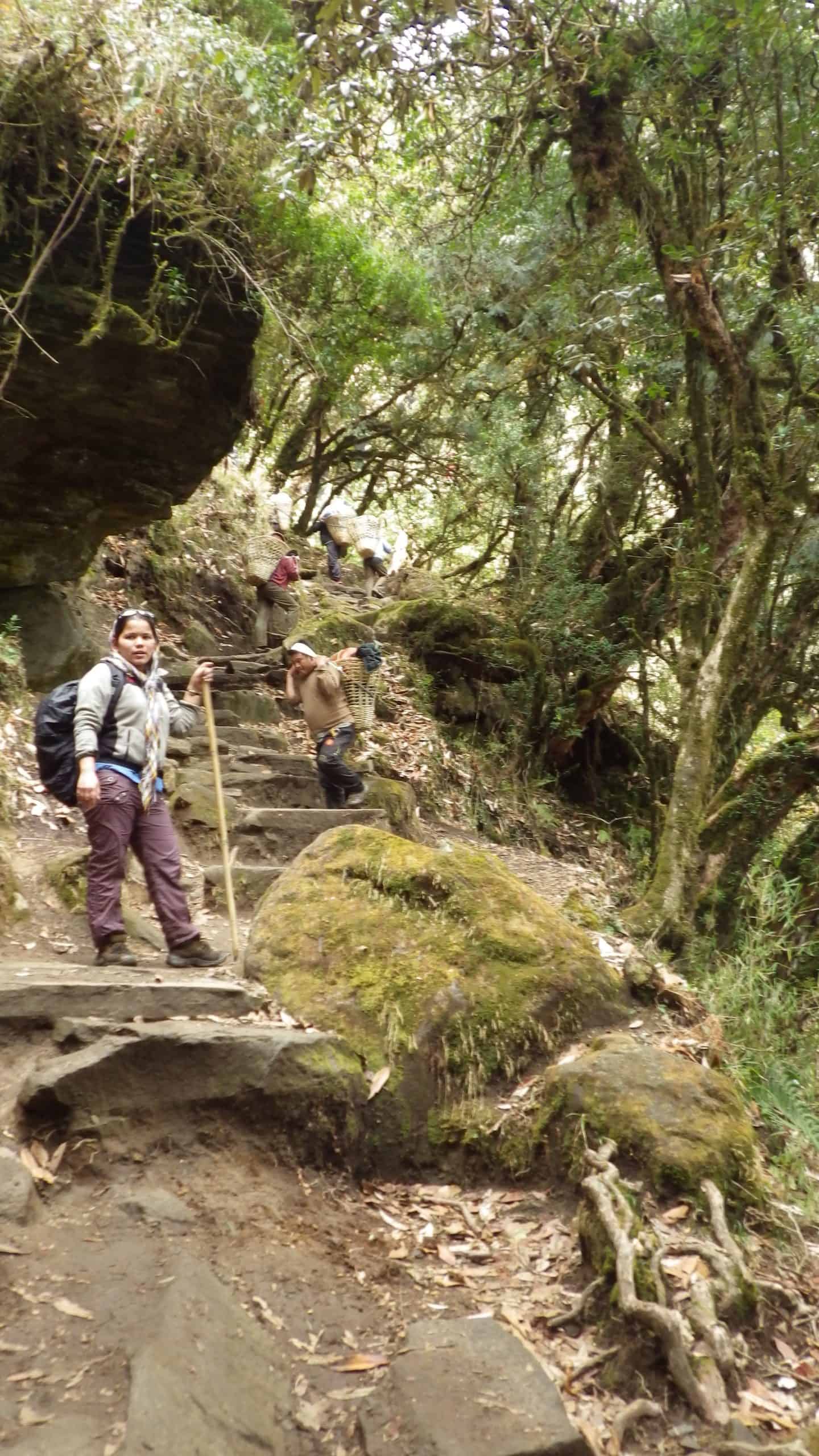
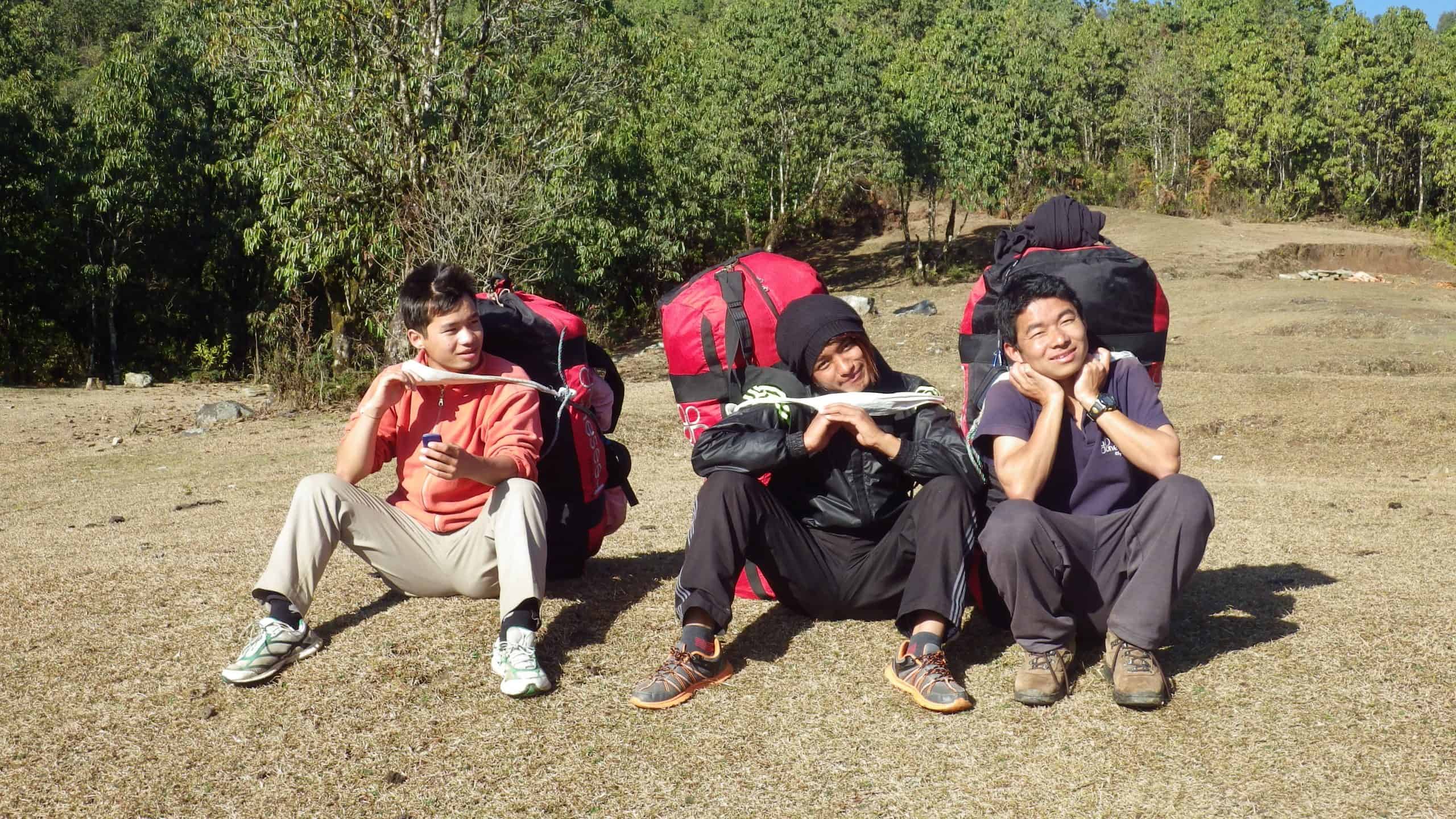
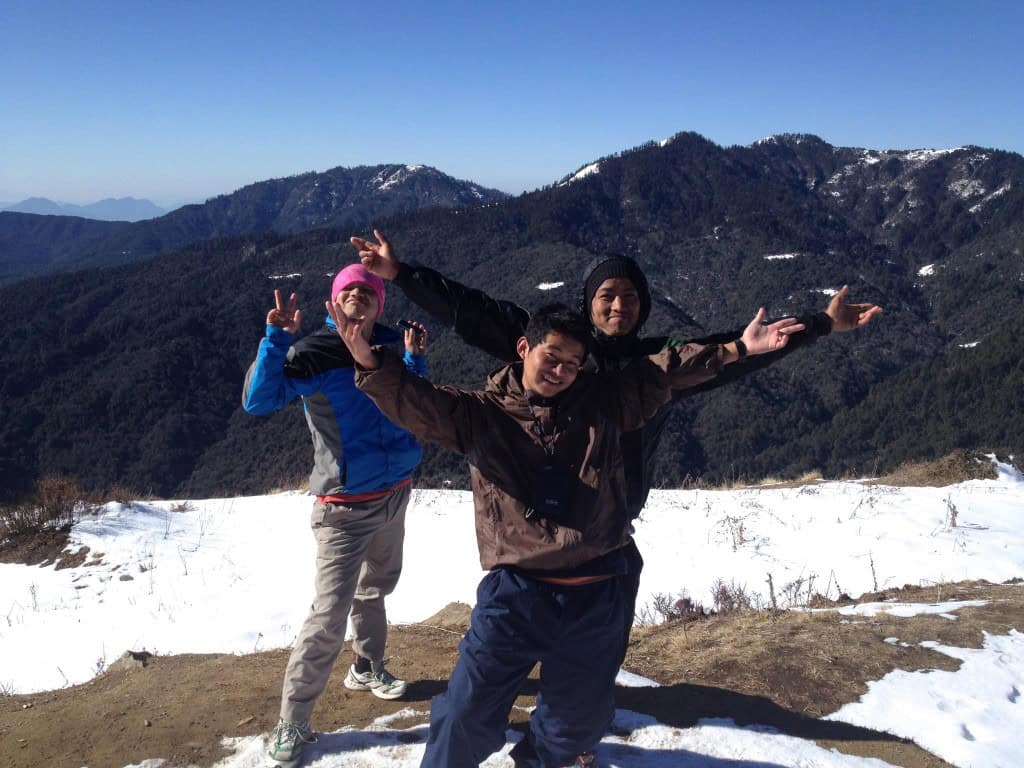
The Guides-in-Training (GITs) — Lal, Keshar, and D-Pak — were also a highlight. Unlike porters from other companies who are rarely allowed to interact with clients (from what I heard), OneSeed encourages their GITs to engage, learn, and grow. By the end of the trek, these shy young men felt like family. They briefed us each night on the next day’s trail, carried a fair part of our gear (I still carried most of my own, as that whole system felt a little strange to me. I felt I was young and therefore could carry my own.) and constantly supported us with kindness and care.
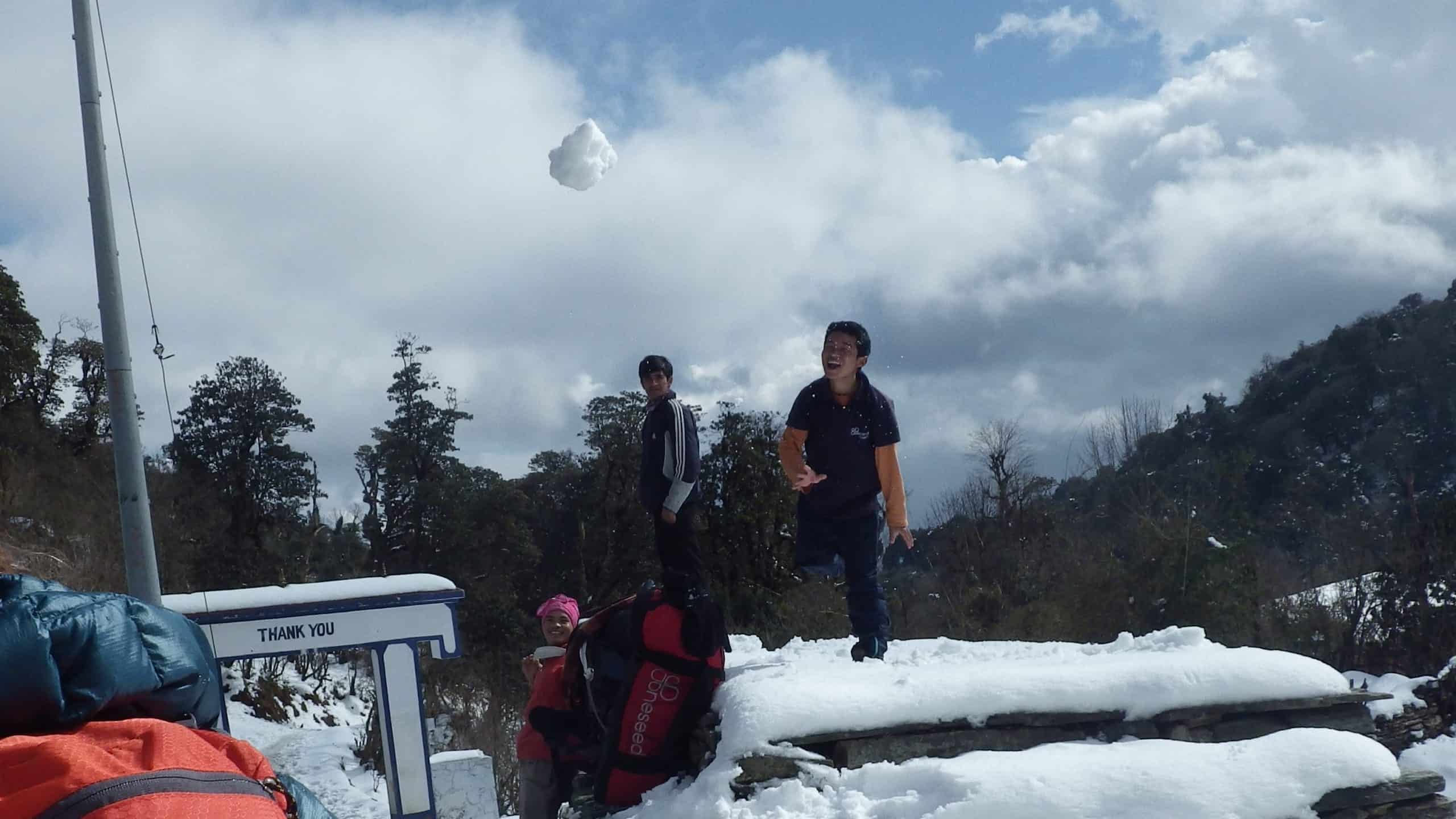
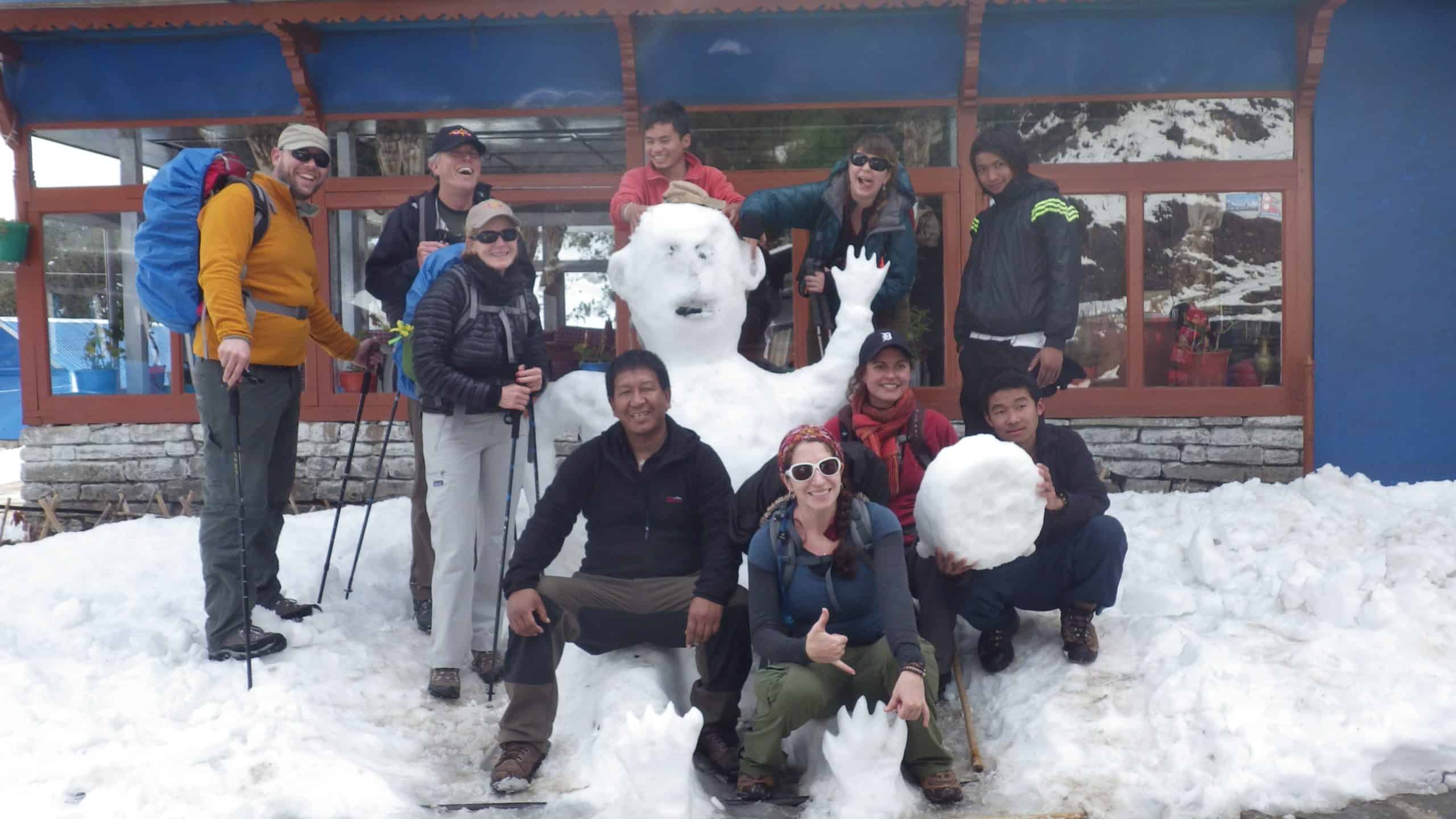
These guys weren’t just helpers on the trail. A few days in we were sharing meals together, them teaching us how to eat traditionally with our hands, learning about their families and cultures, and getting into snowball fights and building snowmen. We were all truly becoming a trekking family. I still keep in touch with many of the Oneseed team members via social media to this day and feel like they are like extended family.
Special Callout to My Trekking Family
What really made this trek unforgettable wasn’t just the scenery, it was the people. I was lucky to be paired with a truly fantastic group:
- Peggy and Graham from Denver, a fun-loving older couple who proved that adventure has no age limit.
- Kate and Jeremy, two compassionate nurses from Seattle who brought humor and heart to every conversation.
- Liz, a fellow solo traveler and outdoors enthusiast from Lake Tahoe, who quickly became a kindred spirit.
I have to give another more personal shoutout to each of our Guides and GITs:
- Kale, of the Sherpa people, clans known for their mountaineering prowess in the region, was our fearless leader with a keen sense of humor that made the trek as safe as it was fun.
- Meena, quiet and thoughtful. She was the true heart of our group.
- Lal, the philosopher, constantly asked big questions: “Which is more important — money or love?” (His answer: “Both.”)
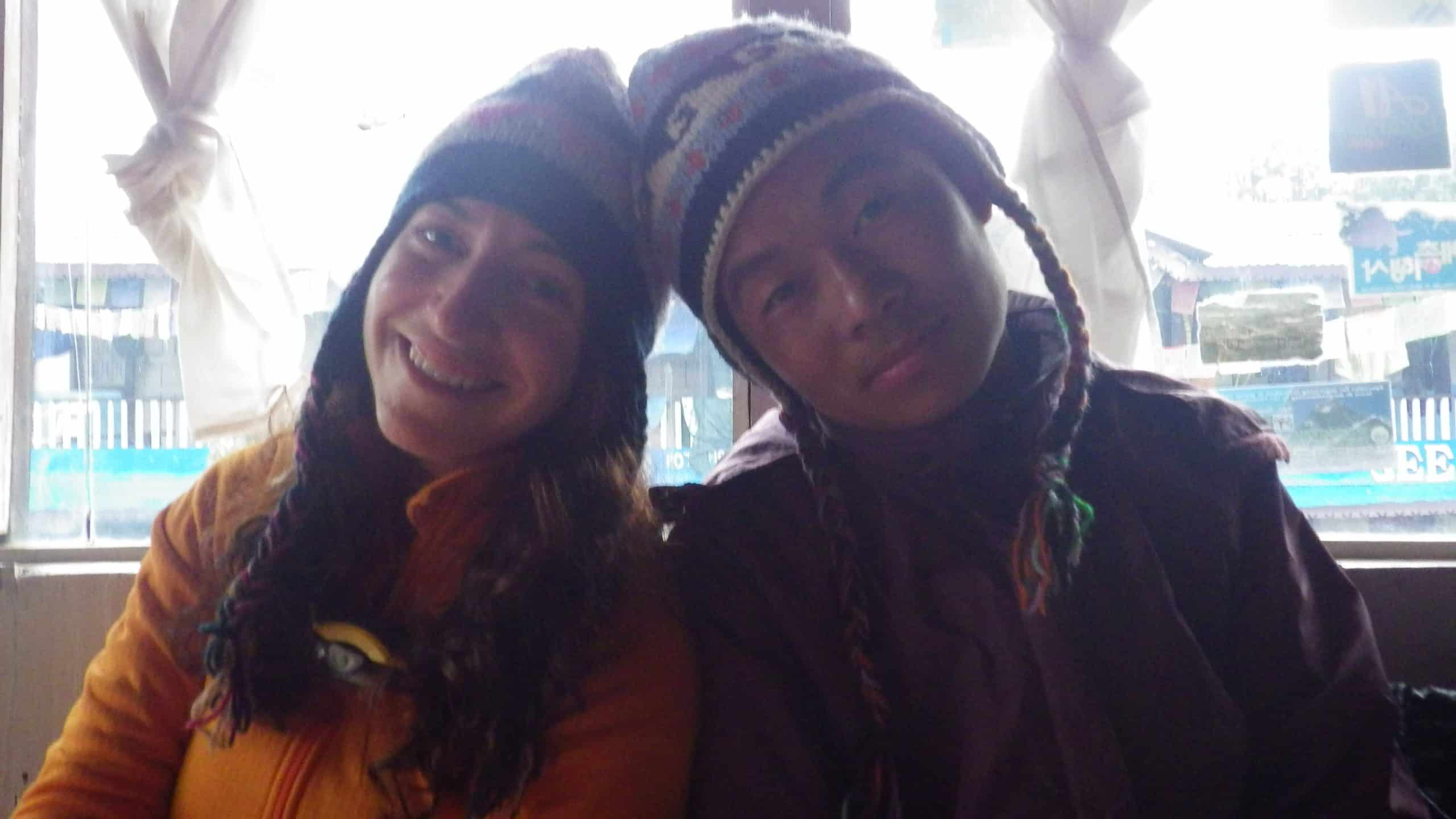
- Keshar, the quiet craftsman, who called me “sister” and made me a bamboo walking stick on the first day that became essential.
- D-Pak, the youngest and shyest, melted hearts with a single smile. By the end, he was calling me “sister,” and I was totally smitten.
Together we laughed, learned, and climbed our way through a part of the world that’s hard to describe but impossible to forget.
Trekking the Annapurna Circuit: A Full 9-Day Itinerary
Day 1: The Trailhead
We arrived in Birethanti and settled in, taking time to explore the local village. With two challenging days of trekking ahead, we tempered our excitement and turned in early, eager to hit the trail at first light.
Day 2: Hiking from Birethanti to Ulleri
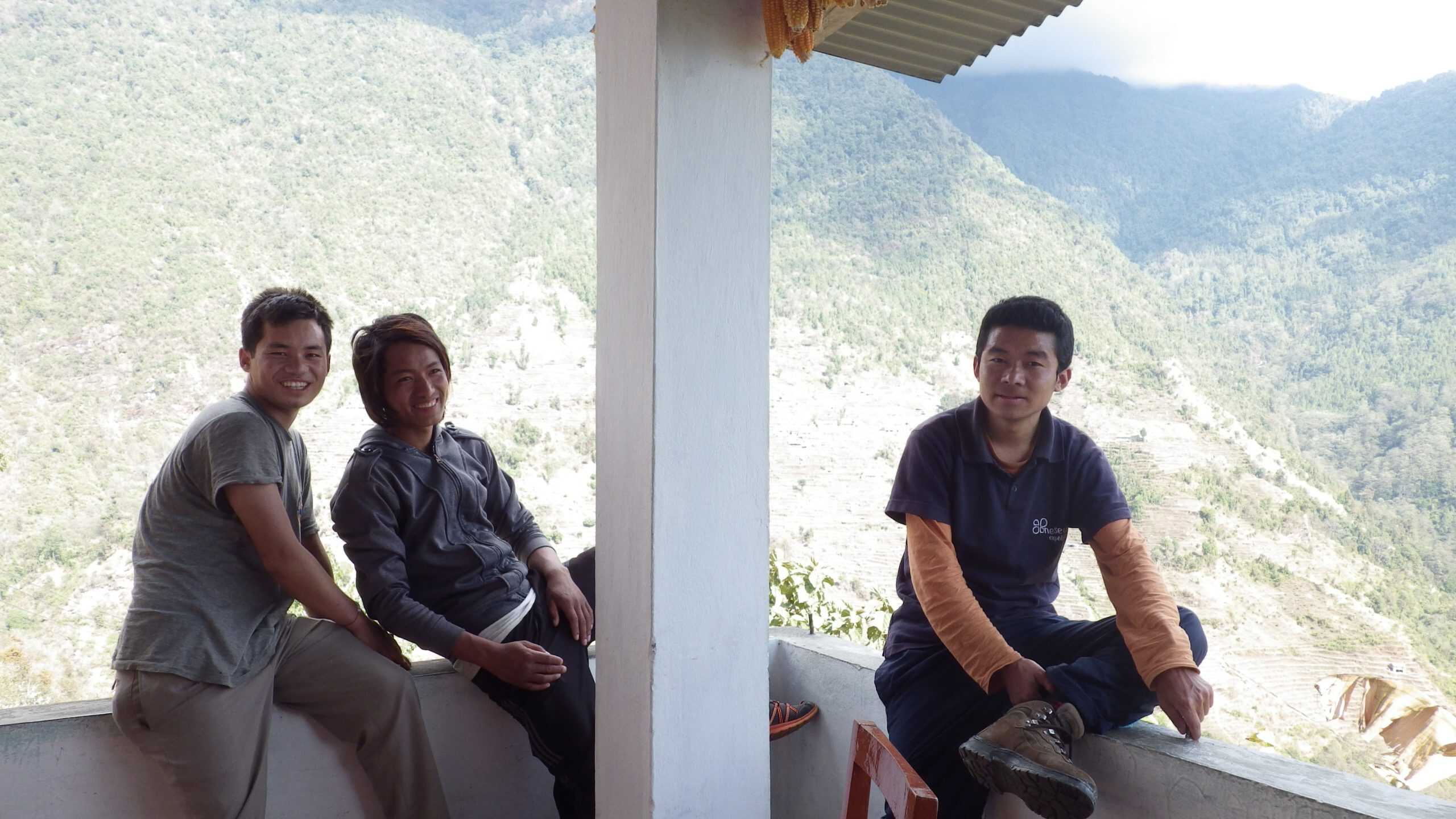
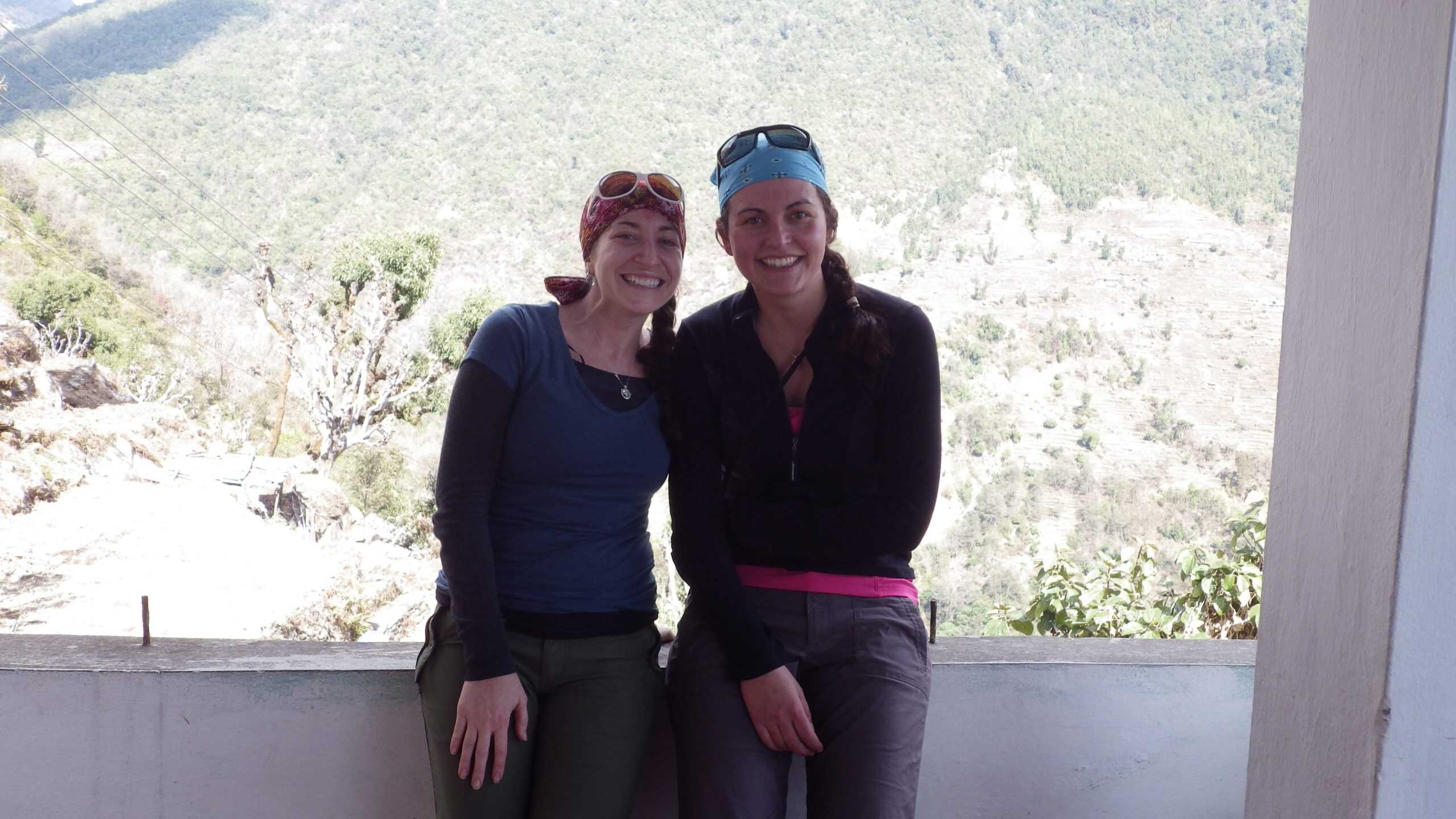
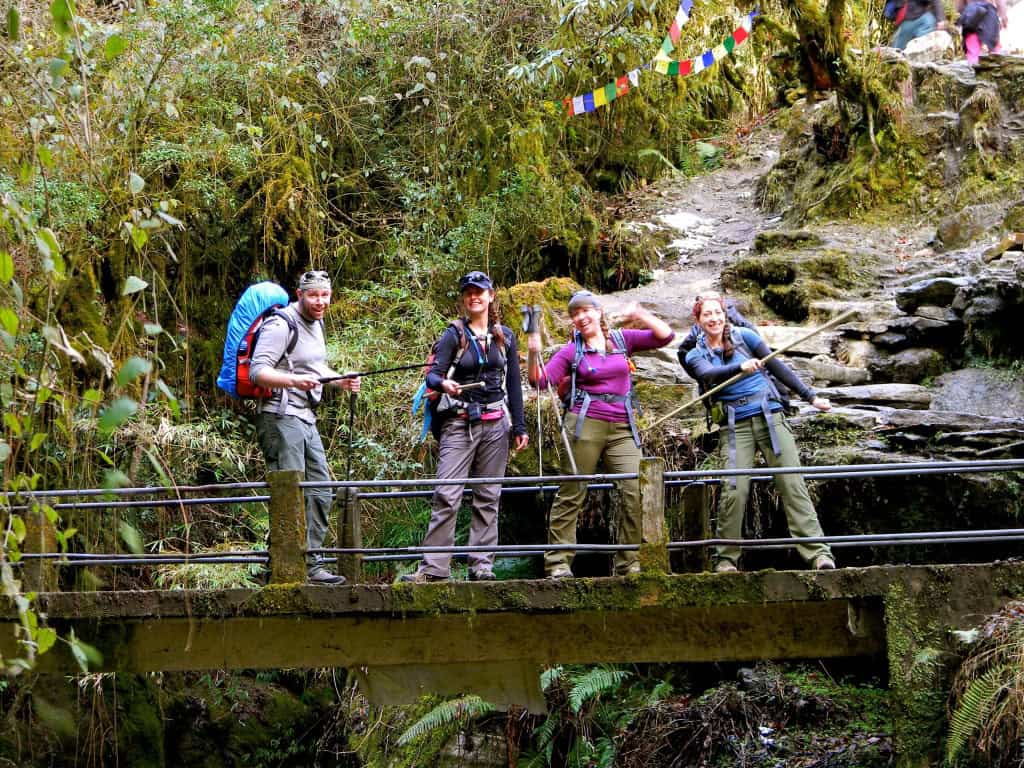
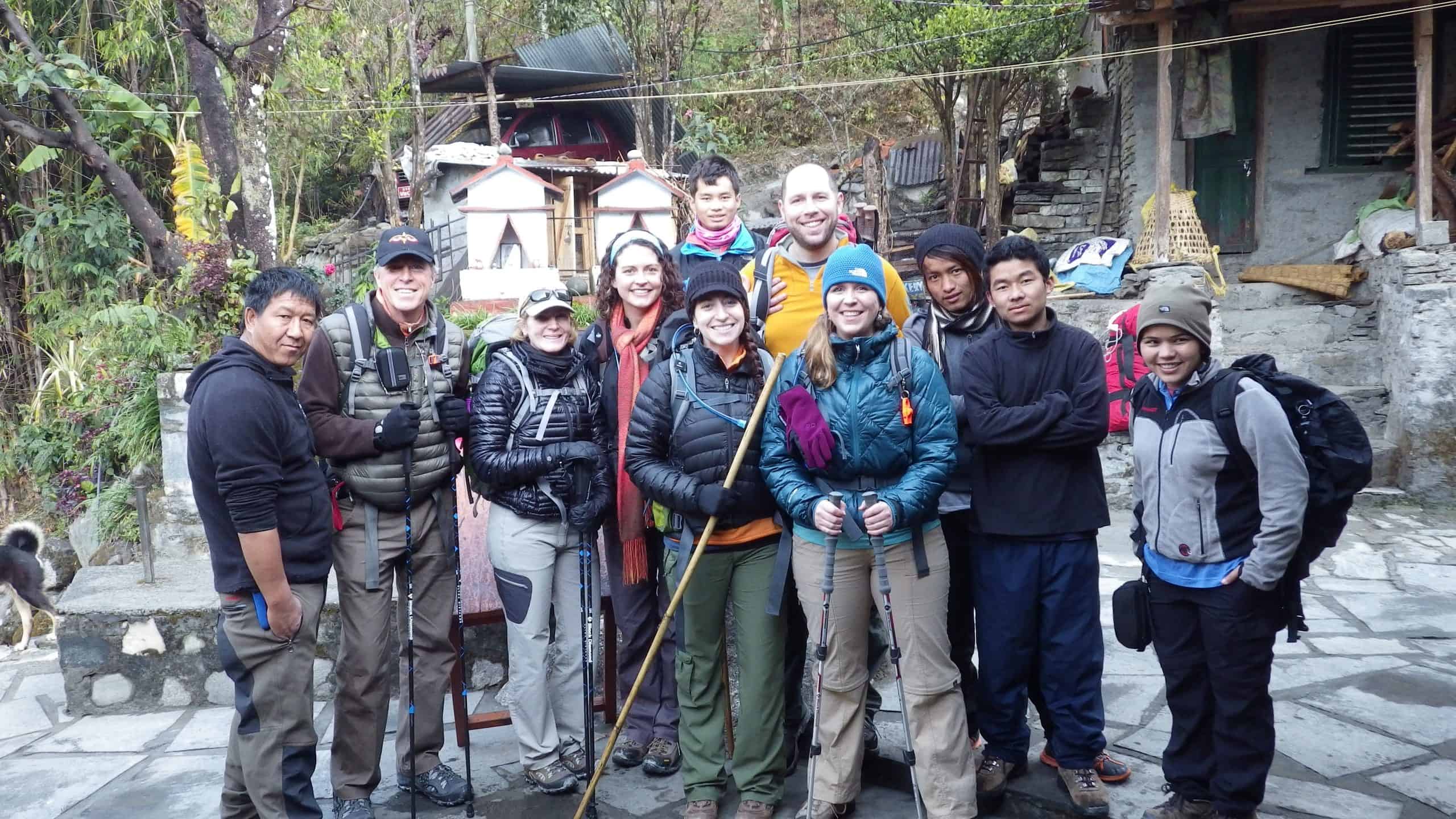
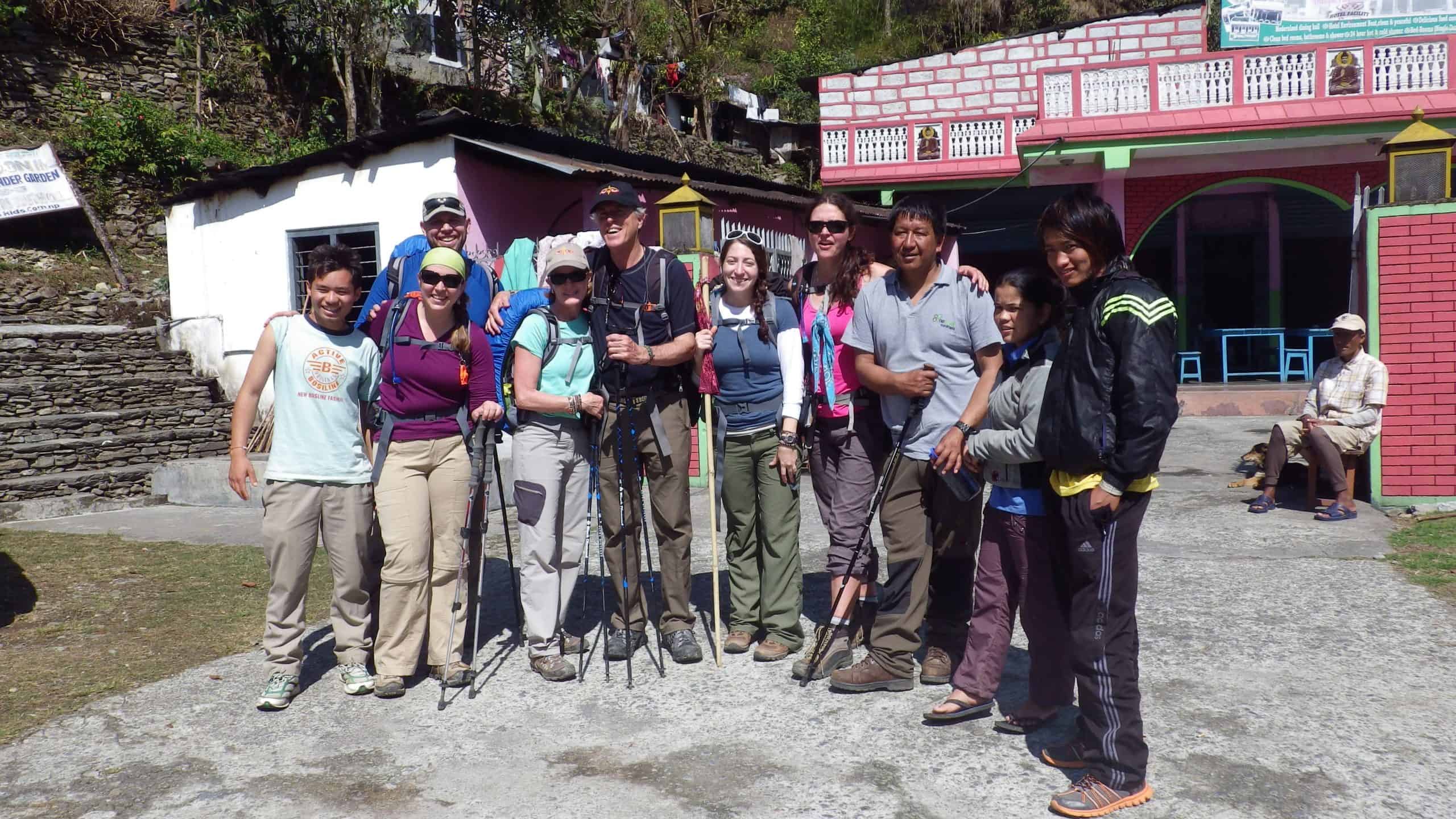
We started the day with a “before” photo of our trekking crew at the trailhead. The route covered 6 miles and took us about six hours, with a steady 3-hour climb through jungle and rice terraces in the morning. We stopped for lunch at our first teahouse, then pushed on for another 3 hours along switchback trails to reach Ulleri, where we collapsed into our beds at the Meera Guesthouse.
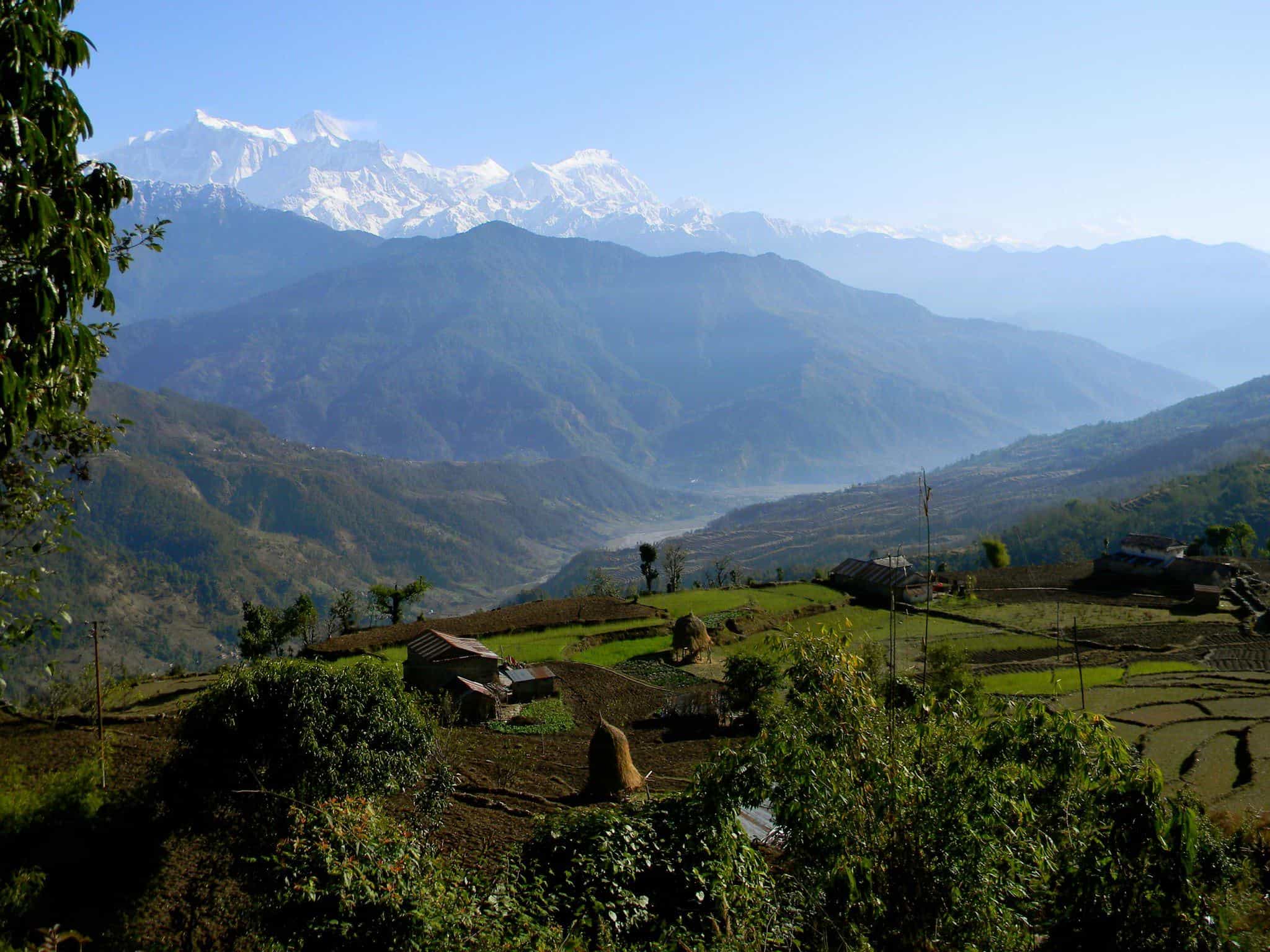
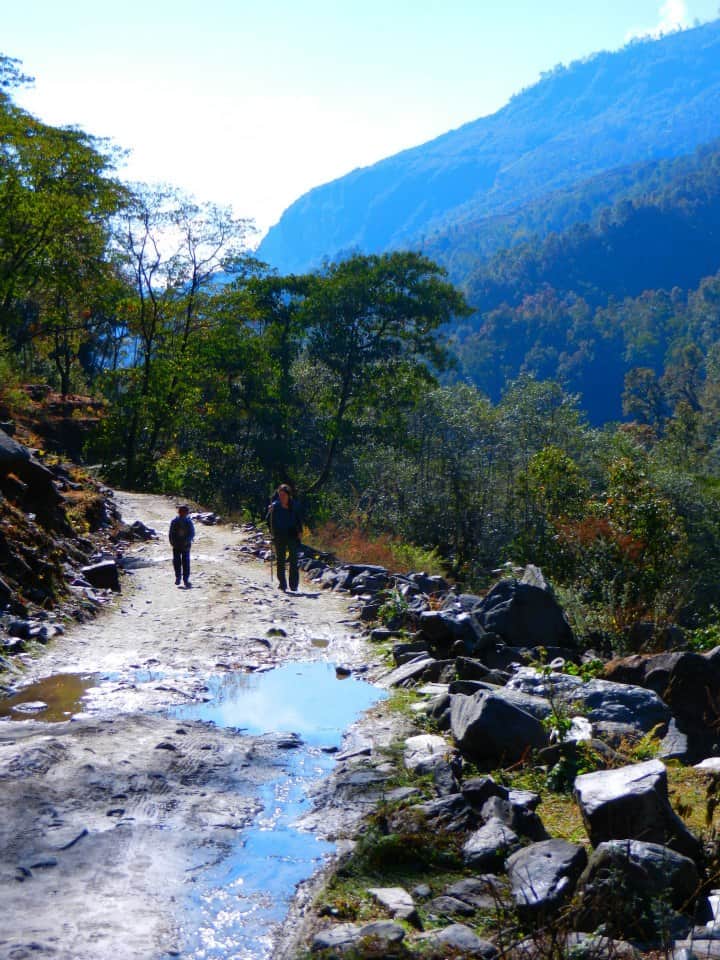
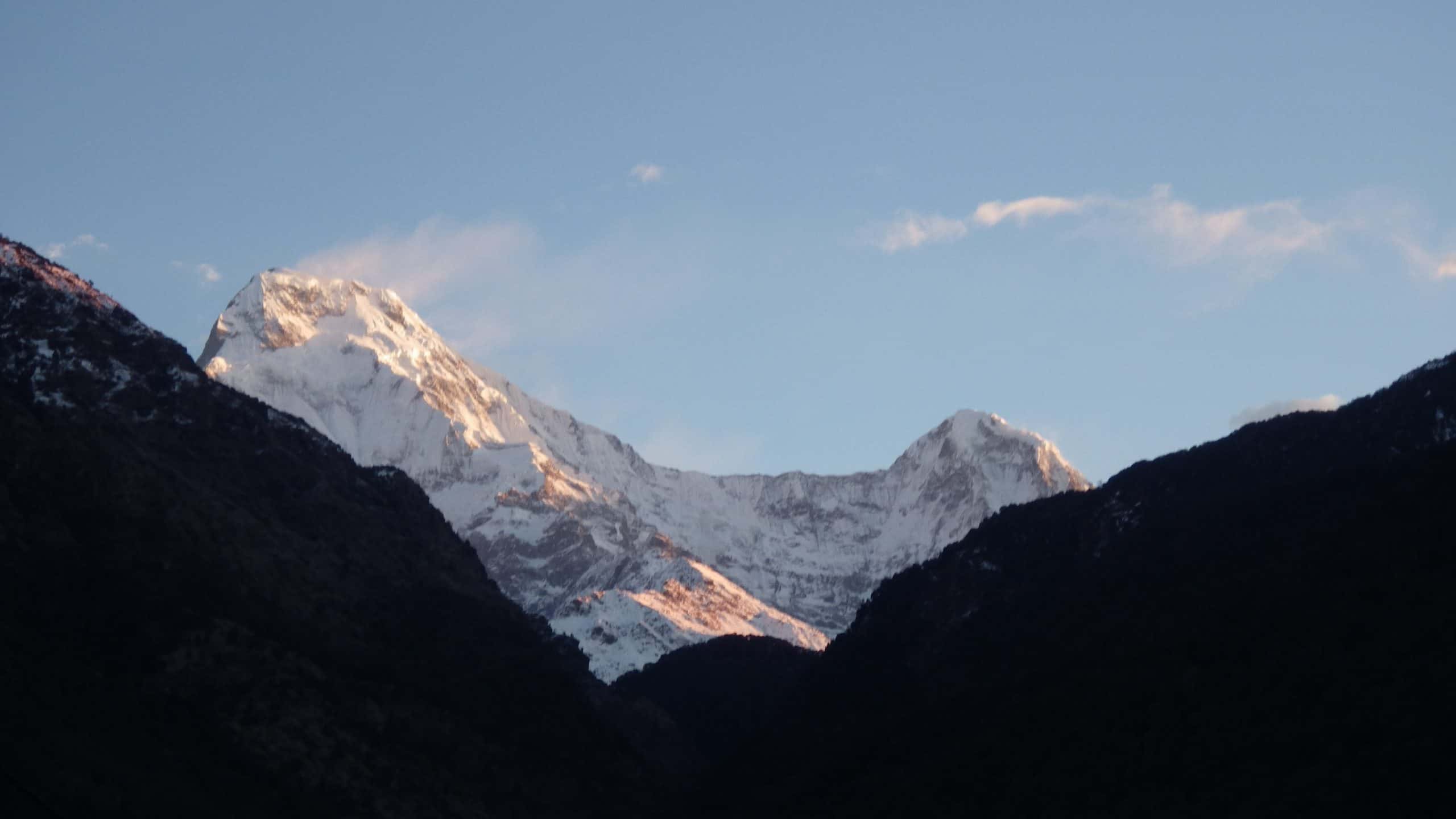
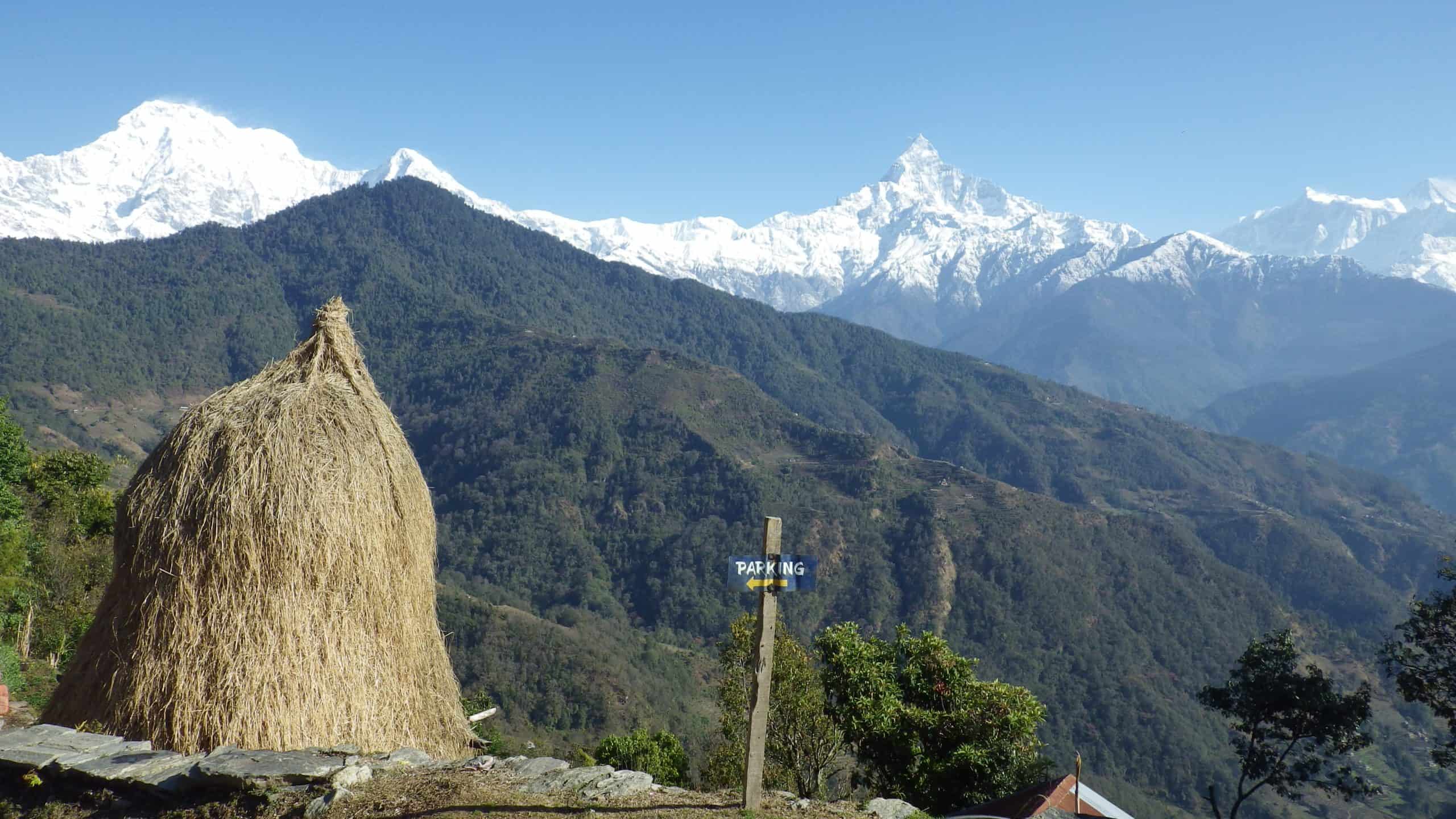
That first day, we climbed over 3,000 feet to an altitude of 6,430 feet. Two moments stood out: first, walking side-by-side with a young boy heading to school, a several-mile trek he made multiple times a week for the sake of education. Second, catching our first views of the snowcapped Annapurna peaks at day’s end.
Day 3-4: Hiking from Ulleri to Ghorepani
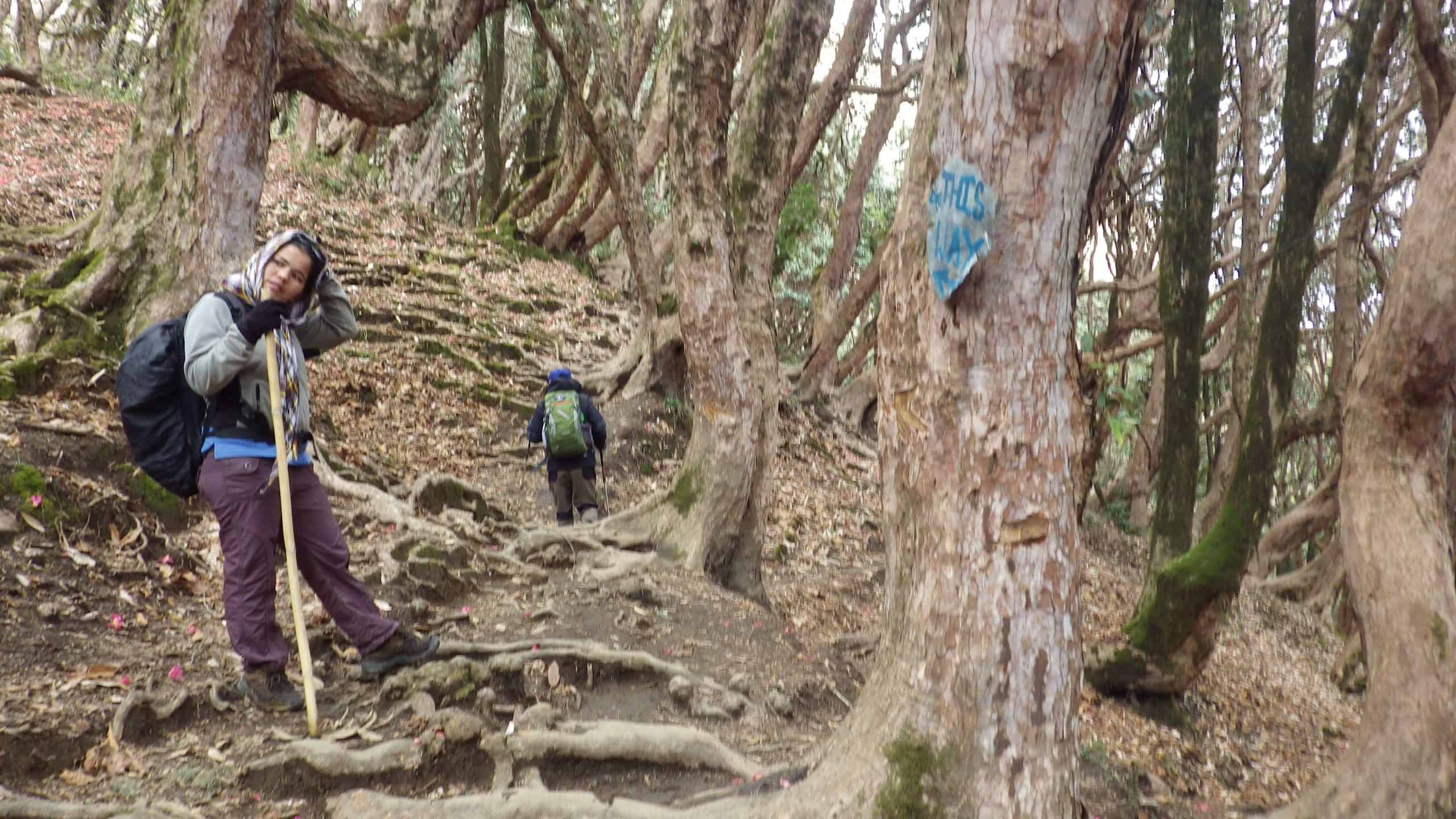
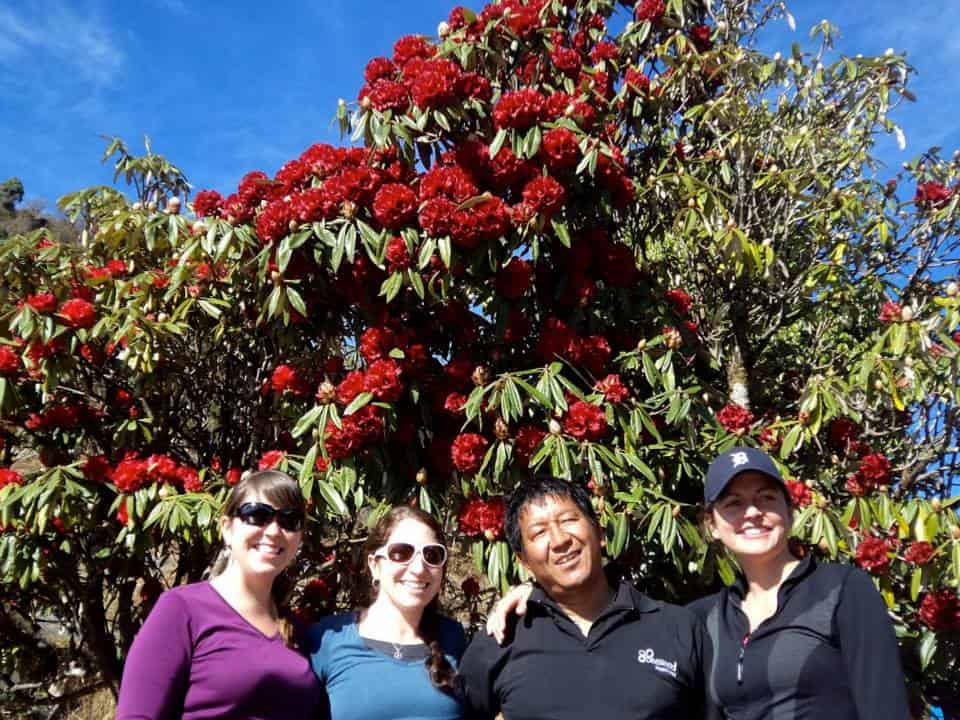
Our OneSeed team rose early to prep filtered water and snacks for what was expected to be the most challenging day of the trek. We climbed another 3,000 feet over 6-miles and 6 hours, ascending through a landscape that changed dramatically. Starting with flowering rhododendron trees in pinks and whites and ending with snow-covered trails as we gained elevation.
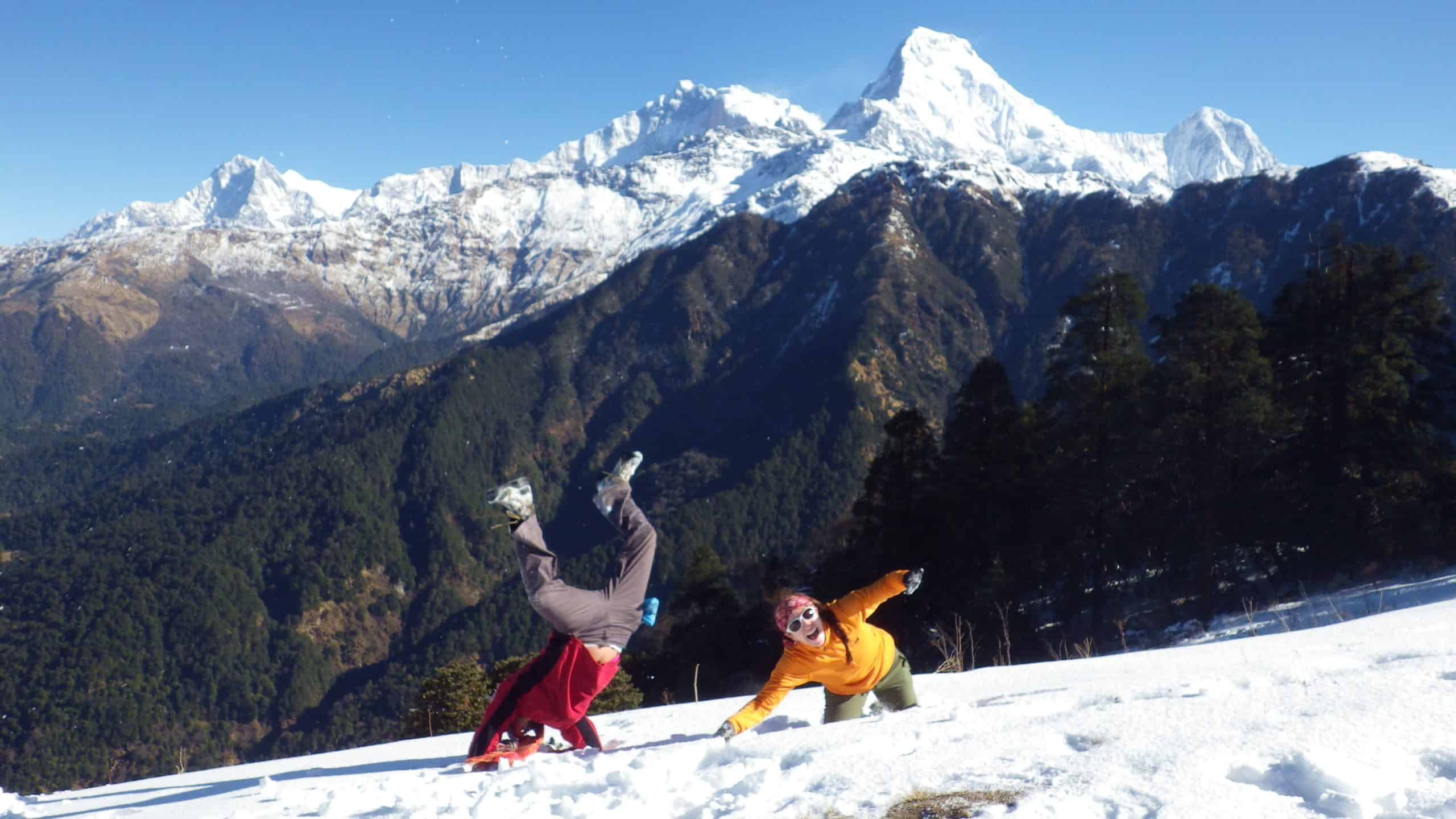
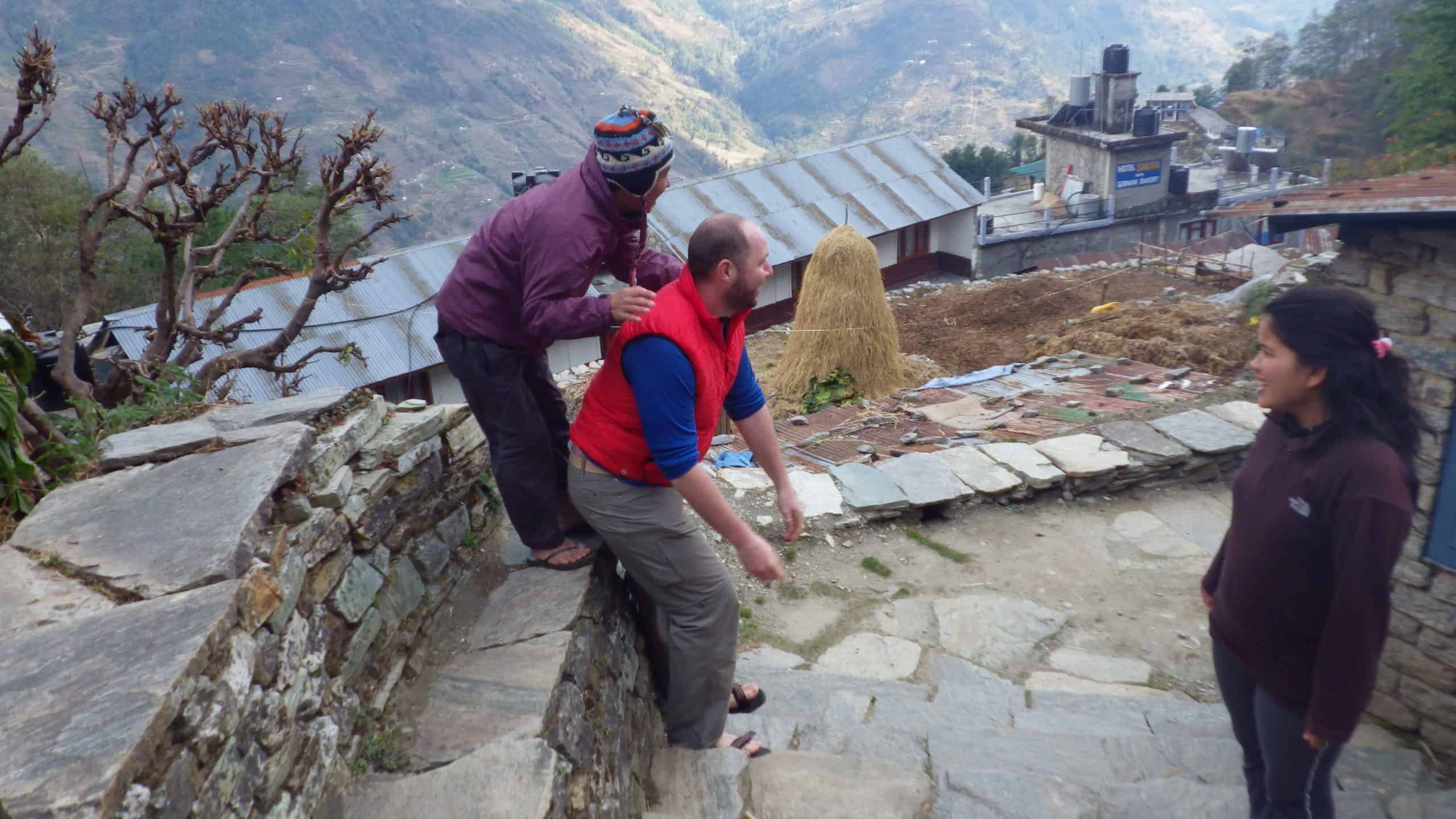
One of our GITs, Lal, had never seen snow before. We took a moment to throw snowballs and enjoy the novelty together. Definitely a highlight of the trip. By the time we reached Ghorepani, the snow was ankle-deep. The Sunny Hotel, complete with plywood walls and an actual internet connection (the only one we would get on the trail), felt like a luxury.
Day 4: Hiking from Ghorepani and Poon Hill
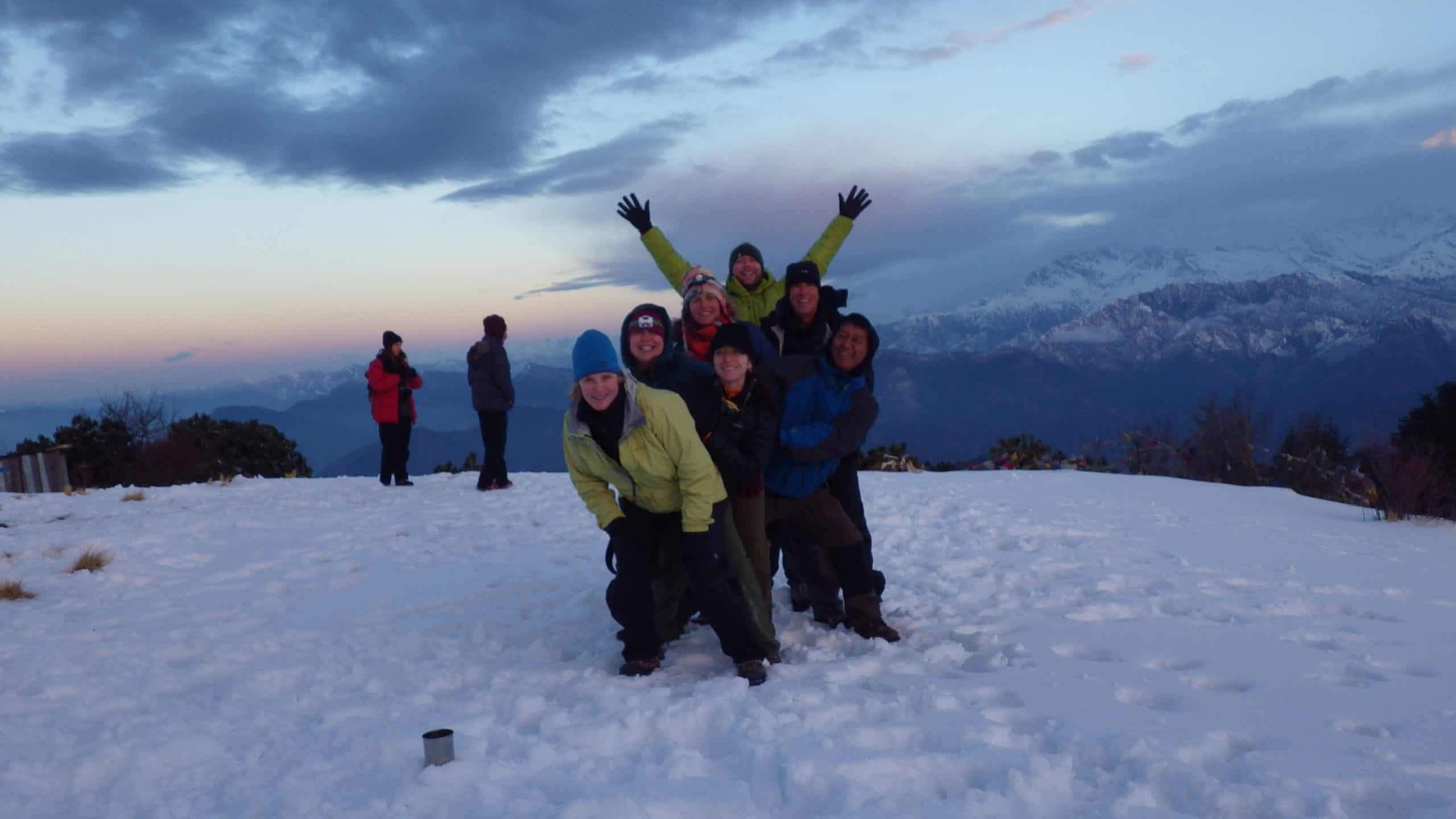
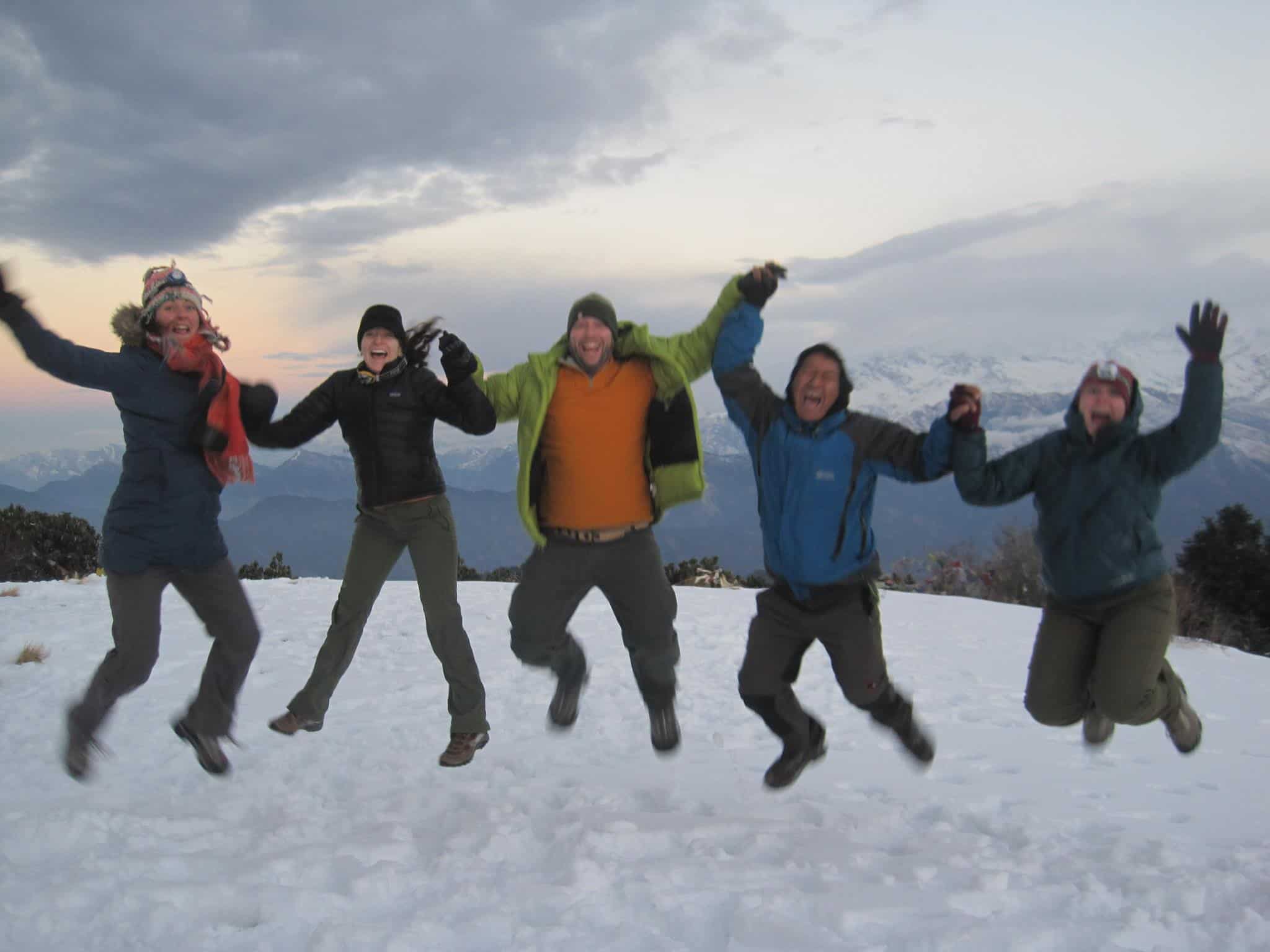
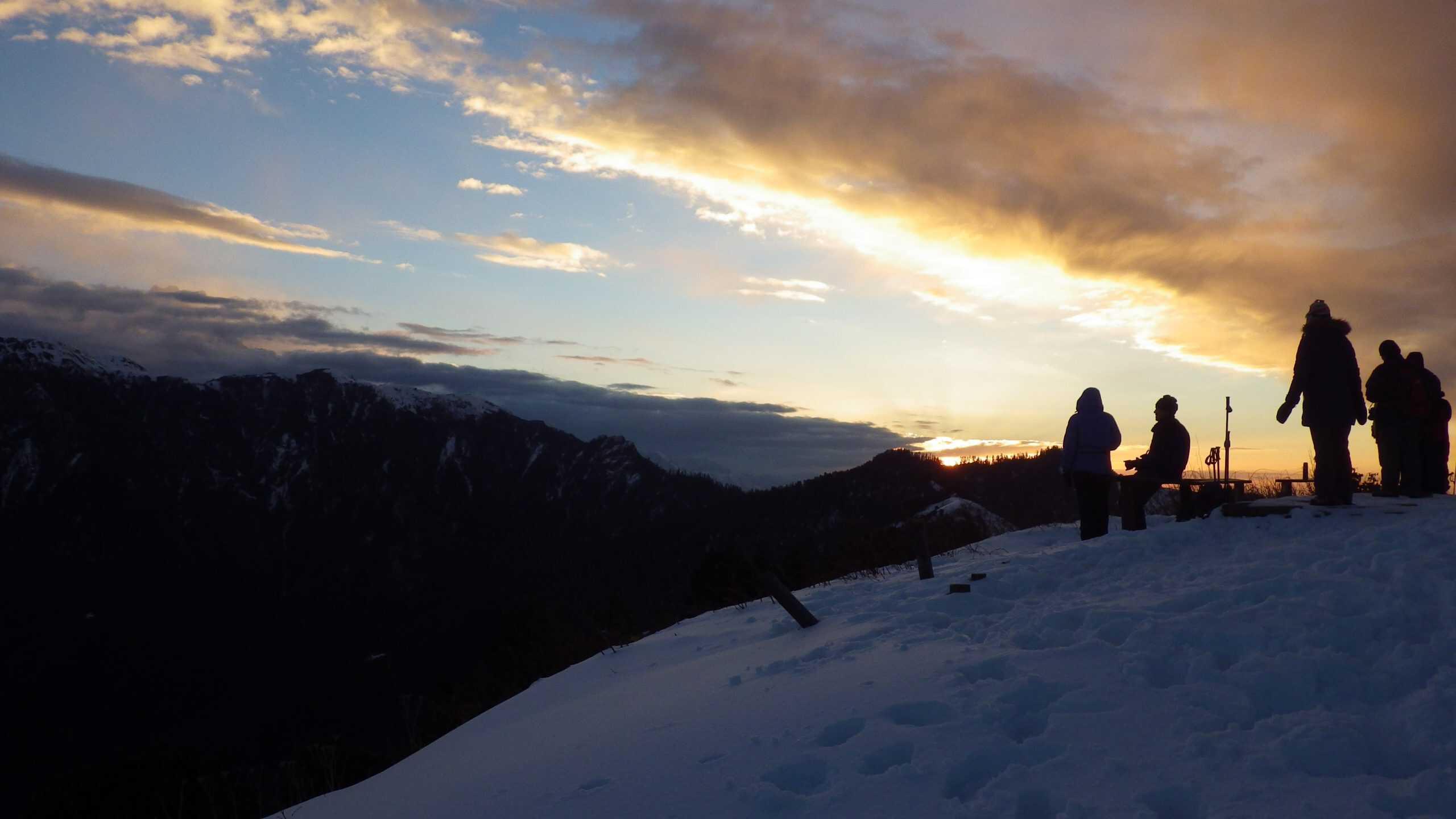
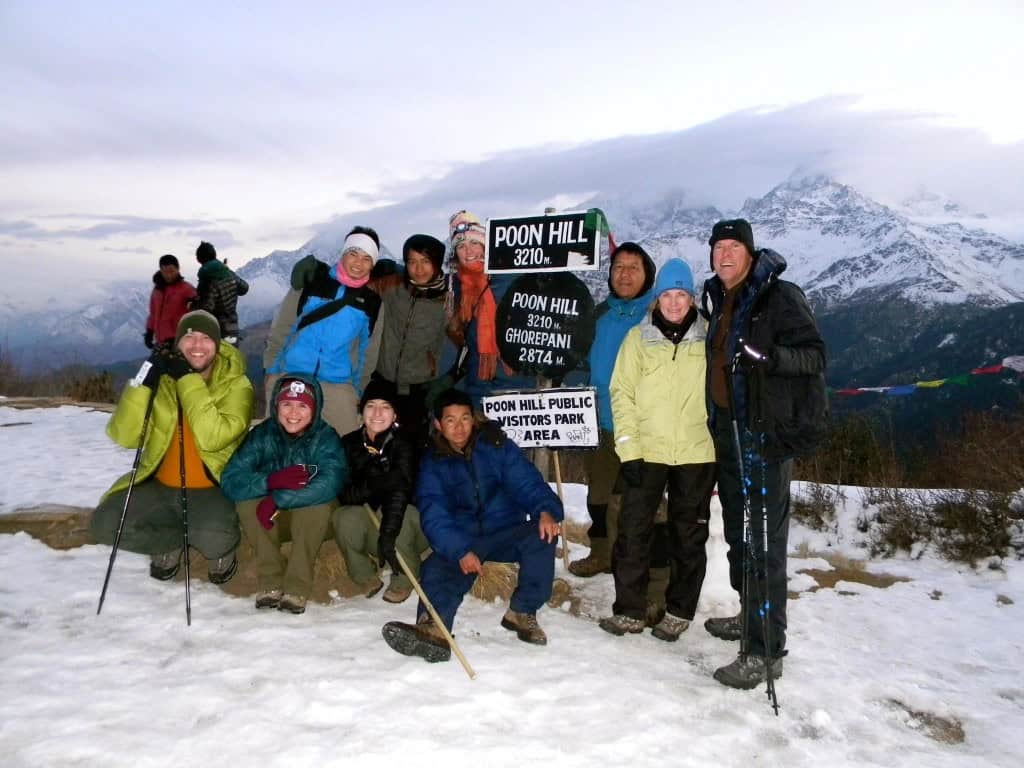
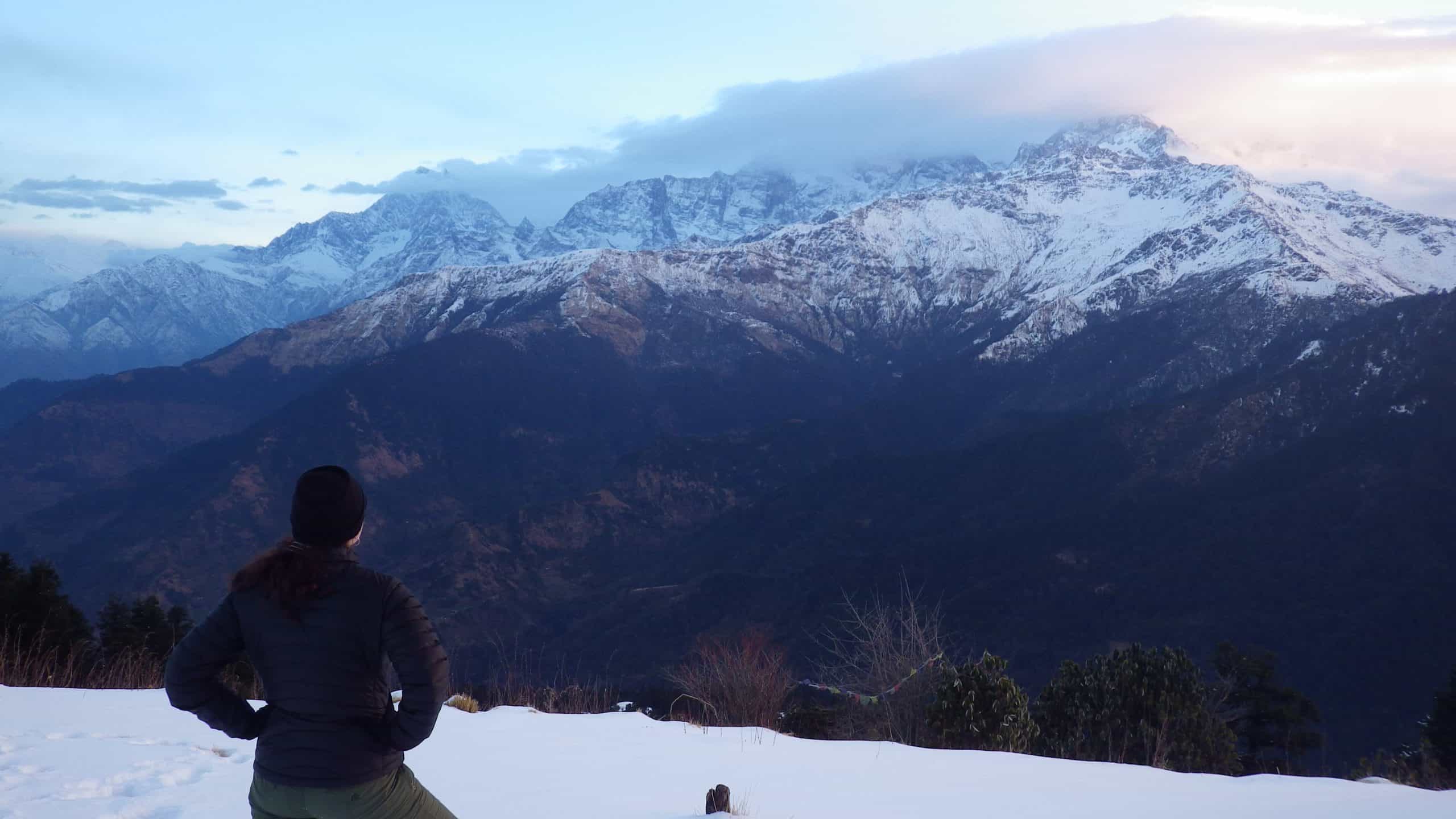
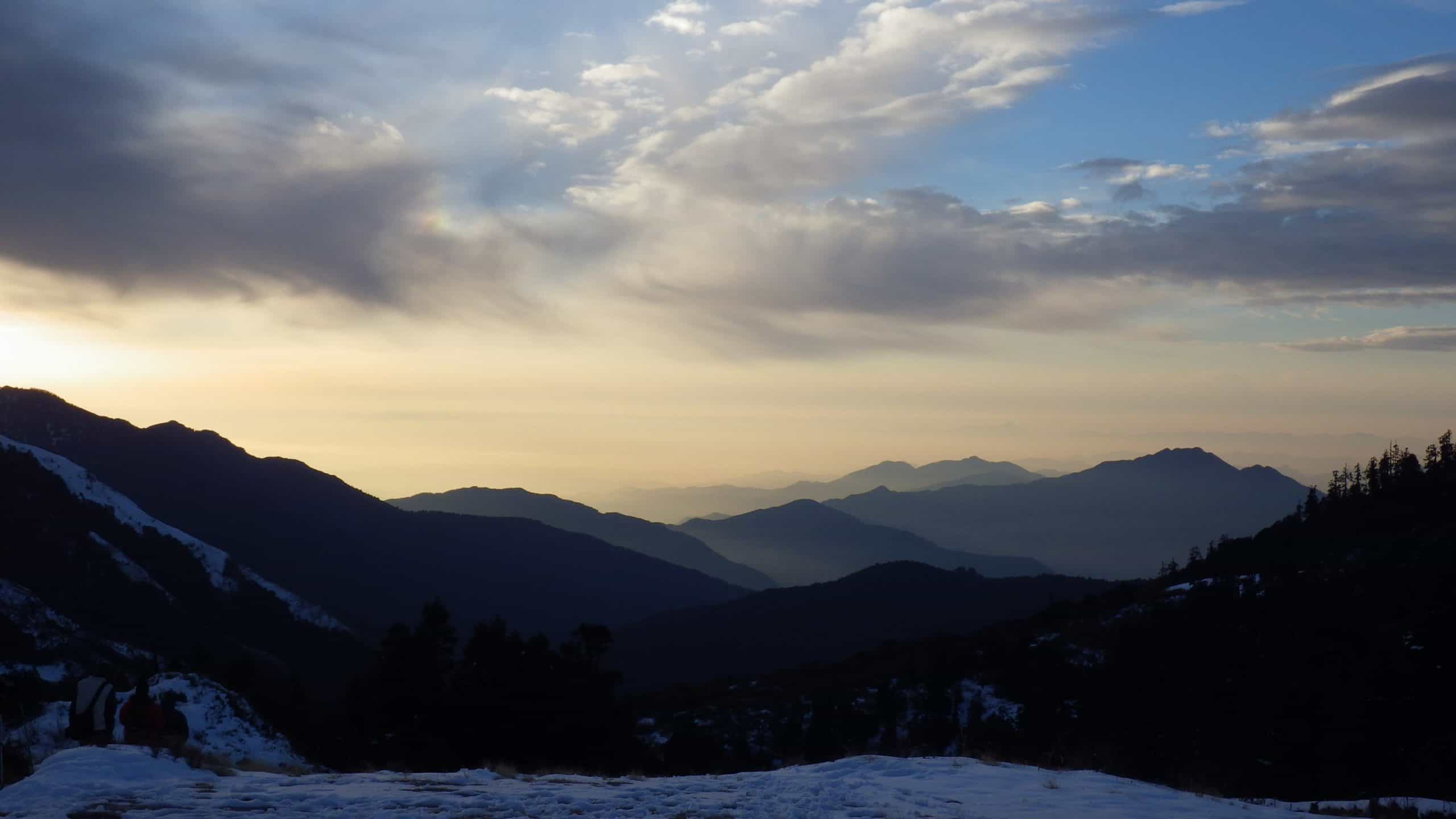
Day four started before dawn as we set out with headlamps firmly in place to hike the narrow paths to our highest elevation of the trek, Poon Hill at 10,532 feet. What got us up at 4:00 AM after two long days of hiking, you ask? The desire to watch a true Himalayan dawn break, which to this day is the most spectacular sunrise I have ever seen. Words and photos fall short. I carry the memory of it like a treasure.
Back at the hotel, we savored a well-earned breakfast and spent the rest of the day resting in Ghorepani, reconnecting with family online and conserving our energy for the longest day of trekking ahead.
Day 5: Hiking from Ghorepani to Tadapani
On day five, we followed the mountain ridge east and descended nearly 1,000 feet over 8 miles in 8 hours. The trails were still slick with snow, making the descent slow and careful.
One of the most memorable parts of the day was sharing the trail with resilient Nepalese mountain women carrying heavy loads in baskets balanced on their heads. A few were wearing only cloth on their feet to grip the slippery paths. I still think back on this experience every time I donate my hiking boots to locals after a trekking excursion.
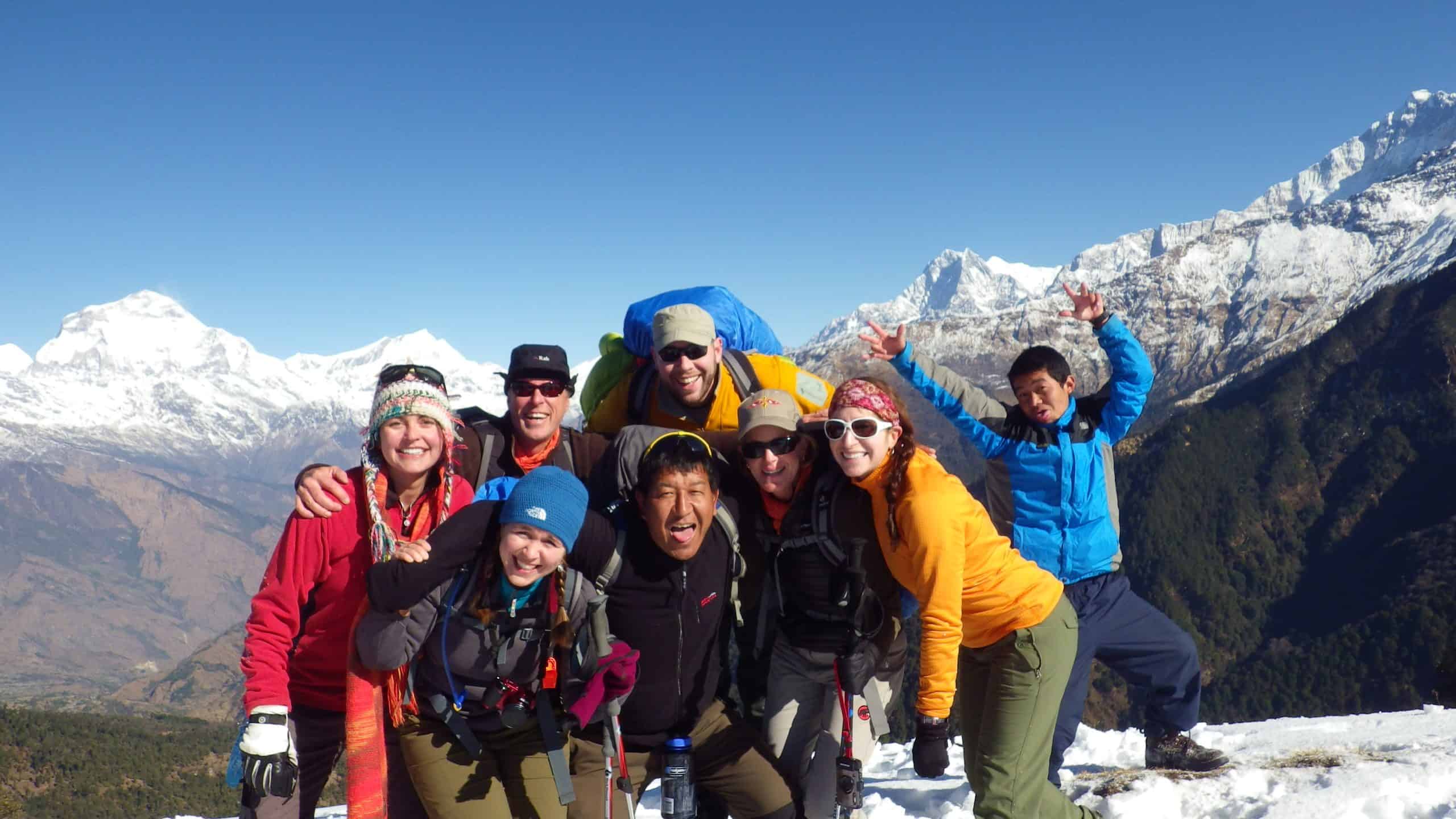
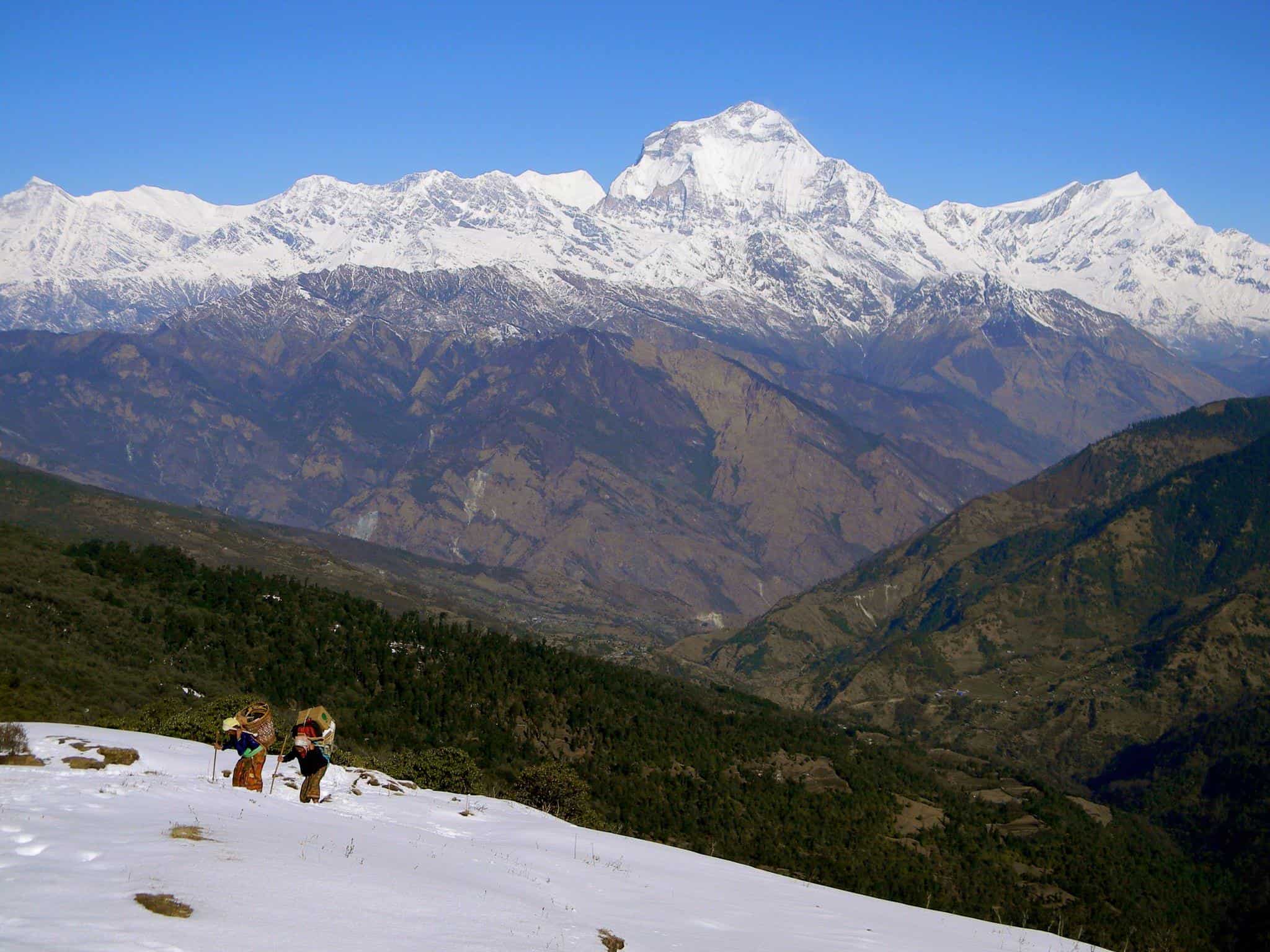
By the end of the trail on day 5 we left the snow behind us, though we could still see the capped mountains far in the distance. Little did I know, sitting in our tea house enjoying a well-deserved dinner, that this night would prove to be the most memorable night I spent on the trail.
Day 5-6: Bonus Nightly Adventures
I woke early, probably around 3 AM with an urge to go (the ginger lemon honey tea was hard to resist the evening before). So, I get out of bed to go to the shared restroom at the opposite end of the open courtyard. Unfortunately, on my way there I noticed a sizeable spider in the door frame of my room. I have a serious case of arachnophobia, and it took every ounce of courage not to wet myself as I made a comical running leap through the doorway.
As I took care of business I fretted over how I would get back into my room. Upon my return however, I found the spider was gone. Well, in my mind the spider was now snuggled securely in my sleeping bag and honestly, as far as I was concerned it owned the bag and the room for all I cared. There was no way I could go back into that room.
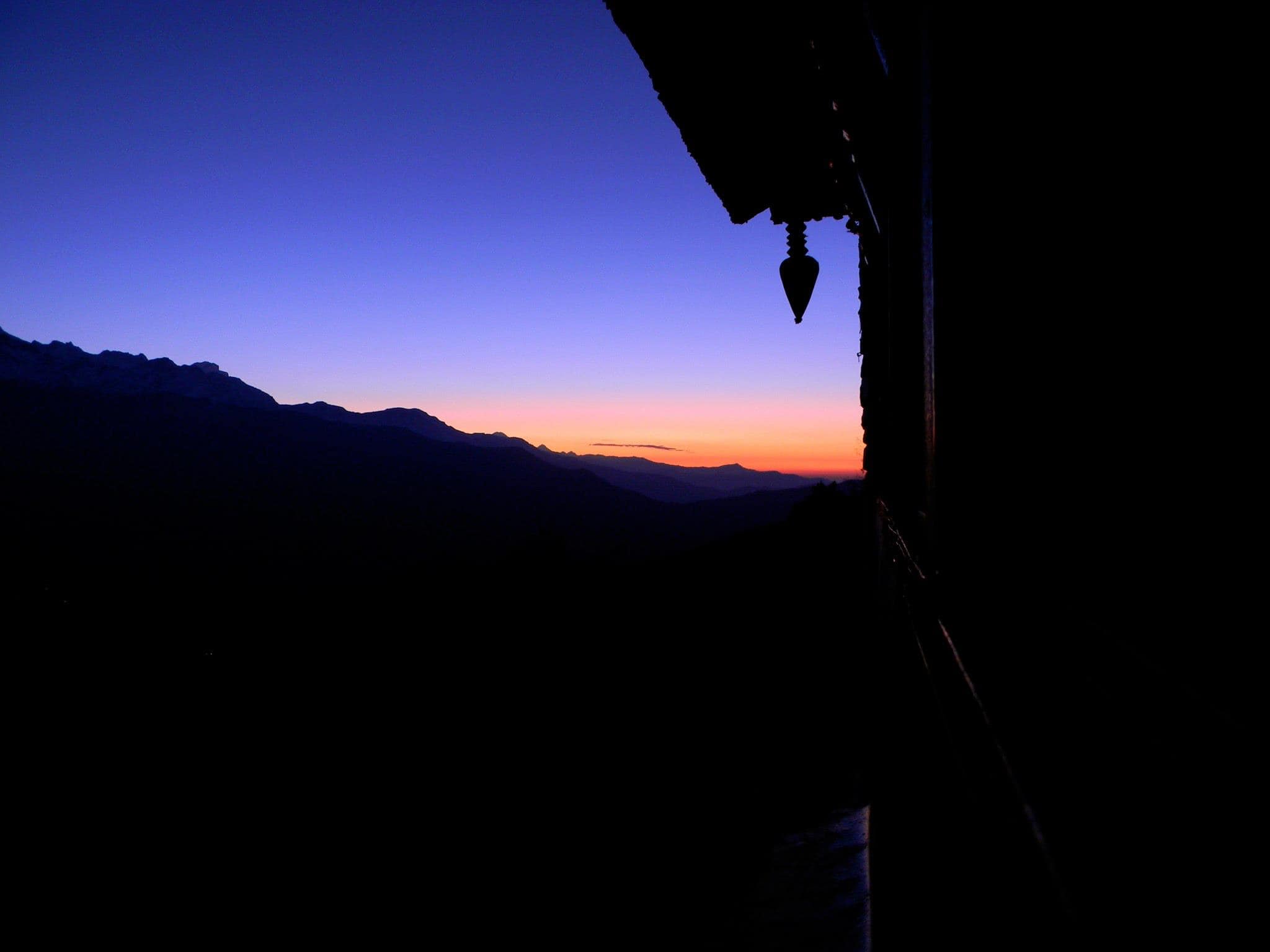
It was very cold, but my was resolve was steadfast. I nestled into a plastic lawn chair on the courtyard and was rewarded with one of the most magical experiences of my life—watching stars drift across the Himalayan sky, so crisp and bright they felt almost touchable. As dawn approached, the light crept over the dark ridges, highliting the mountain range, while the stars faded behind me. I may never feel that same sense of wonder again, but I truly hope I do.
Day 6: Hiking from Tadapani to Ghandruk
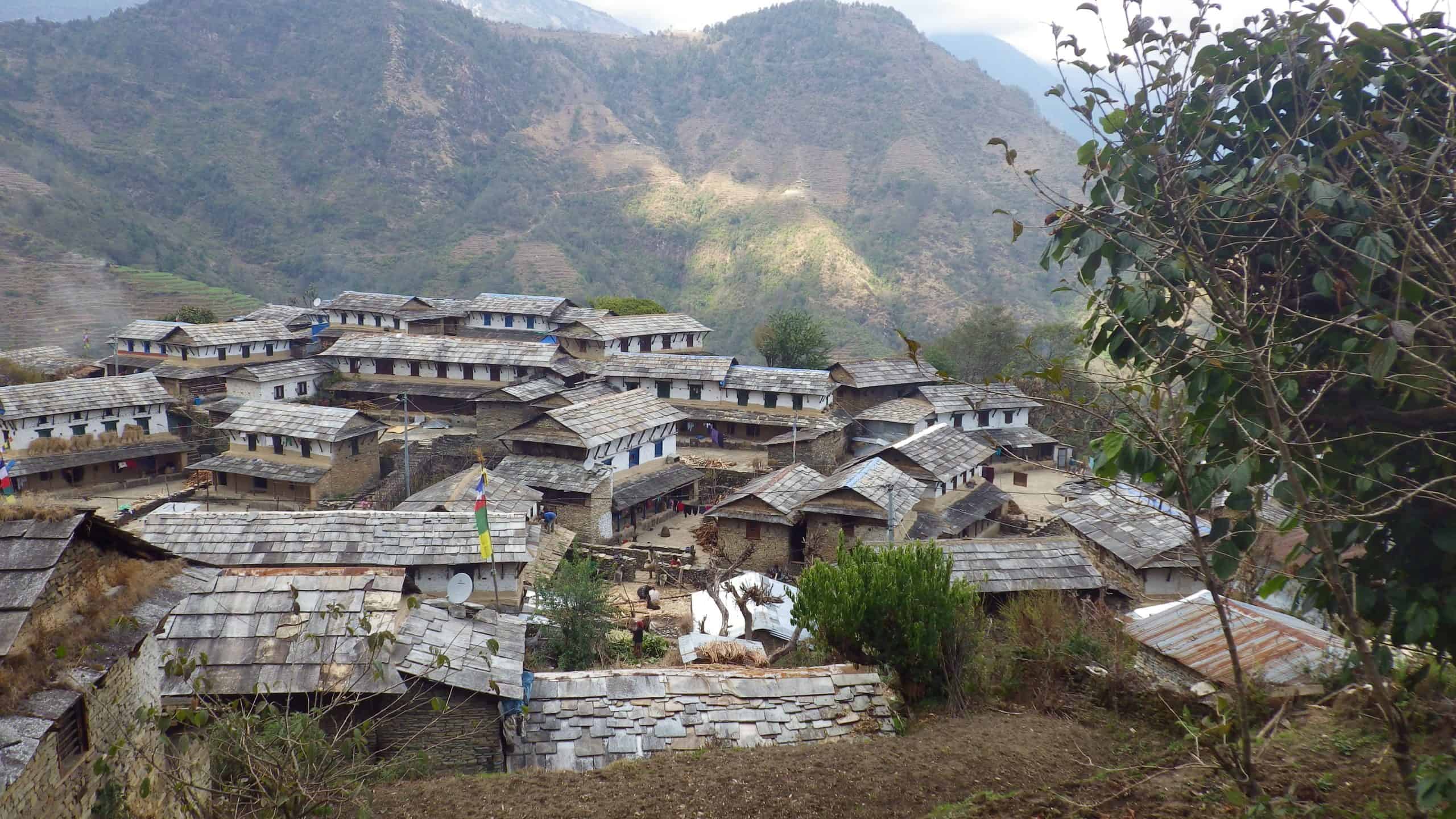
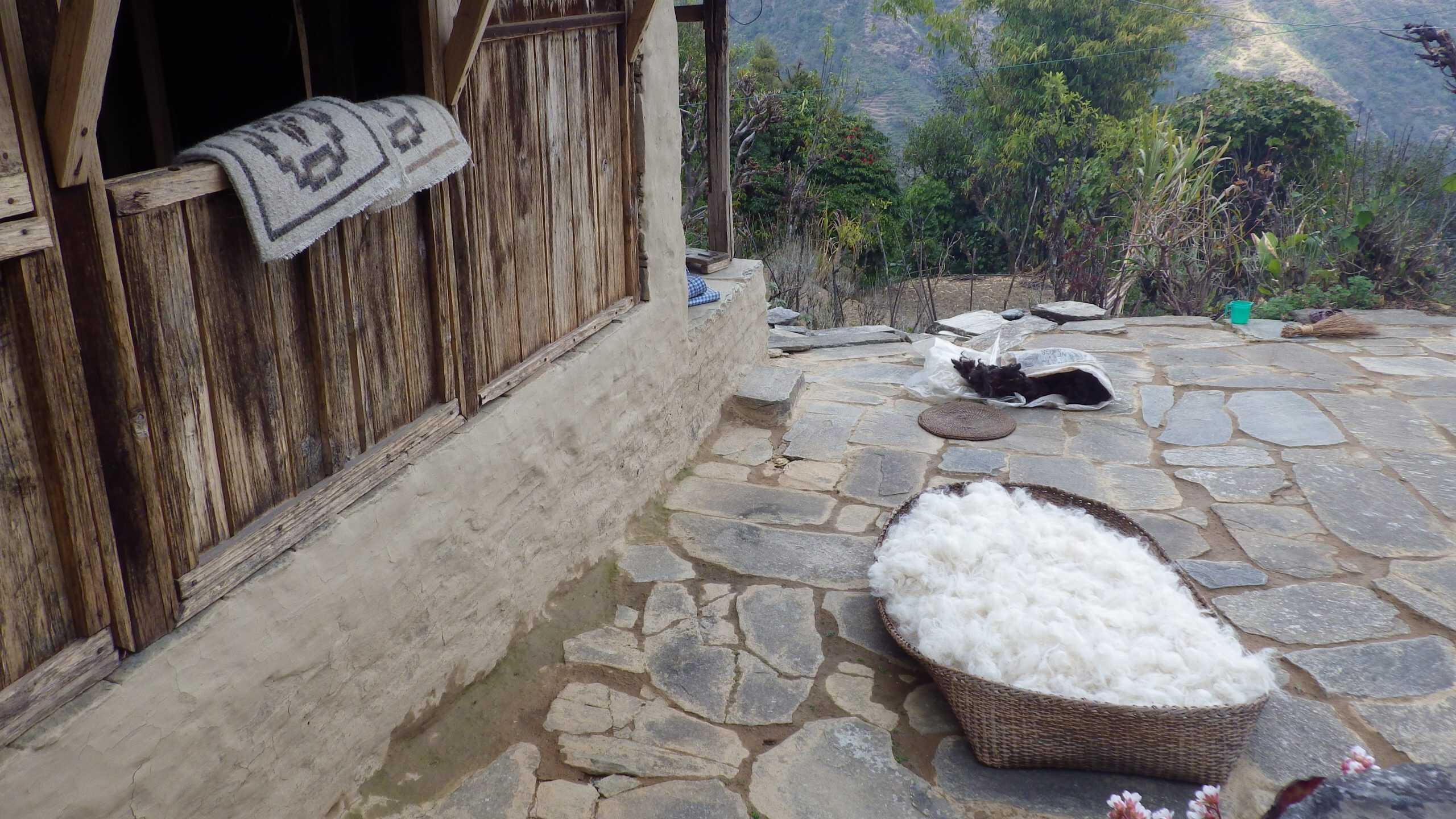
This was one of the shortest trekking days, just 2.5 miles over 4 hours on steep, stone stairways that challenged our knees. By early afternoon we arrived in Ghandruk, a peaceful village lost in time, with sweeping views mountain views.
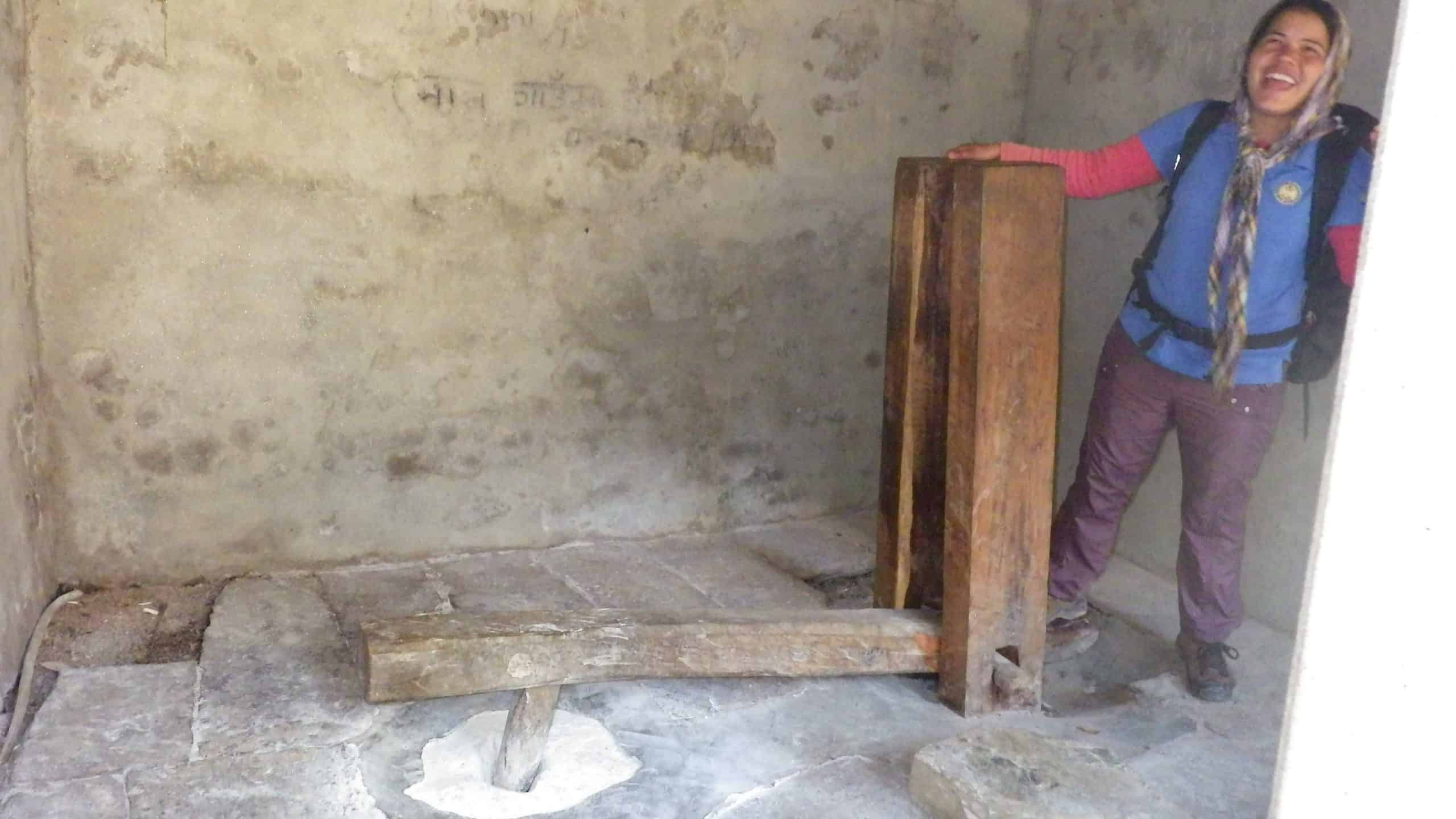
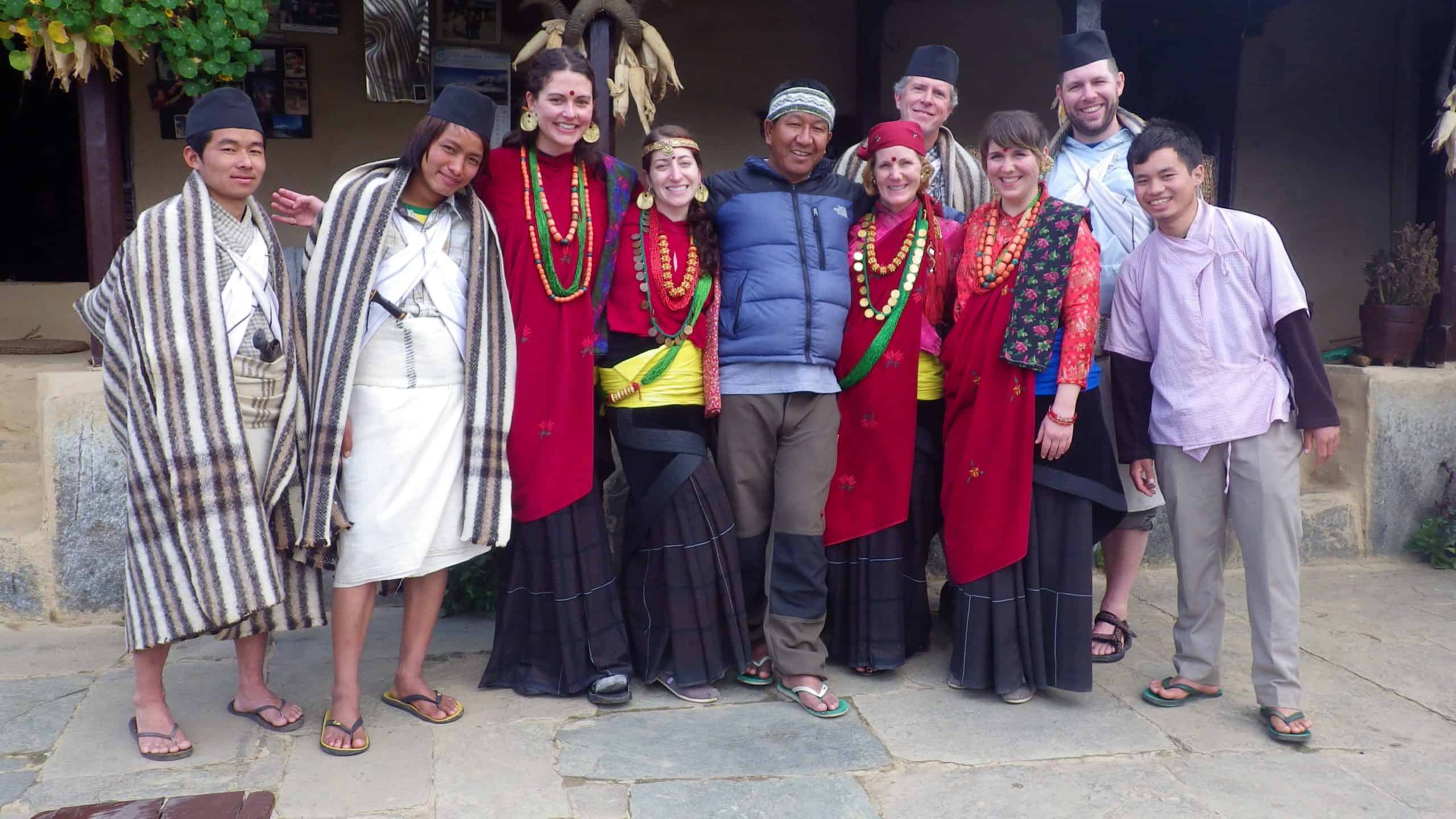
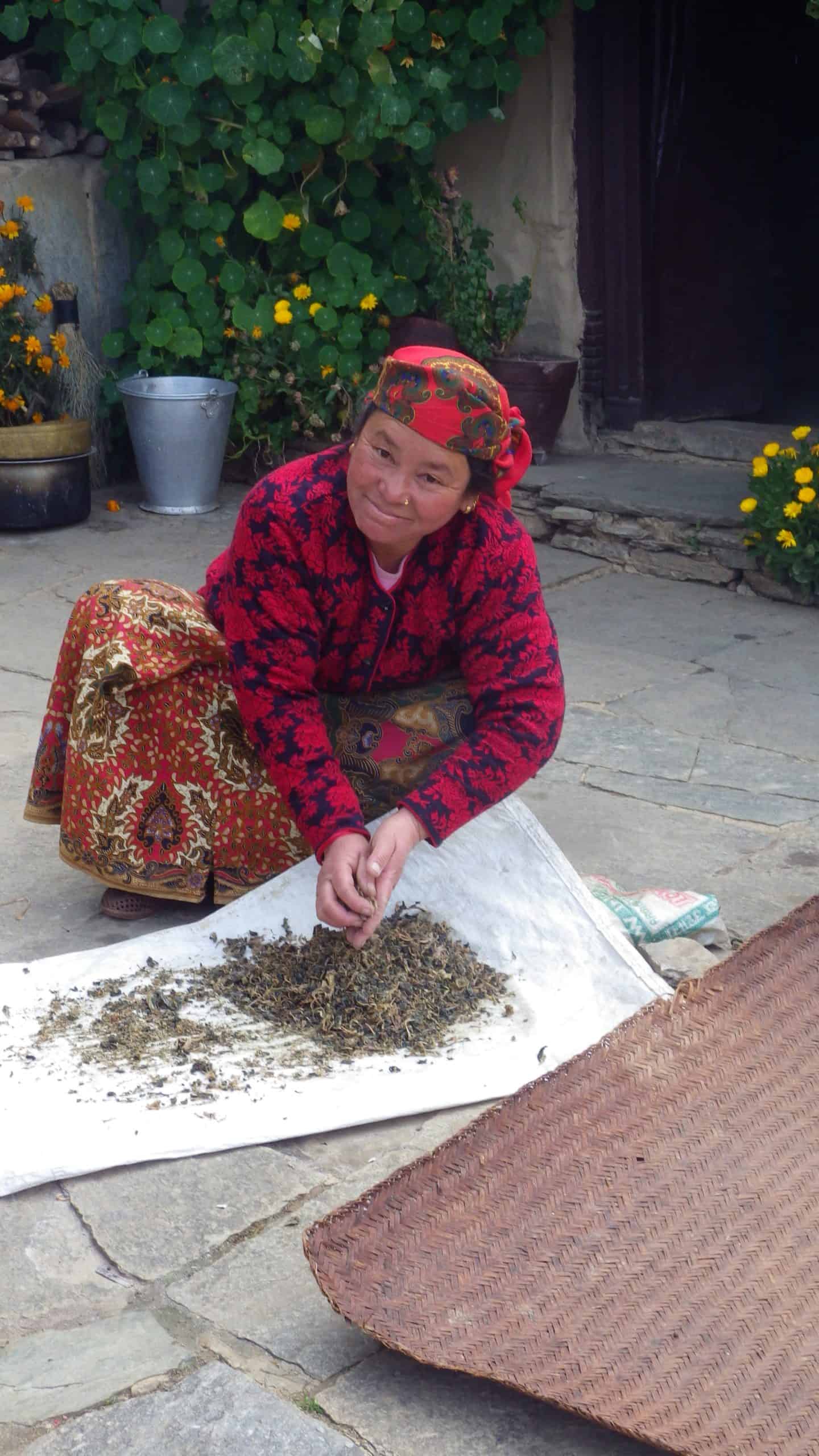
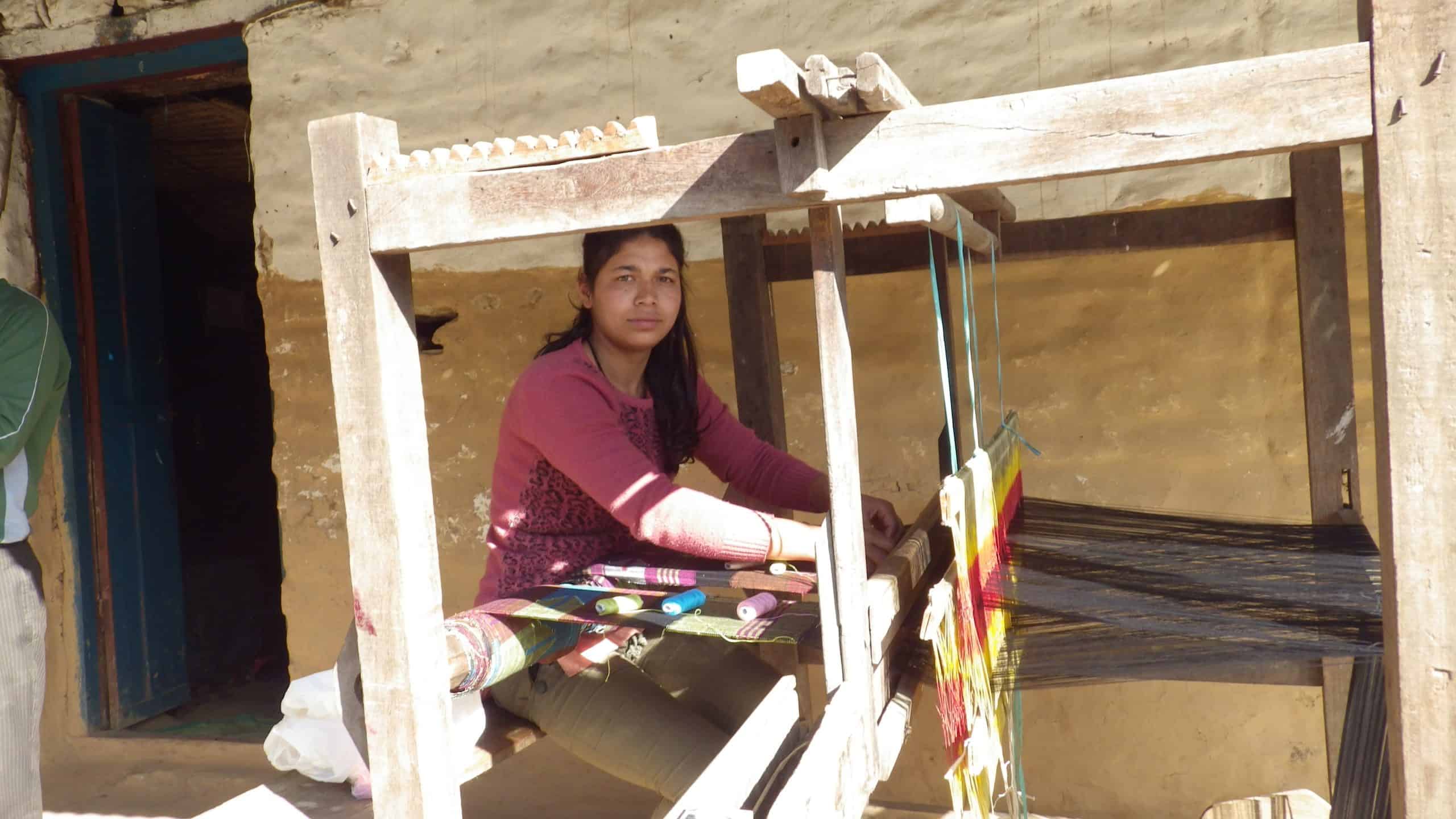
After a hearty lunch we explored the town, met locals from the Gurung community and learned about their fascinating heritage. We also got to dress in traditional garments and learned about their handmade crafts. After a relaxed afternoon, we slept soundly at Hotel Trekkers Inn, already dreaming of our next day’s adventure.
Day 7: Hiking from Ghandruk to Tolka
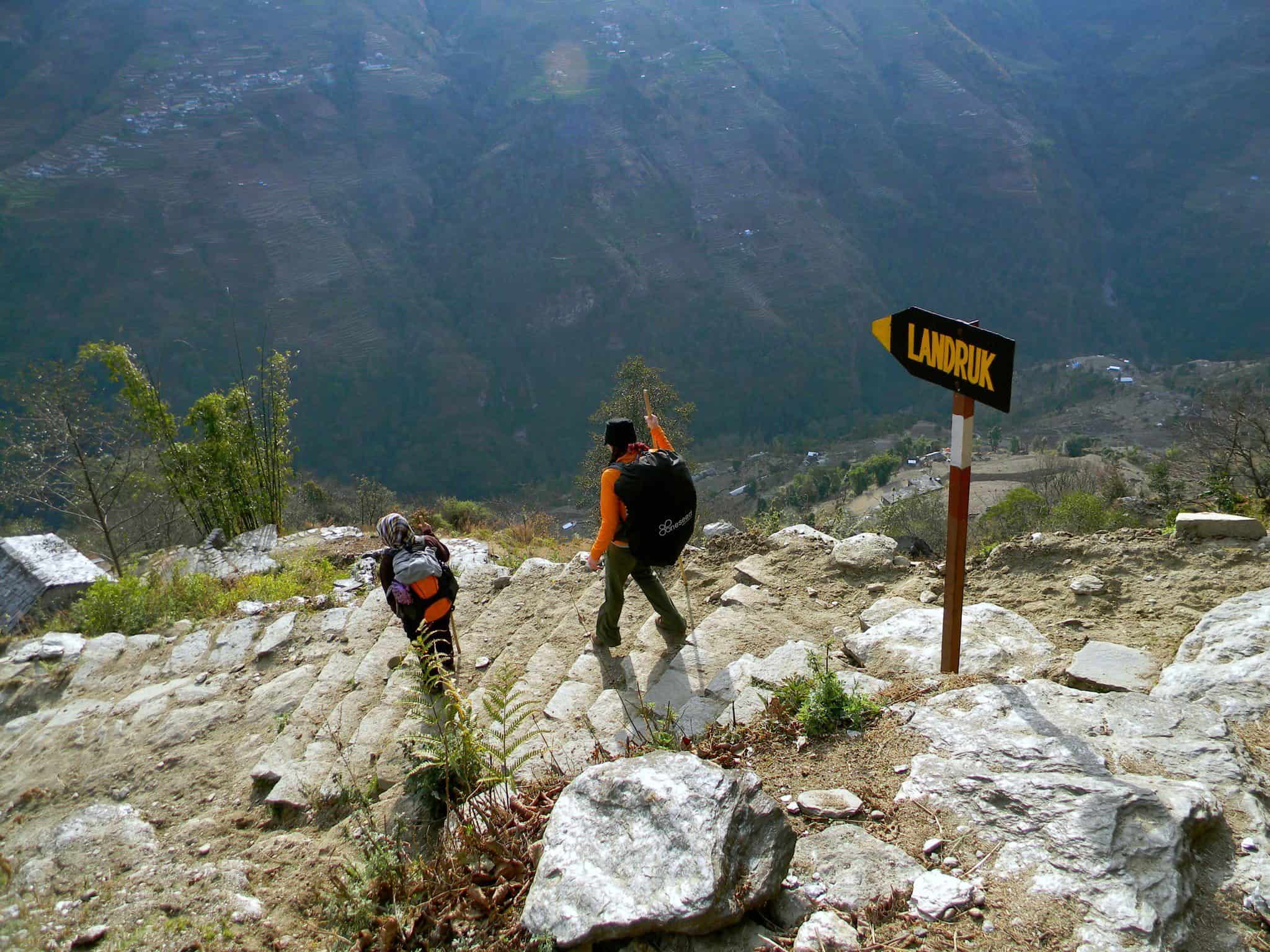
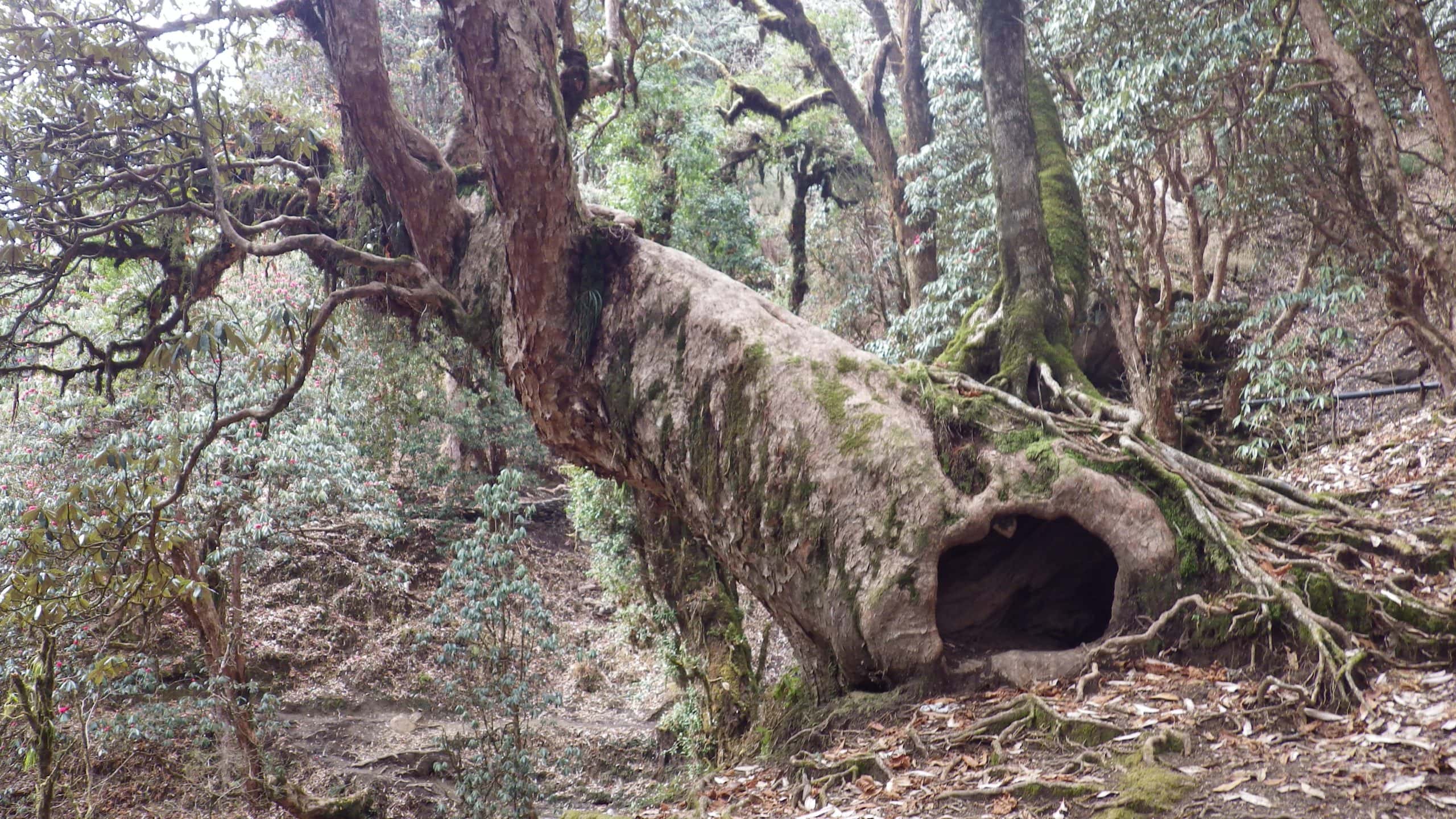
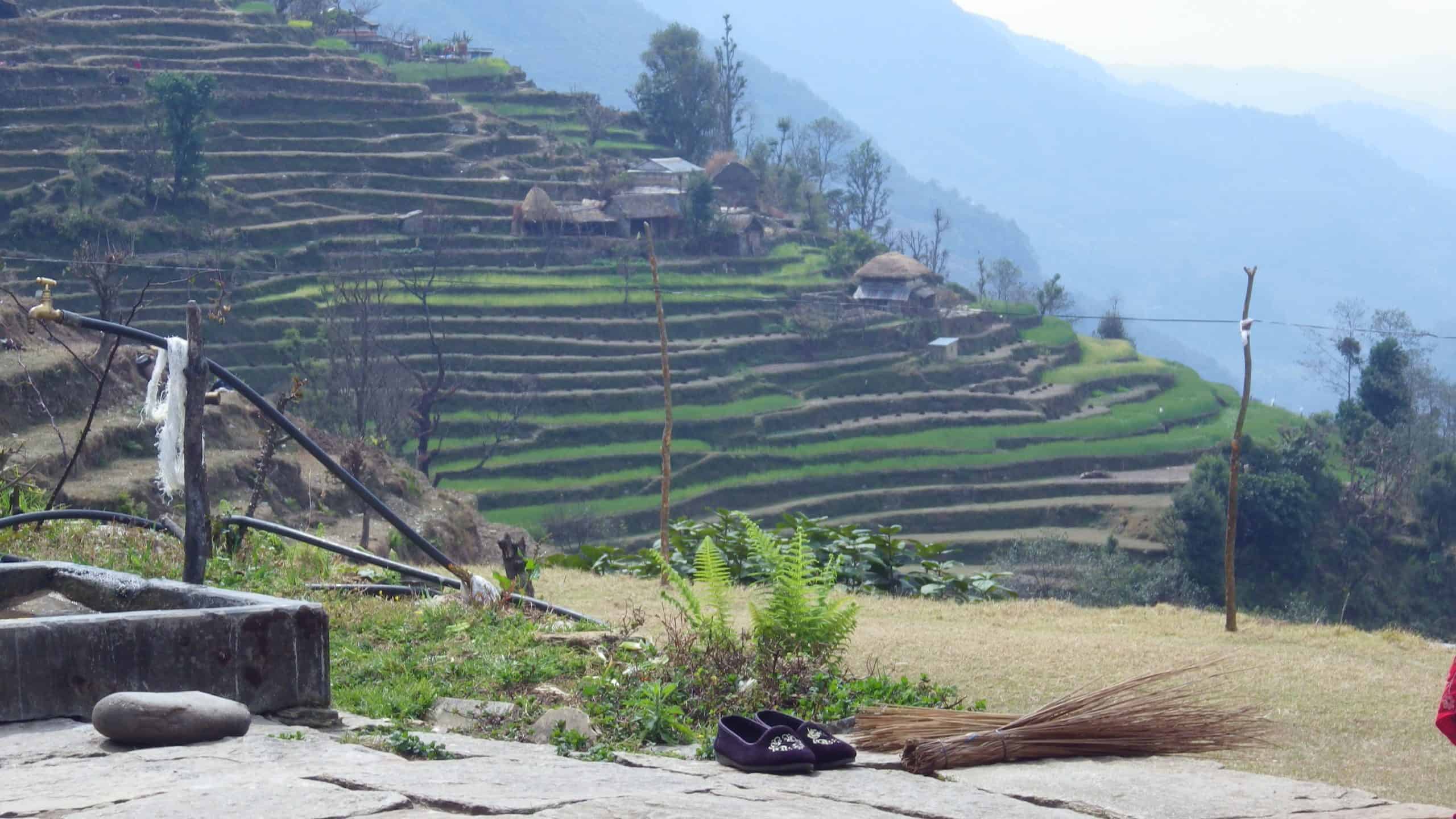
Our journey continued through storybook forests and terraced rice fields. We covered 6.5 miles in about 6 hours, stopping for lunch in the village of Landruk before reaching the charming town of Tolka. The tea house that night was warm, inviting, and filled with the quiet satisfaction that comes near the end of a long journey.
Day 8: Hiking from Tolka to Pothana
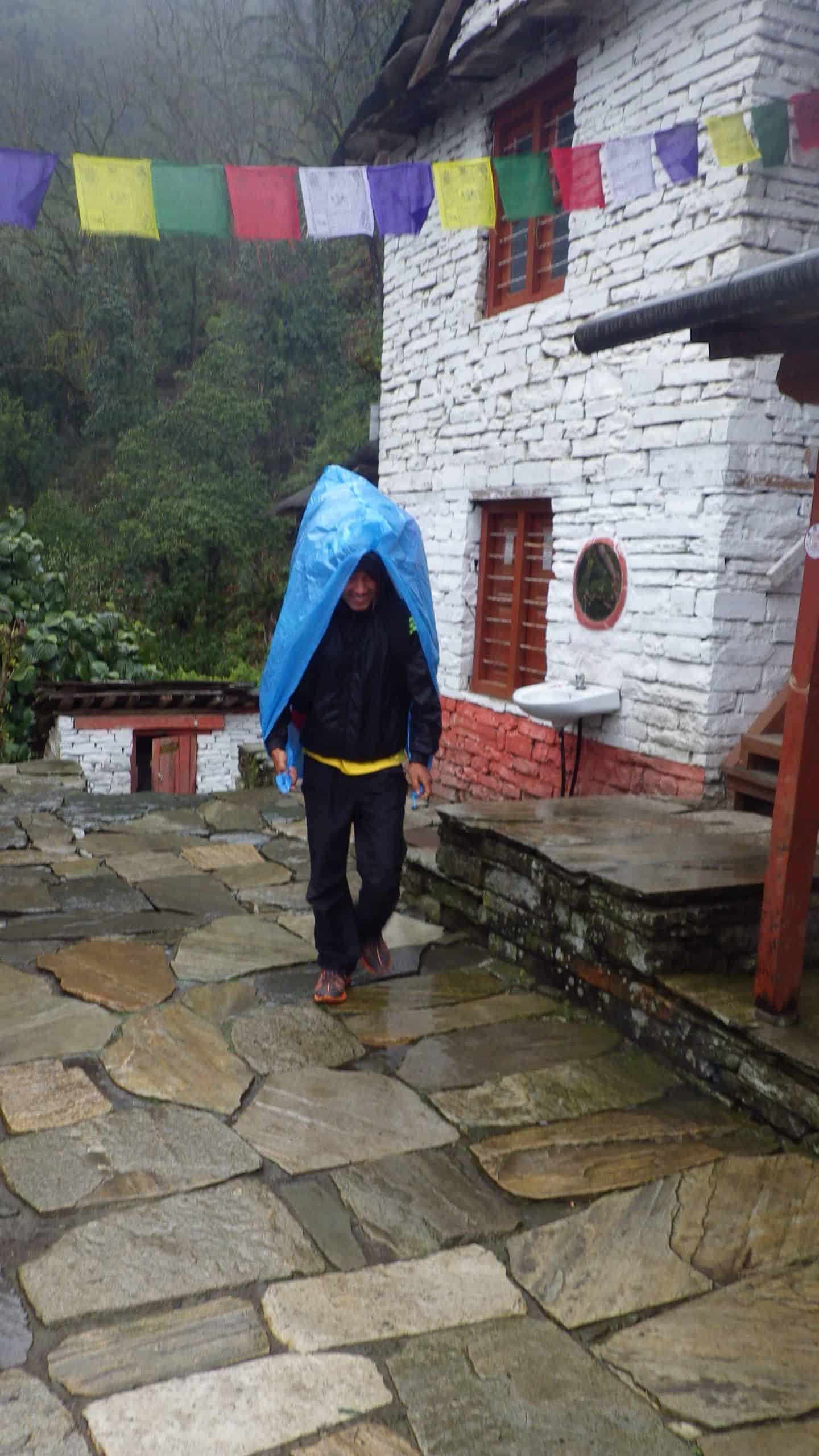
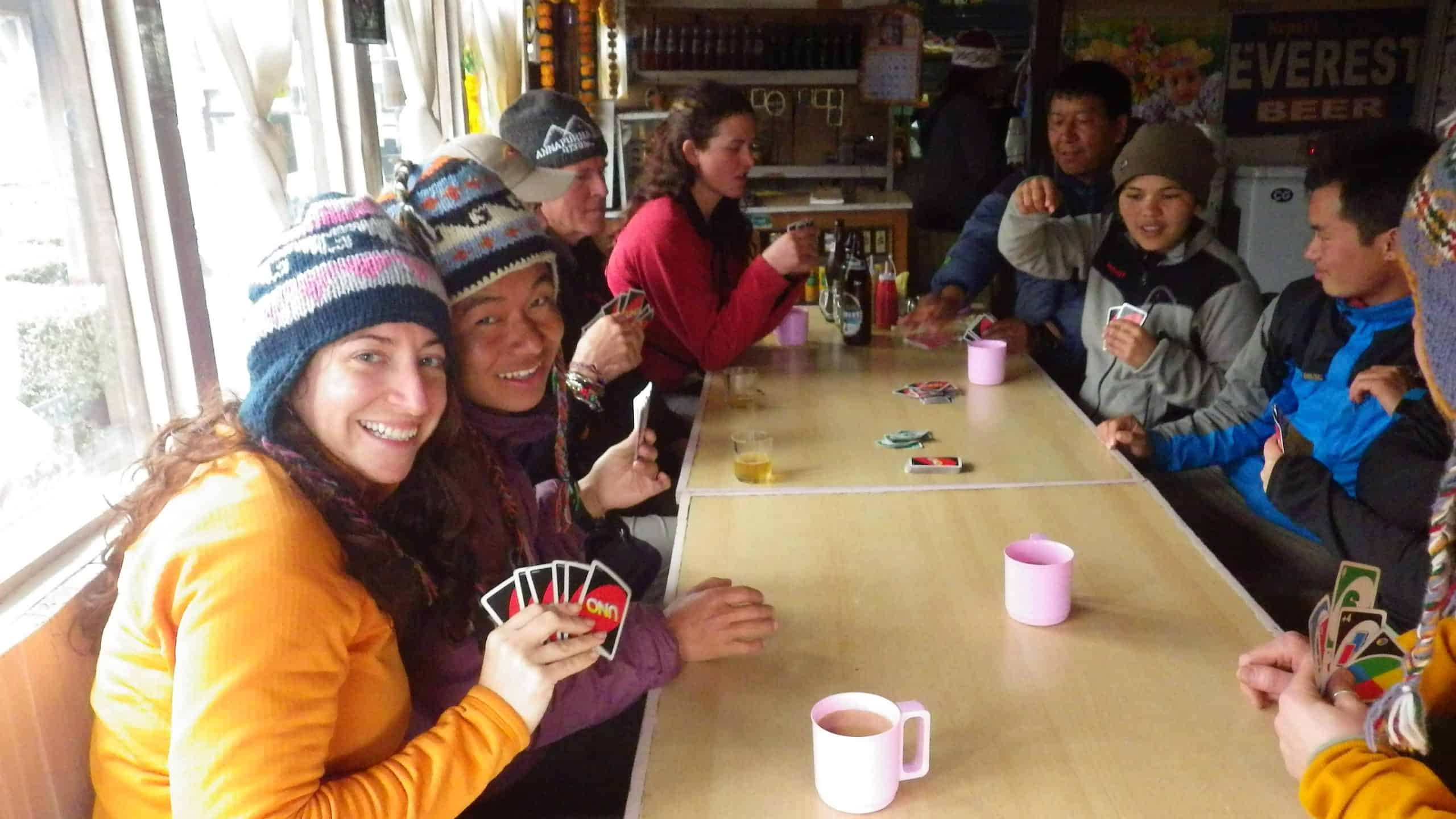
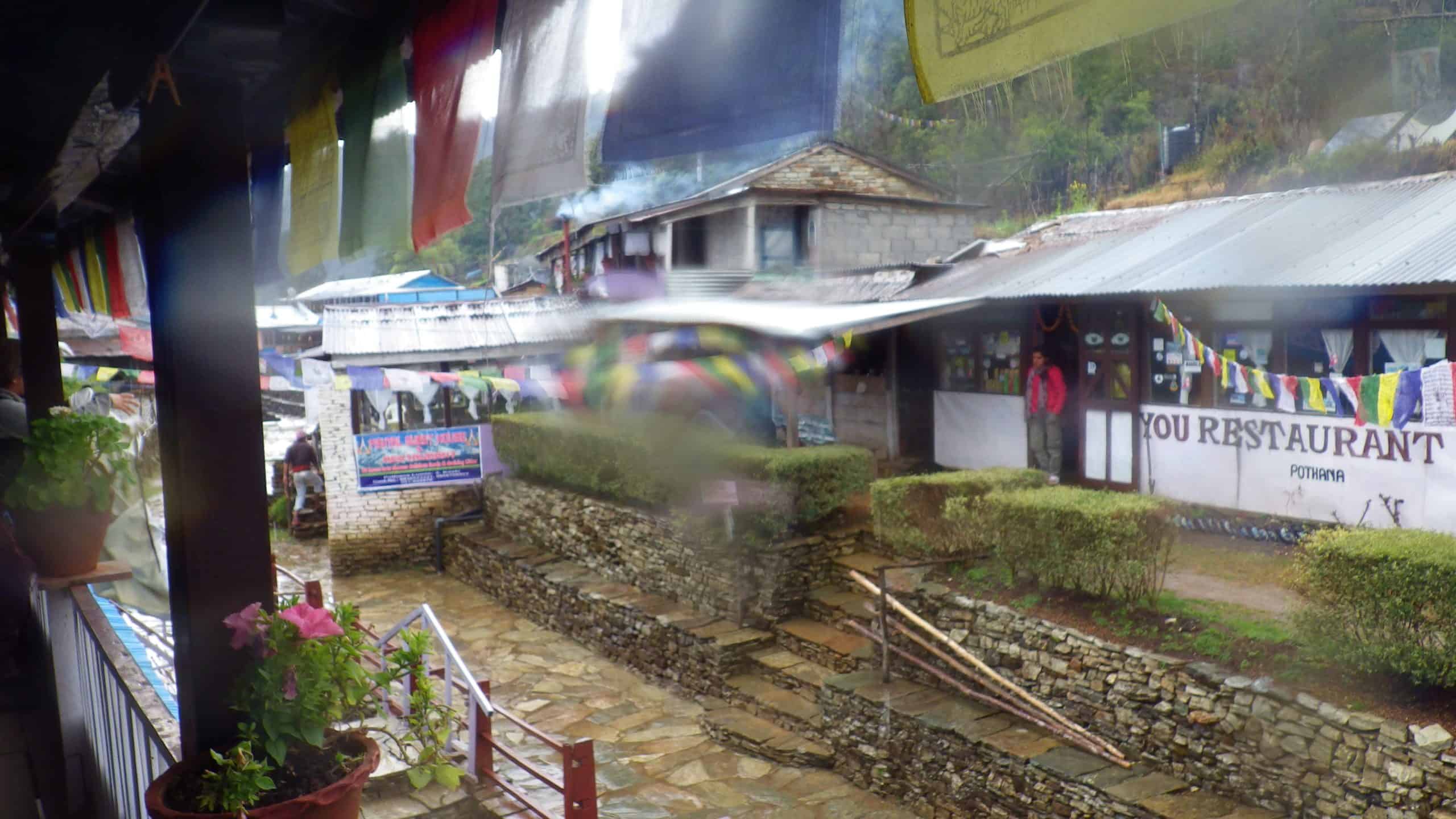
Unfortunately, after nearly ideal weather conditions throughout our journey, we caught a little bit of rain in the morning of our 8th day. Everyone was exhausted, but we powered through our 2-hour trek to our final stop, the village of Pothana. Here we rested and ate well, played many hands of UNO, enjoyed one another’s company and celebrated our groups accomplishments.
Day 9: Hiking from Pothana to Pokhara
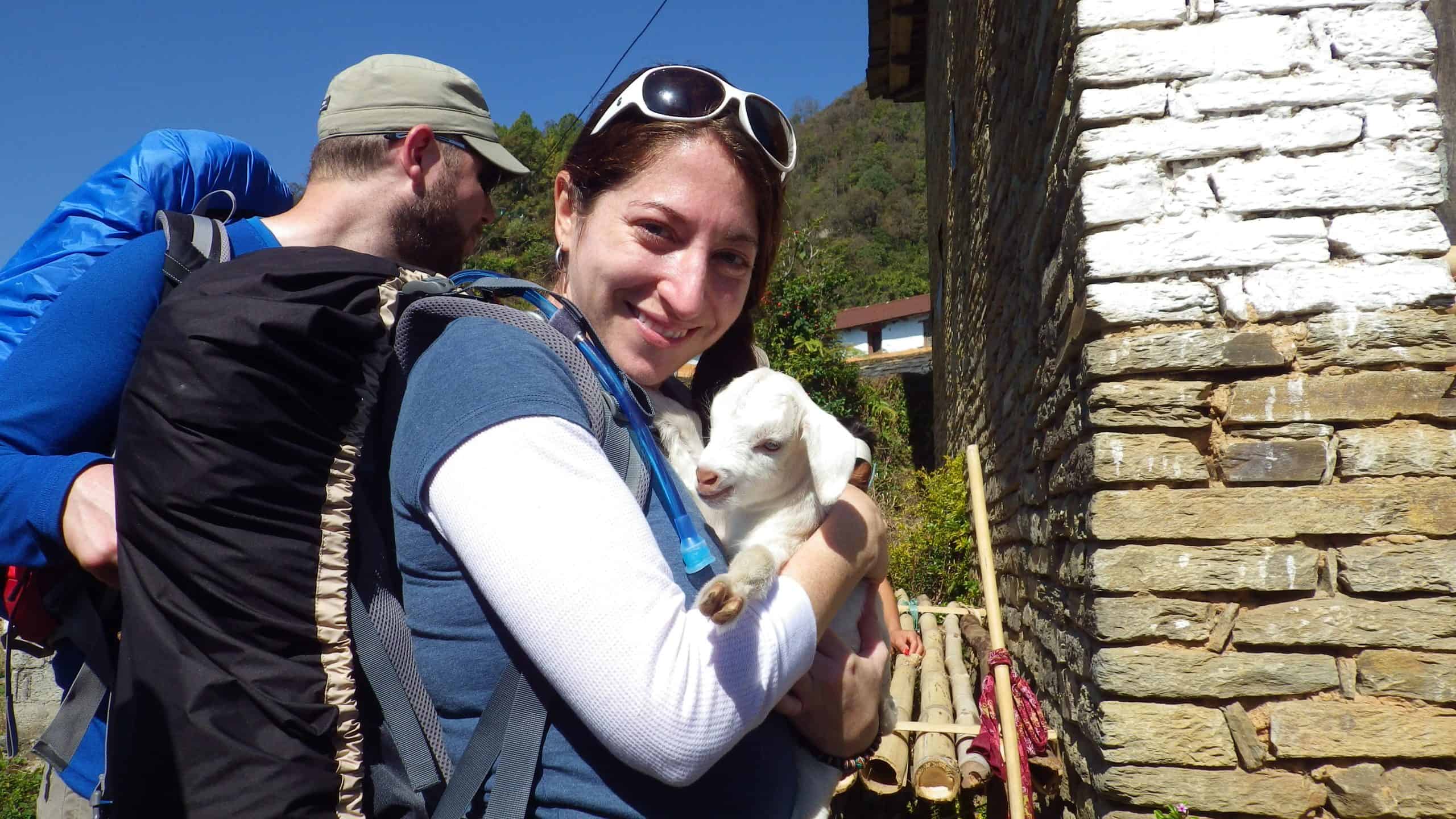
Our final day of trekking took us through a more populated area of the trail where we got frequent glimpses of everyday village life. We got a chance to interact with the locals and even snuggle some kids, and by kids, I mean baby goats.
After about three hours, we reached the trailhead at Phedi and were both relieved and sad to put the trail behind us. We took one last group photo (our “after” shot) and boarded the van to Pokhara. Our hotel in the city felt luxurious after the simplicity of the trail, and that first hot shower? Absolute bliss.
Pokhara: A Well-Earned Reward at the End of a Long Journey
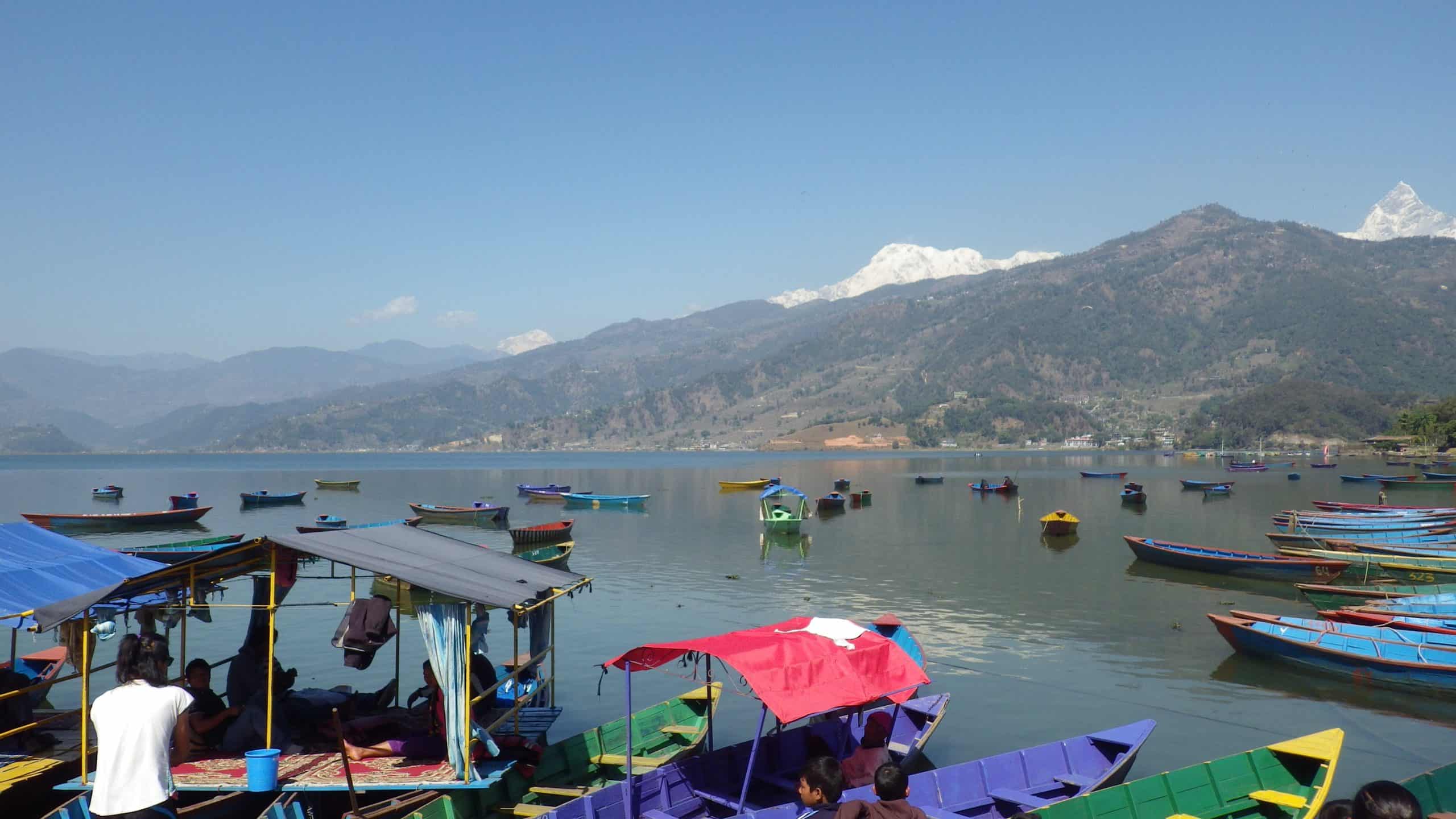
After 9 days of trekking, we arrived in Pokhara, a peaceful lakeside city surrounded by mountains. We stayed at Mum’s Garden Resort, a serene spot with hot showers and green gardens. Total bliss after days on the trail.
We spent our final morning doing rooftop yoga overlooking the Pokhara Valley. Between the mountain views and our mantras assisted by birdsong, it was one of the most beautiful, grounding moments of the trip.
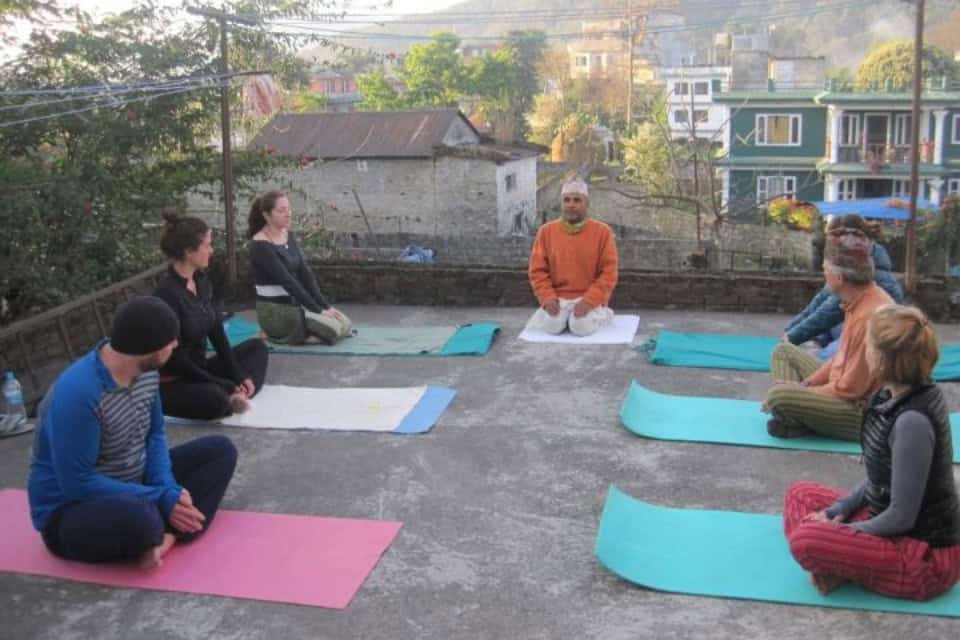
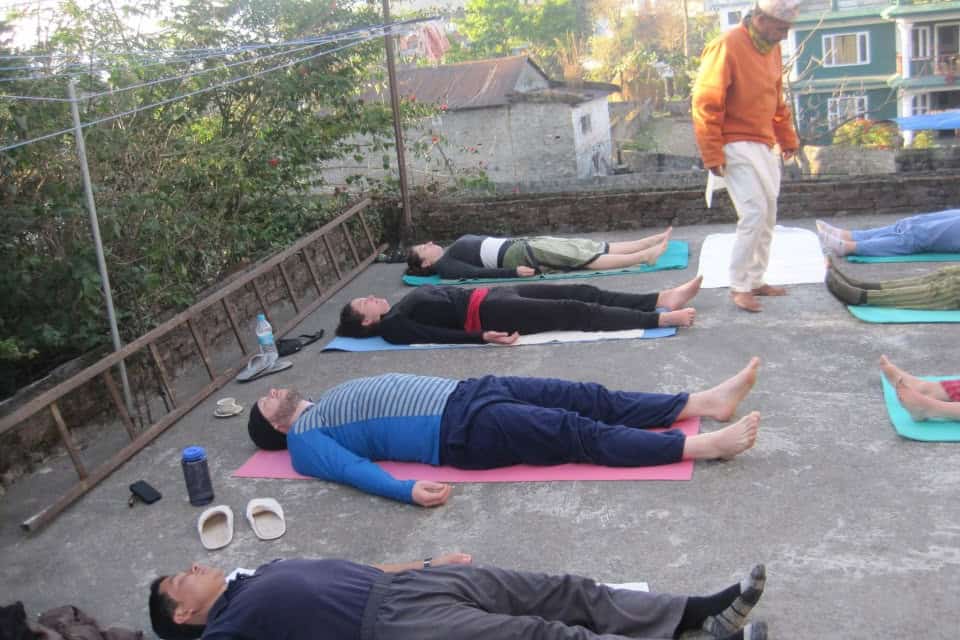
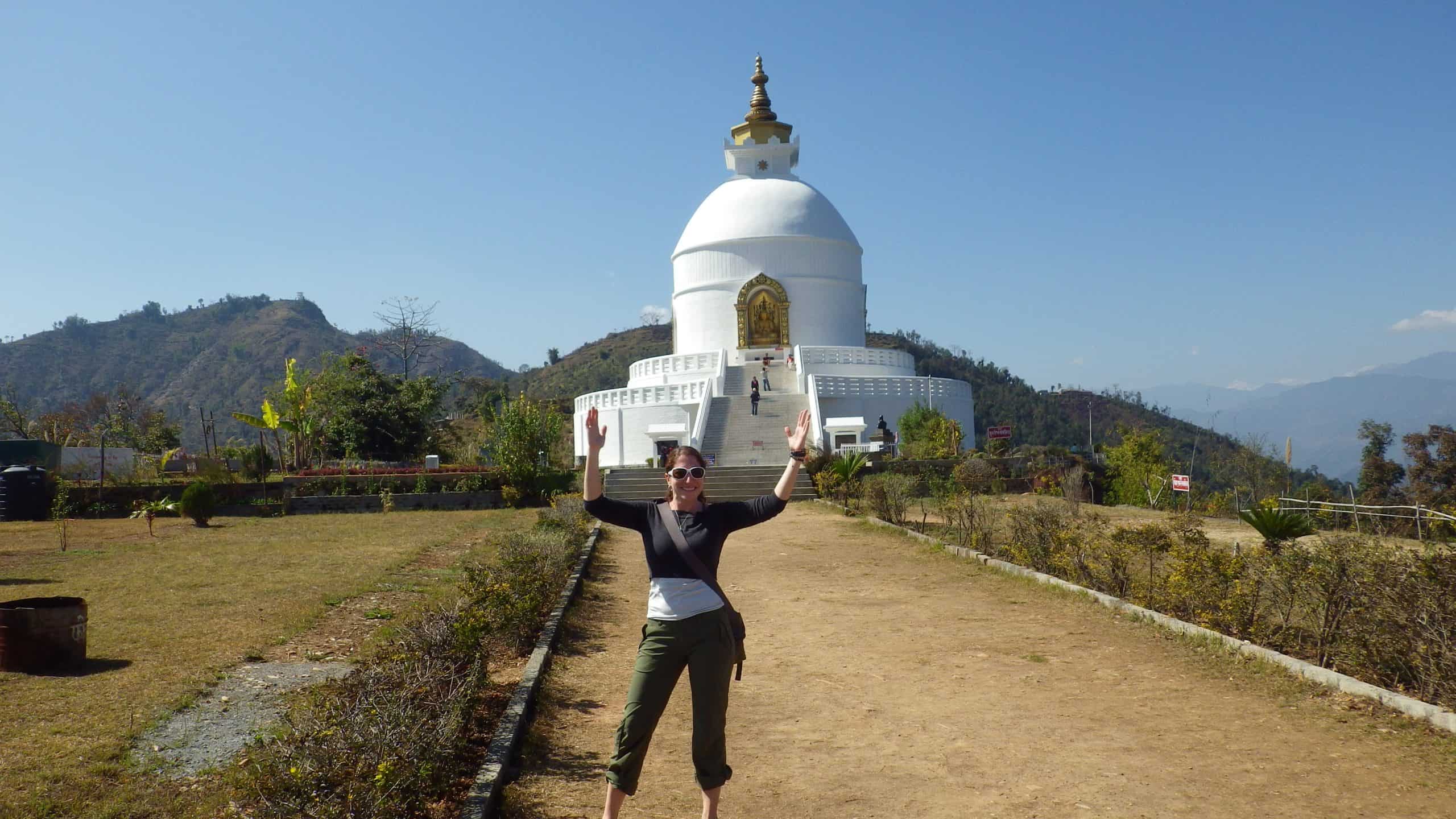
I wish I’d had more time to explore Pokhara to experience zip-lining, paragliding, or just renting a canoe on the lake. But a visit to the World Peace Pagoda, perched high above the city, was the perfect end to a trip of a lifetime.
Farewell Dinner & Final Reflections
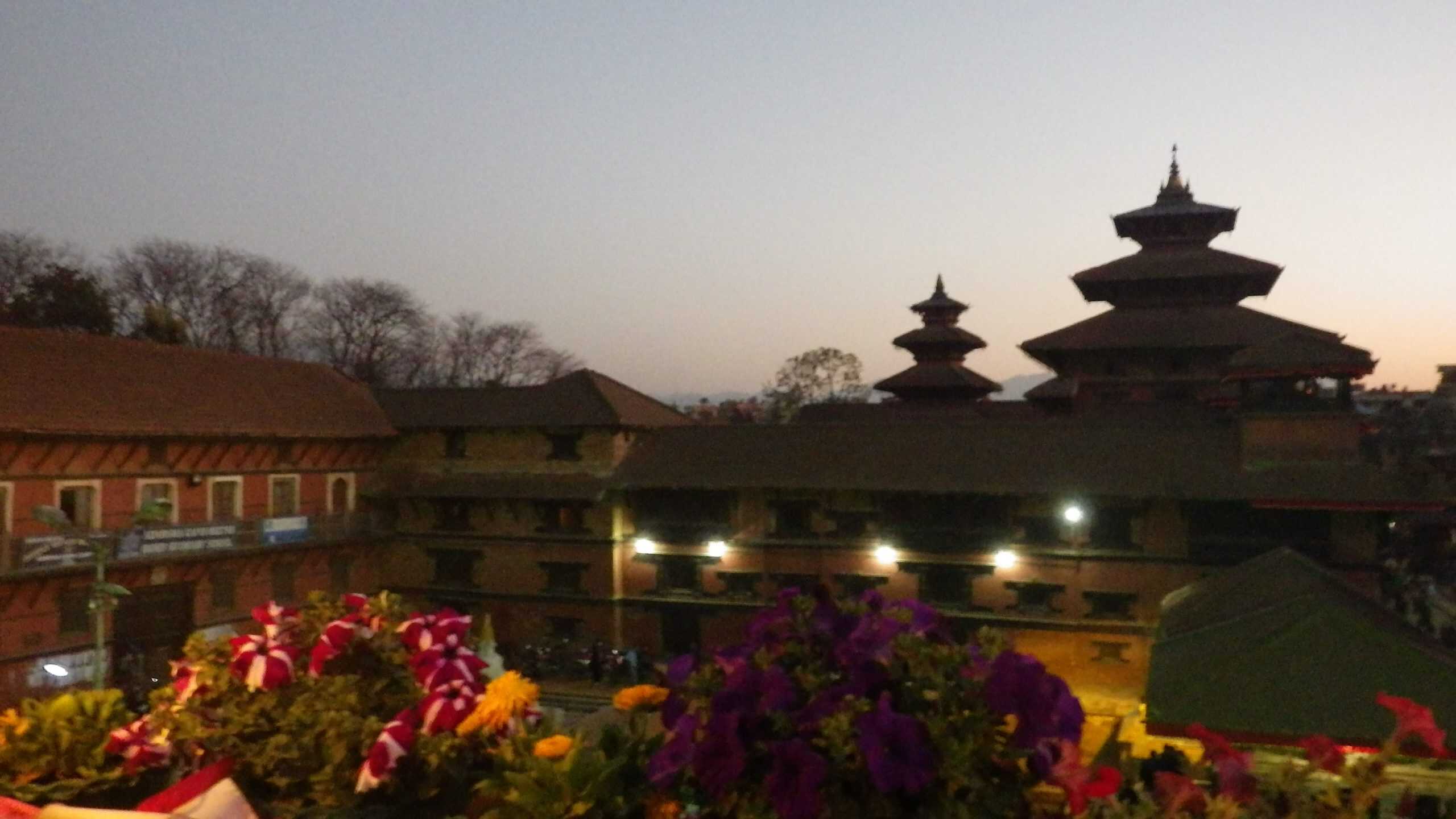
Back in Kathmandu, OneSeed hosted a farewell dinner on a rooftop in Patan. We laughed, traded stories, and were each given scarves and clay pots as mementos. Saying goodbye to my trekking family was genuinely emotional — This trip and these people had made such a deep impact on my life, and I just knew that the connection we built would stick with me forever.
Highlights from the Trail
Each day on the Annapurna Circuit brought new surprises, and here are just a few of the moments that stood out:
- Hiking through what seemed like every season as we started the trek peeling off our down jackets and hiking our sleeves, then hiked passed flowering rhododendron trees, then up to the snowy peaks, and back down through bare forests with fallen leaves on our path.
- Throwing snowballs with Lal and our other GITs.
- Watching the stars dance across the night sky and turn into an incredible sunrise over snowcapped peaks all because I was afraid to go back in my room because there was a spider perched on the door frame.
- Sharing dhal bhat, lemon ginger and honey tea and masala tea in teahouses perched along terraced hillsides.
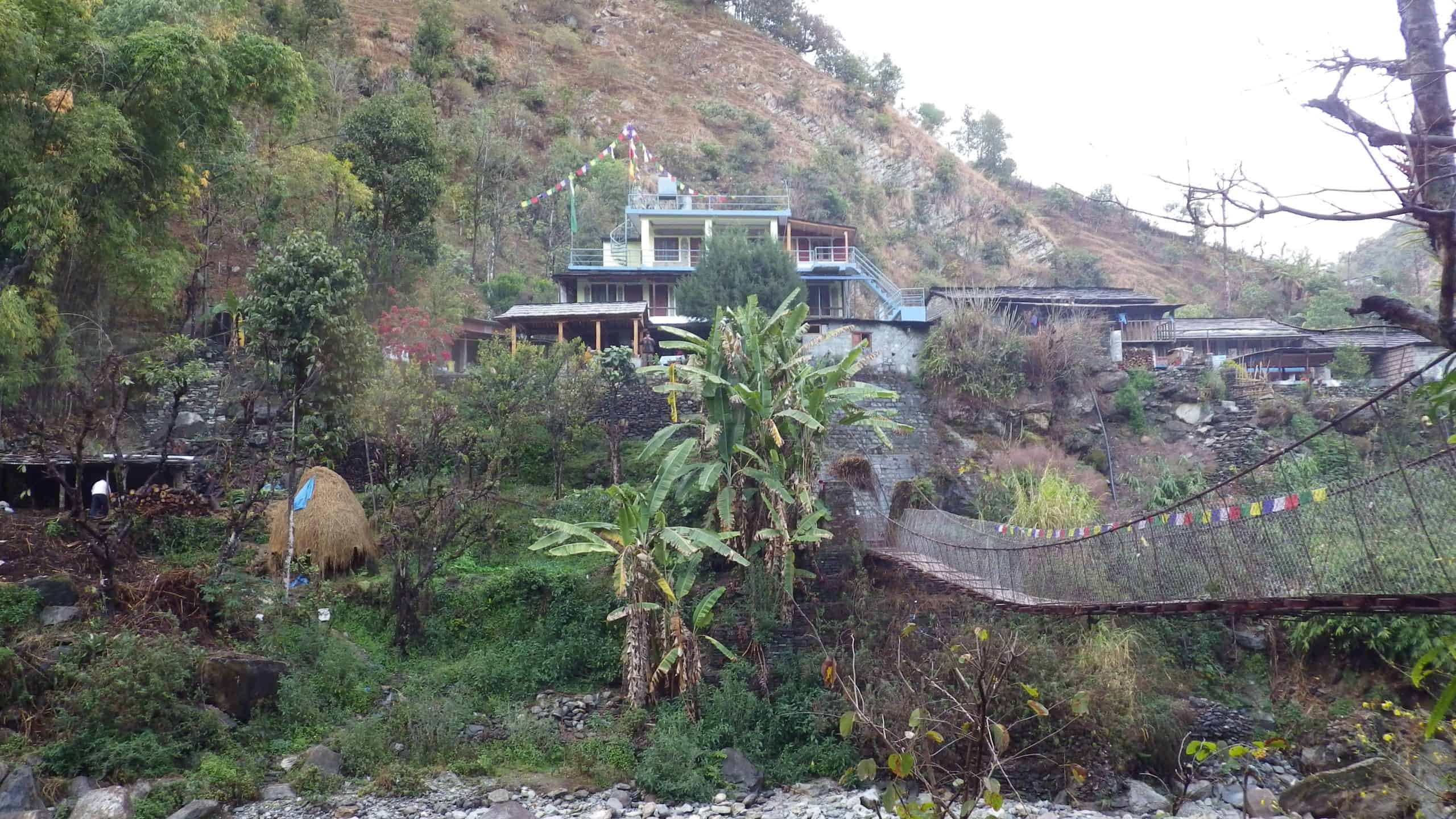
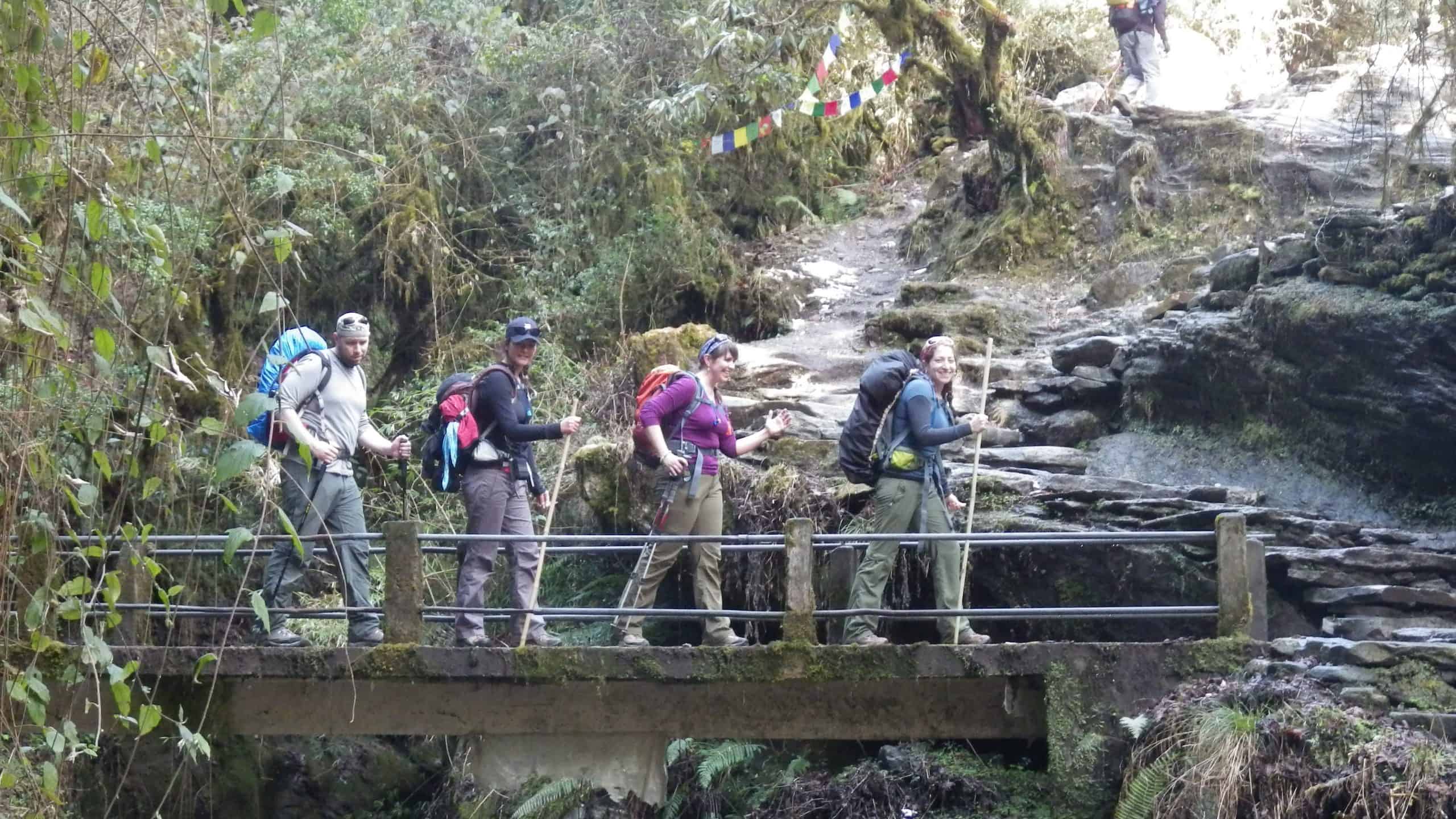
- Crossing suspension bridges above roaring rivers, with prayer flags fluttering in the breeze.
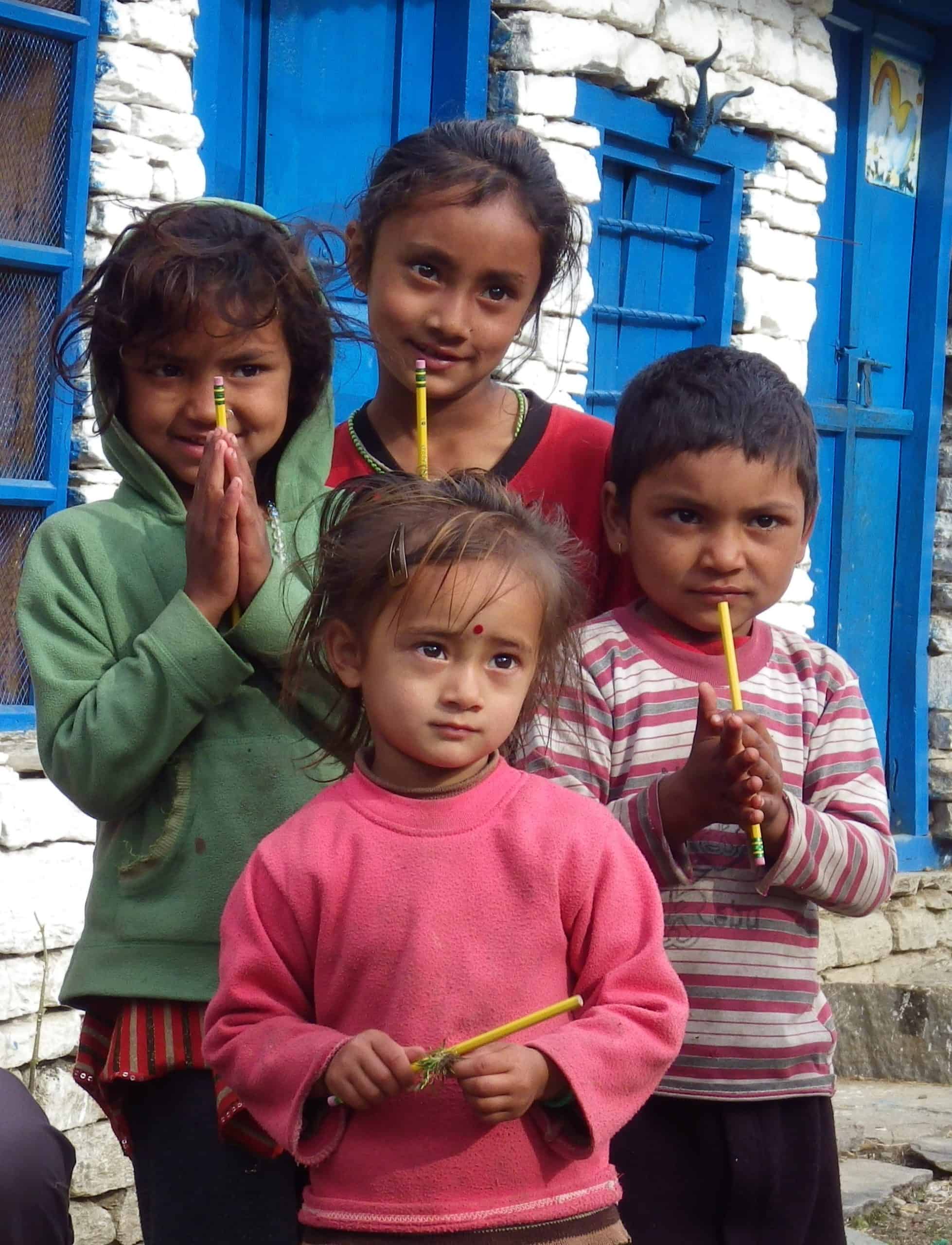
- Stopping in tiny mountain villages where children ran out to greet us with bright eyes and dusty hands, Grahm handing them each candy and a pencil.
- The feeling of accomplishment at the top of Poon Hill, as we watched the sun rise over the Himalayas .
- Playing UNO into the night, which I found out was an international game that despite language barrier we could all enjoy.
What to Expect and How to Plan for a Successful Trek
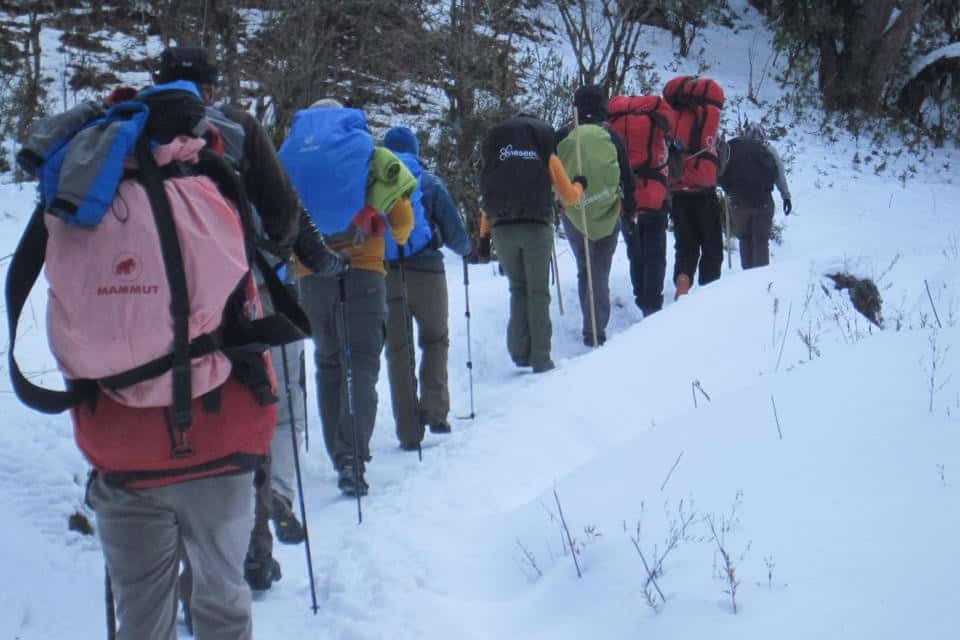
Tips for Trekking the Annapurna Circuit
1. Go with a guided group. Trekking with OneSeed Expeditions added depth, safety, and incredible camaraderie to my experience.
2. Pack light but smart. Layers are key. You’ll experience everything from sunshine to snow.
3. Train beforehand. While you don’t need to be an athlete, a reasonable level of fitness helps you enjoy the journey.
4. Embrace the unknown. Weather shifts, power cuts, and basic accommodations are part of the adventure. Go with the flow.
5. Spend time in Pokhara. Don’t rush your post-trek recovery. Give yourself a couple of days to enjoy this gem.
Food on the Trail: What to Expect
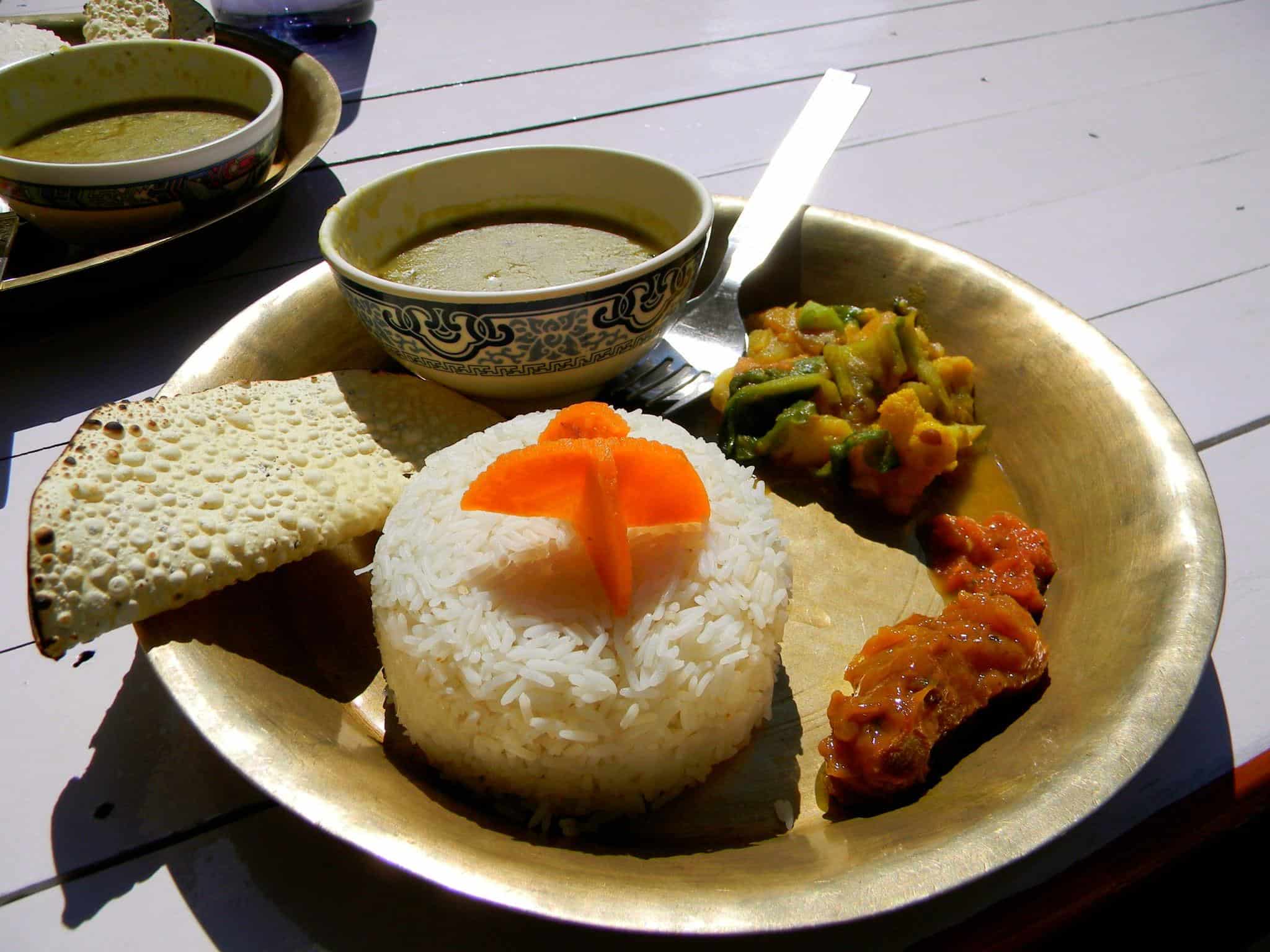
Dal Baht: A Trekkers Fuel
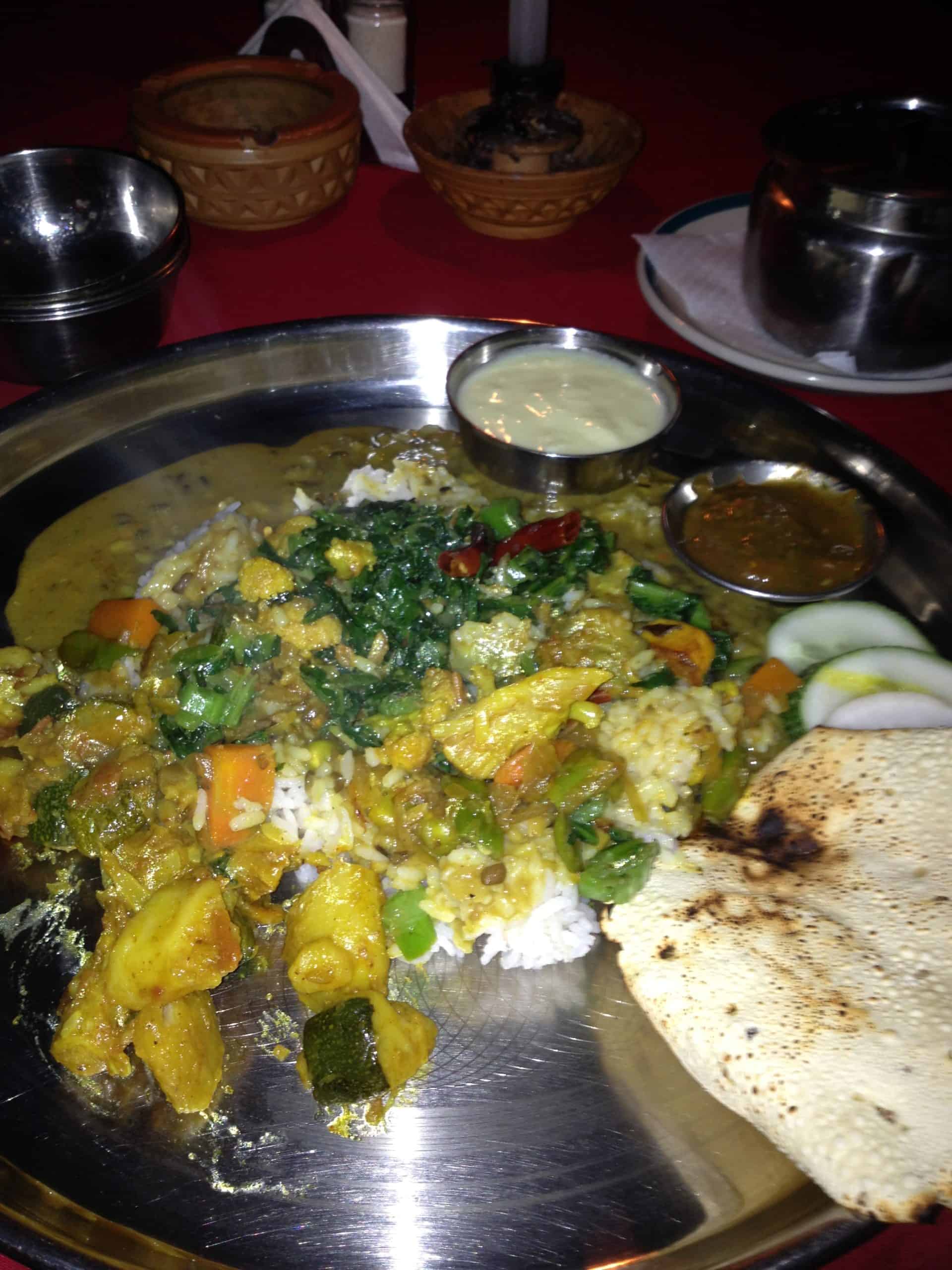
Nepalese cuisine is the kind of food that nourishes you from the inside out with its simple, hearty, and bursting flavor. The country’s most iconic dish, dal bhat, is far more than a meal; it’s a daily ritual. This comforting plate features steamed rice (bhat) served with a lentil soup (dal) and a variety of accompaniments that might include spiced vegetables, curried meats, pickled chutneys (achaar), and crispy papad. Every household and tea house does it a little differently, but one thing remains constant: dal bhat power, 24 hour — a saying you’ll hear from trekkers and locals alike. It’s filling, nourishing, and exactly what you need after a long day on the trail.
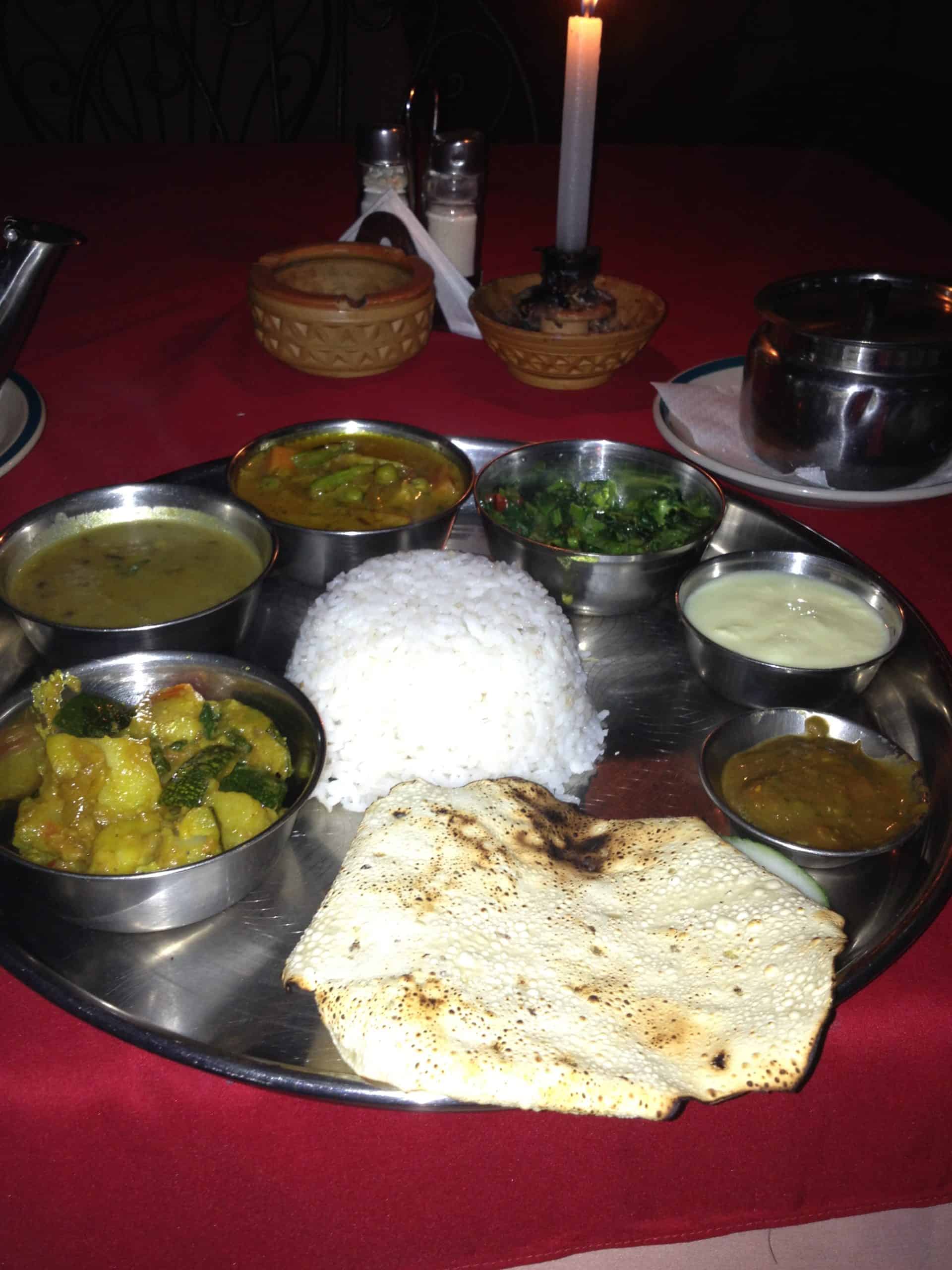
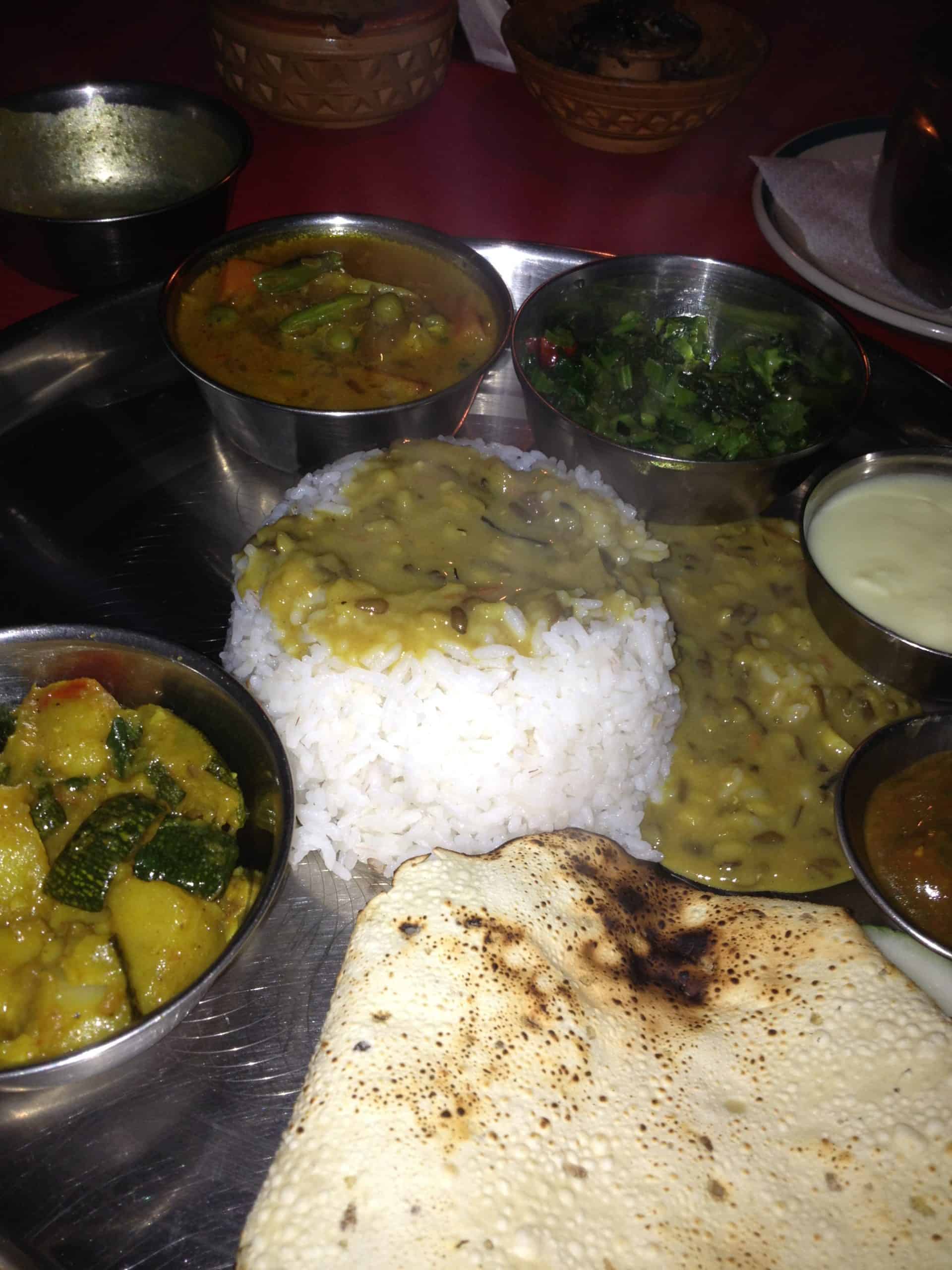
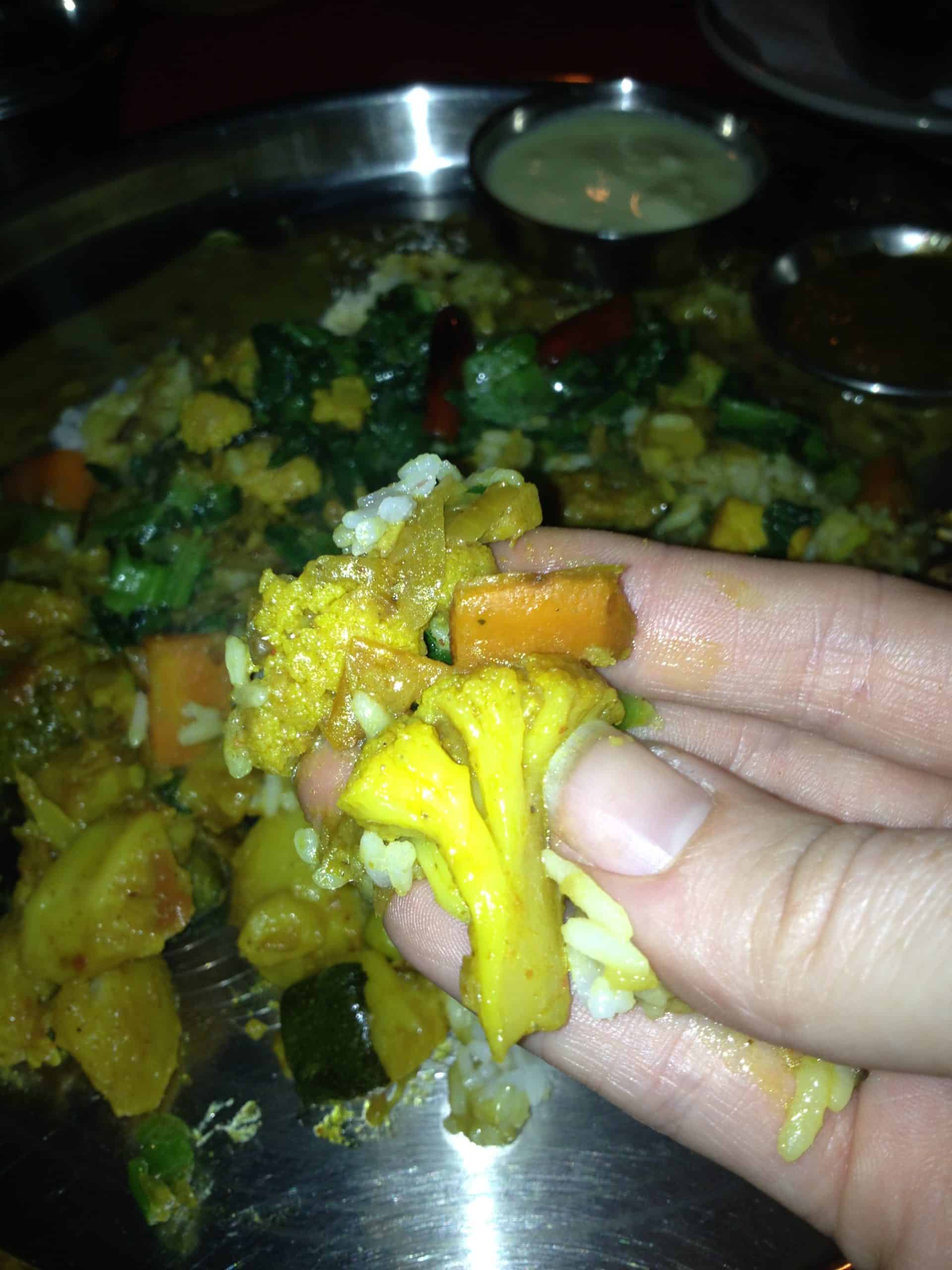
If you want to eat dal baht like a local, follow the images below. Start by scooping the mixed ingredients with your crispy bread and then finish it off by scooping with your fingers and using your thumb to push the hearty goodness into your mouth. This technique was taught to us by our guides-in-training.
Beyond Dal Bhat
Nepal’s diverse geography and cultures shine through in its food. You’ll find Tibetan-inspired momos, delicious dumplings stuffed with spiced meat or vegetables, sold from street stalls and tiny cafes across the country. In the higher Himalayan regions, warm bowls of thukpa, a hearty noodle soup, provide the perfect antidote to mountain chill.
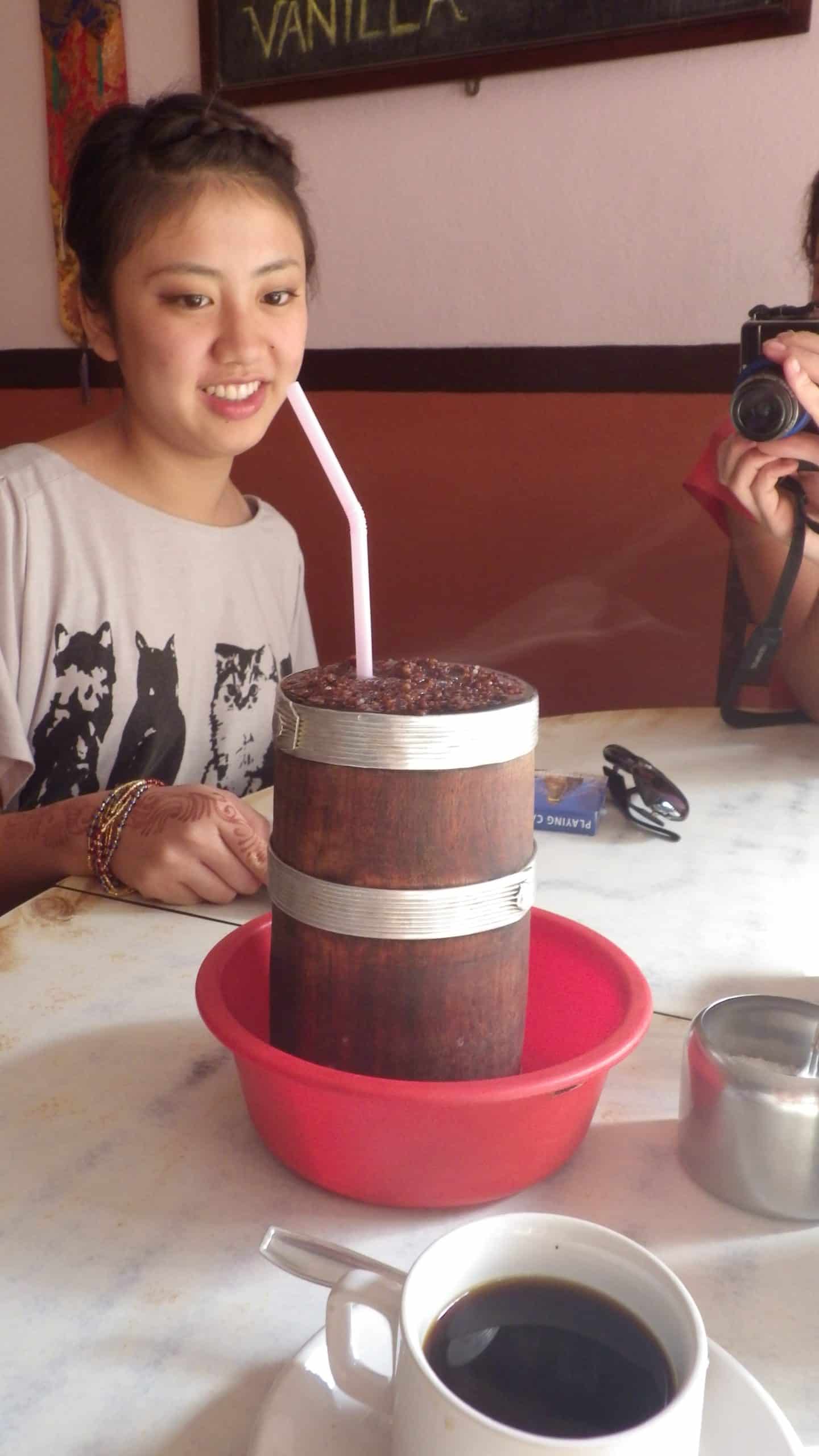
Down south, Indian influences bring fragrant curries and fried snacks like samosas and pakoras. Wash it all down with a steaming cup of chai or, for something stronger, try rakshi (pictured left), a traditional homemade spirit often distilled from millet or rice.
Whether you’re eating with your hands in a family kitchen or sitting cross-legged in a local tea house, Nepali food is as much about community as it is about taste — it’s humble, wholesome, and full of heart.
Accommodation on the Trail: What to Expect
One of the most charming parts of trekking the Annapurna Circuit is the tea house experience. It’s a uniquely Nepalese blend of simplicity, warmth, and community. These family-run lodges dot nearly every village along the trail, offering weary trekkers a place to rest, refuel, and share stories with fellow travelers.
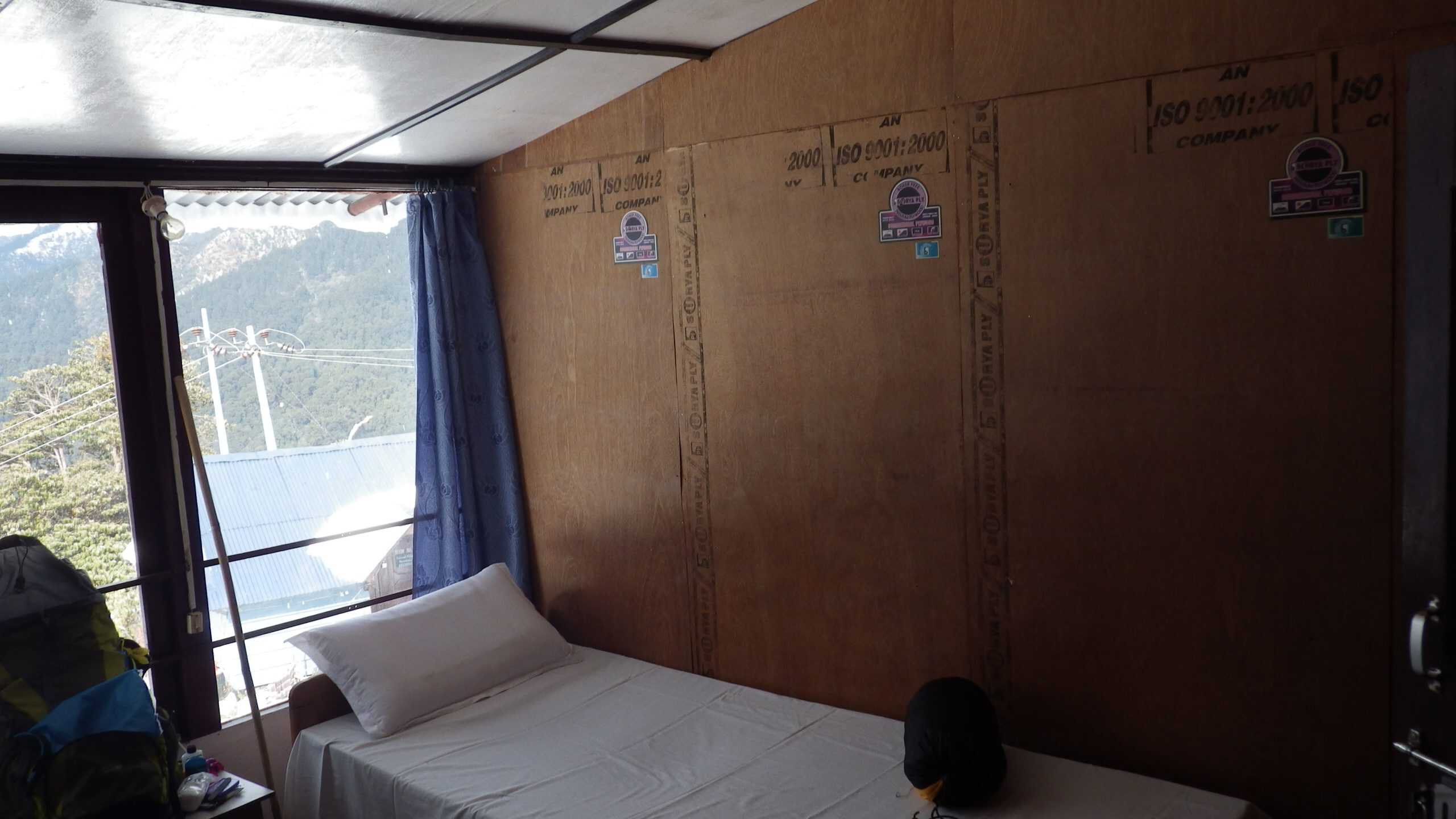
Accommodations are basic but endearing: think plywood walls that let you hear the soft murmur of your neighbors, thin mattresses covered with woolen blankets, and windows that frame breathtaking mountain views. It’s not luxury by any stretch, but there’s a certain magic in its modesty. A Keep in mind that many times adventure often comes with a side of humility.
Meals are hearty and home-cooked, usually served in a cozy communal dining room centered around a wood-burning stove. As temperatures drop, trekkers gather here for hot mugs of masala tea (milk tea), plates of steaming dal bhat, and the occasional slice of pie.
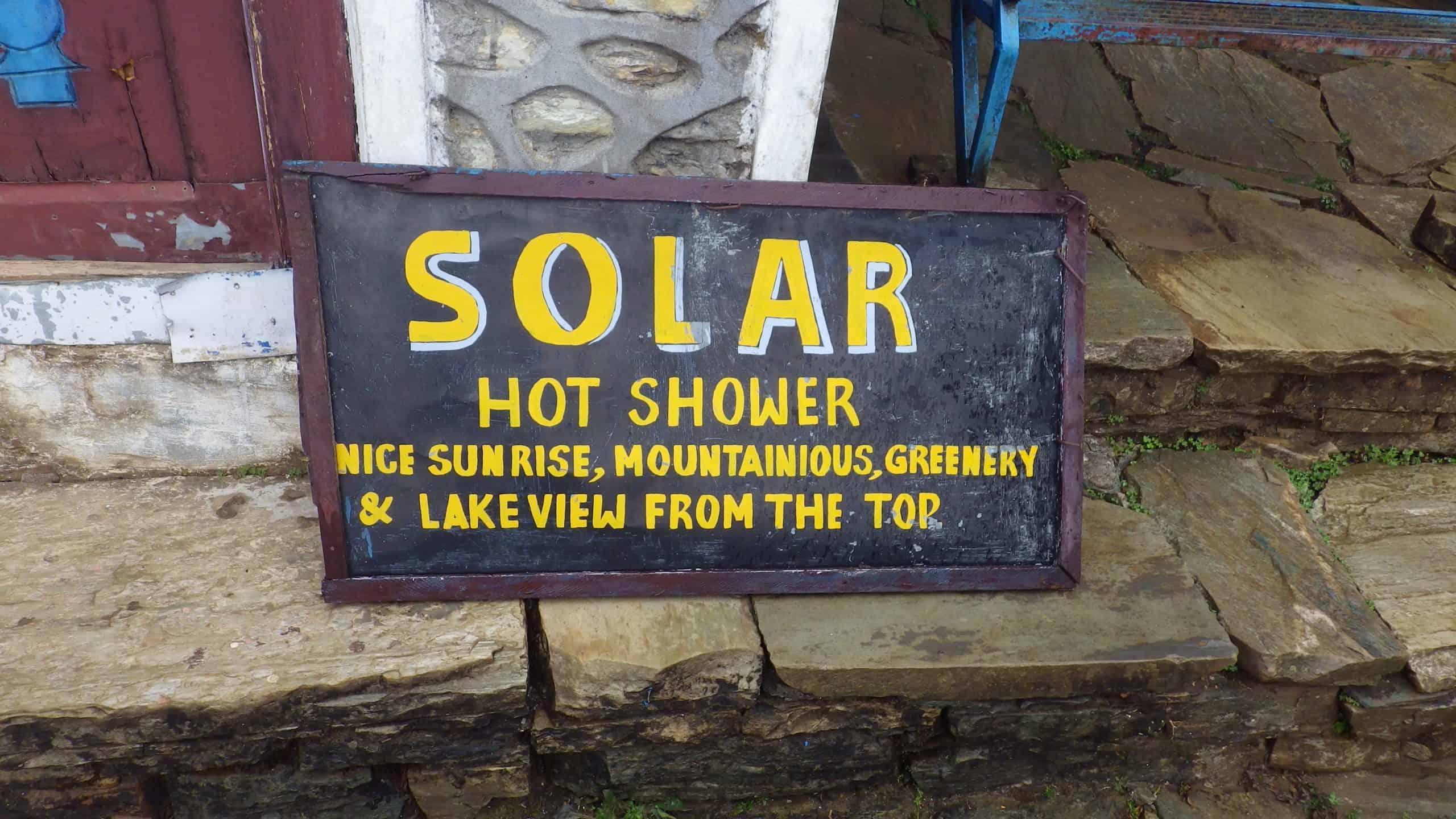
Many tea houses now have solar-powered showers, though “hot” can be a relative term depending on the weather and altitude. Electricity and Wi-Fi are limited but available in most lower-altitude lodges, tapering off as you climb higher into the mountains. What the tea houses lack in amenities, they more than make up for in atmosphere. There’s a genuine sense of welcome and shared humanity that makes each stop feel like a home away from home, even if that home happens to be 12,000 feet above sea level.
Trekking the Annapurna Circuit – Would I Do It Again?
Without hesitation. This 9-day trek along the Annapurna Circuit was one of the most soul-nourishing trips of my life. The beauty of the Himalayas is hard to overstate, but it was the people — the guides, the locals, the fellow trekkers — that made it truly unforgettable.
If you’re looking to challenge yourself, connect with new cultures, and experience the magic of Nepal’s Himalayan mountains, this is the trip for you. An experience like this one really shows you what you are made of and shines a light on the best parts of you. It is truly eye opening.
Dreaming of taking on the Annapurna Circuit or another Trekking Adventure? As a professional travel consultant and experienced trekker, I can help you plan every detail—from permits and guides to the perfect acclimatization stops. Let’s turn your Himalayan dream into reality.
✨ Visit my Services page to start planning your trek.