The Ultimate Guide to the Best Springs in Florida for Recreational Scuba Diving
A Complete Guide for Divers Exploring Florida’s Crystal-Clear Freshwater Springs
Florida may be famous for its coral reefs and warm ocean diving in the Keys, but some of the state’s most unique underwater experiences are hidden inland. Scattered throughout North and Central Florida are hundreds of freshwater springs that create some of the clearest dive environments on earth.
For scuba divers, these springs offer a completely different type of diving. Instead of reefs and saltwater fish, you’ll glide through limestone caverns, fossil beds, and ancient underwater rock formations carved by thousands of years of flowing groundwater. In some places, sand boils erupt from the bottom as water rises from deep underground aquifers. In others, cavern openings hint at extensive cave systems explored by technical divers.
Florida’s springs are particularly famous in the diving world for cavern and cave diving. The Suwannee River Basin in North Florida is often considered the epicenter of cave diving, attracting divers from around the world who come to explore these intricate subterranean systems. But you do not have to be a cave diver to enjoy these incredible sites. Many of Florida’s springs are open to recreational divers, offering open-water basins, shallow spring runs, and cavern entrances that can be explored safely without specialized cave certification.
If I’m being honest, spring and fresh water diving isn’t for every diver. If colorful reefs and a myriad of marine life are what excites you, a spring may not garner the same wonder or excitement. I get it, believe me. I had my own reservations about diving the springs when I moved to Florida from the Caribbean. Now, I truly believe freshwater spring diving is something every diver should experience at least once. The water clarity is surreal, the geological formations are mesmerizing, and the peaceful atmosphere feels worlds away from busy ocean dive sites.
In this guide, we will explore 10 of the best springs in Florida for recreational scuba diving, including what makes each one unique, what divers can expect underwater, and who each site is best suited for.

Why Florida Springs Are So Unique for Diving
Before diving into the list, it helps to understand what makes Florida’s springs so special.
Florida sits on top of a massive underground aquifer system that pushes millions of gallons of freshwater to the surface every day through natural vents in limestone rock. Many of these springs are classified as first-magnitude springs, meaning they discharge more than 65 million gallons of water per day.
Because the water is filtered through limestone for years before reaching the surface, it emerges incredibly clear and mineral-rich. The result is visibility that often rivals tropical ocean diving.
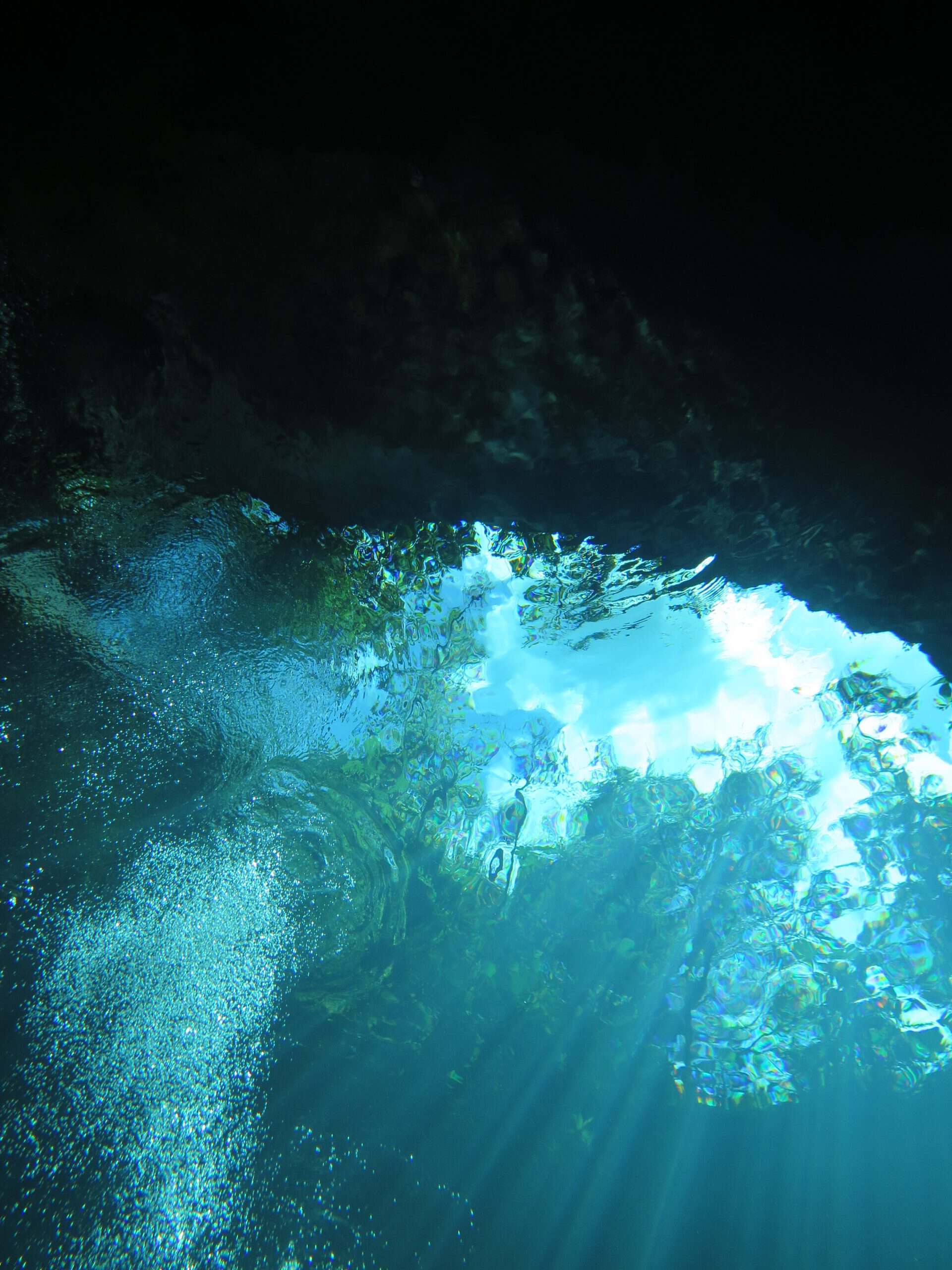
Some key characteristics of Florida spring diving include:
1. Consistent Water Temperature
All Florida springs flow from the Floridan Aquifer and maintain a year-round temperature of around 72°F, offering stable diving conditions all year round.
2. Exceptional Visibility
Visibility can exceed 100 feet in some springs, making them ideal for underwater photography and training dives.
3. Unique Geological Formations
Divers will encounter sometimes dramatic formations including limestone caverns, underwater tunnels, fossilized rock walls, and sinkholes.
4. Cavern and Cave Systems
Many springs connect to vast underground cave systems, though these areas require specialized cave diving certification. (Please never venture into an overhead environment without proper training.)
5. Freshwater Wildlife
Instead of coral reefs, divers encounter freshwater species like:
- Gar
- Freshwater turtles
- Catfish
- Bluegill
- Mullet
- Occasionally manatees
For divers accustomed to ocean diving, it feels like stepping into an entirely different world.
Best Time of Year to Dive Florida Springs
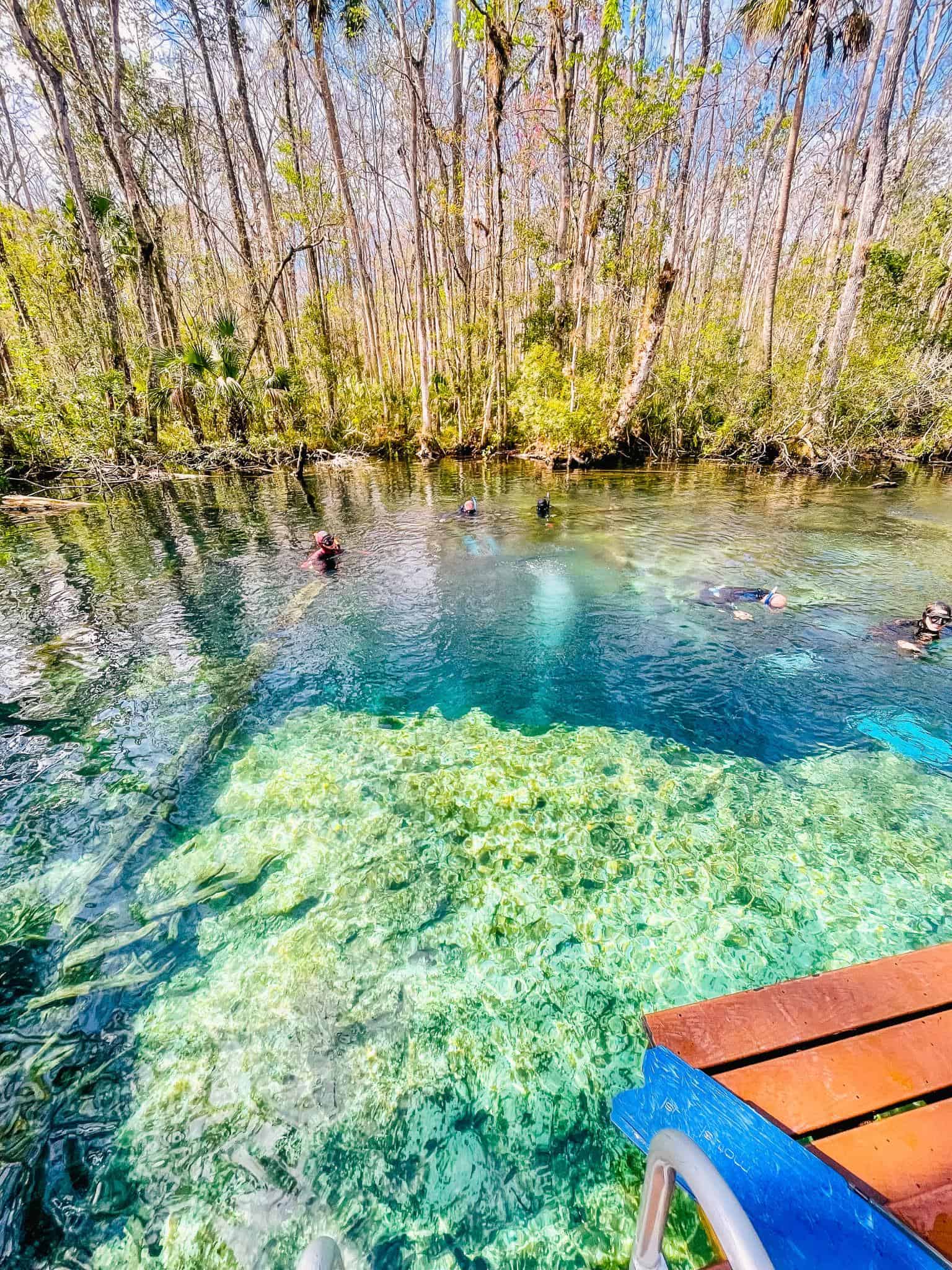
One of the biggest advantages of diving Florida’s freshwater springs is that they can be enjoyed year-round. Unlike ocean diving where weather, waves, and storms can affect visibility and conditions, spring diving remains remarkably consistent because the water flows from underground aquifers at a steady temperature.
That said, some seasons are better than others depending on what type of experience you’re looking for.
Winter (December – February)
Winter is actually one of the best times to dive Florida springs, particularly for divers who want to avoid crowds.
While air temperatures may be cooler, the spring water remains around 72°F year-round, which can feel surprisingly comfortable compared to chilly winter air temperatures (yes, even in Florida). Because fewer swimmers and tubers visit the springs during winter, visibility often remains exceptionally clear.
Winter is also the manatee season at several springs throughout the state. During colder months, manatees migrate into warm spring waters to regulate their body temperature. Some springs, like Blue Spring State Park, close certain areas to protect the animals, but it can still be an incredible time to witness these gentle giants gathering in large numbers.
Spring (March – May)
Spring is widely considered one of the ideal seasons for spring diving in Florida. Air temperatures warm up, crowds are still manageable, and water conditions remain excellent.
This is also a great time for divers planning multi-day road trips through North Florida’s spring systems. Many parks are open, wildlife activity increases, and the surrounding forests begin to bloom.
Spring conditions often bring calm weather and comfortable temperatures for both diving and exploring nearby parks.
Summer (June – September)
Summer is the busiest season at Florida’s springs, especially for popular parks like Rainbow Springs and Ichetucknee Springs. Local kids are on their summer break, and tubers, swimmers, and kayakers flock to these crystal-clear waters to escape the Florida heat.
While diving is still possible and enjoyable, divers should expect larger crowds and occasional visibility reduction due to increased activity in the water or daily rains that cause runoff.
If you plan to dive in summer, arriving early in the morning often provides the best conditions before recreational crowds increase.
Fall (October – November)
Fall may be the most underrated time of year to dive Florida springs. Temperatures begin to cool slightly, crowds thin out, and water conditions remain excellent.
This time of year offers some of the most peaceful diving conditions, especially at quieter locations like Paradise Spring, Buford Sink, and Troy Spring.
Many divers enjoy fall because it combines comfortable weather with fewer visitors.
Florida Springs Scuba Diving Safety: Cavern vs. Cave Diving Explained
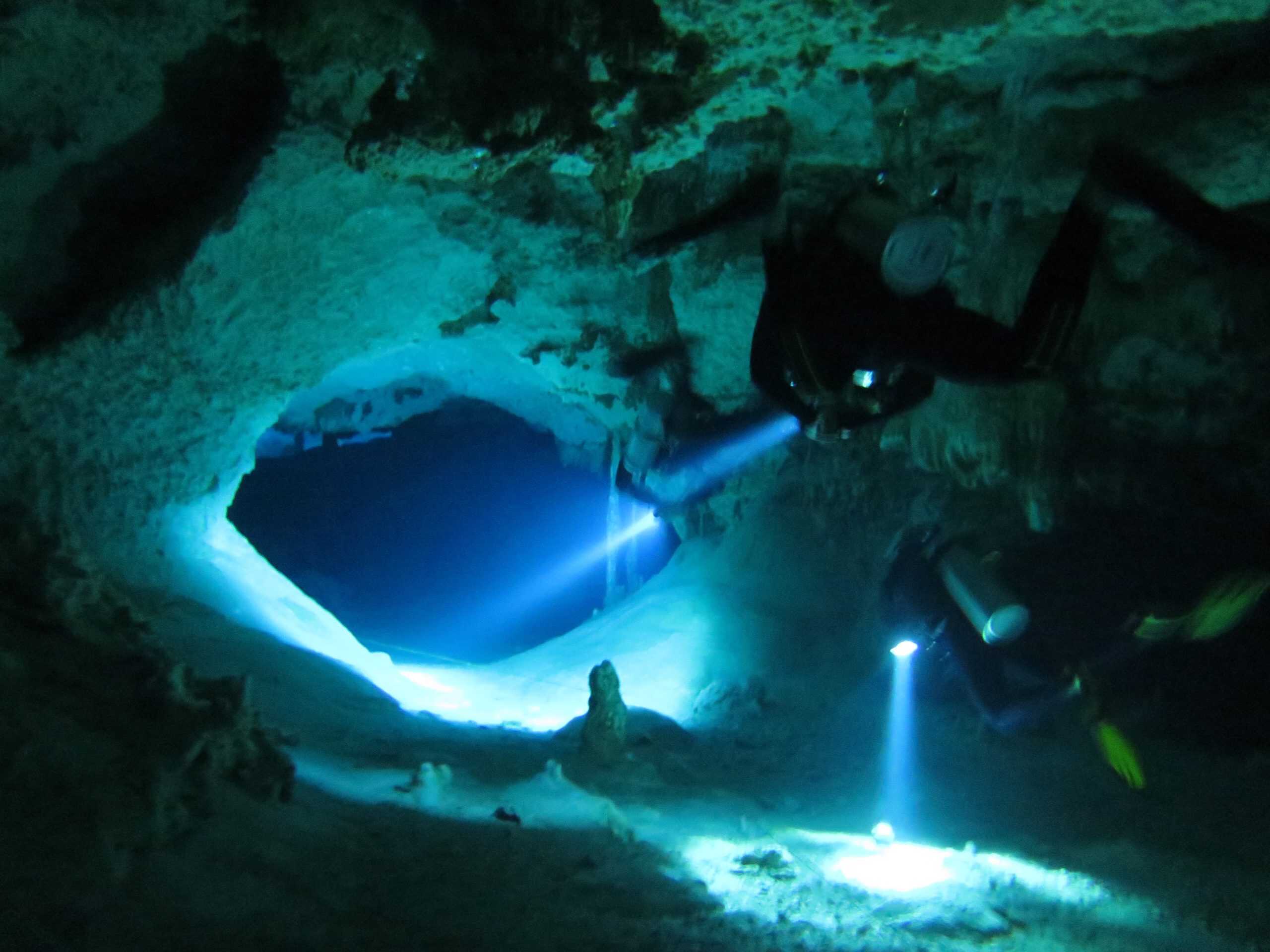
As a scuba instructor, I would be remiss and even neglectful not to make this distinction very clear. One of the most important safety topics to understand when diving Florida’s freshwater springs is the difference between cavern diving and cave diving. Many of the springs throughout North and Central Florida are connected to extensive underground cave systems carved into limestone by the flow of groundwater over thousands of years. These underwater tunnels can stretch for miles beneath the surface and represent some of the most complex and dangerous dive environments in the world.
For divers visiting Florida springs for the first time, it is easy to see the entrance to one of these cave systems and assume it is simply another swim-through. In reality, cave diving is an entirely separate discipline of scuba diving that requires specialized training, equipment, and procedures. Understanding the distinction between cavern and cave diving is critical for staying safe while exploring these beautiful freshwater environments.
What Is Cavern Diving?
Cavern diving takes place in the light zone of a cave system, meaning divers remain close enough to the entrance that natural daylight is still visible at all times. The key rule in cavern diving is that a diver should always be able to clearly see the exit.
Because the exit remains visible and divers remain relatively close to open water, cavern diving is considered an extension of recreational diving rather than a fully technical discipline. That said, cavern environments still present hazards that divers must respect.
Many Florida springs offer excellent cavern dives that allow recreational divers to safely experience the beauty of underground formations without entering the more dangerous cave passages.
Some famous Florida cavern dive locations include:
- The Ballroom at Ginnie Springs
- Blue Grotto cavern
- Catfish Hotel cavern at Manatee Springs
- The cavern entrance at Peacock Springs
In these environments, divers can explore limestone ceilings, rock formations, and dramatic lighting effects created by sunlight filtering through the entrance above. However, it is important to remain calm and diligent, and remember that even though you may be able to see the exit, you are still technically in an overhead environment. This is why it is always important to be properly weighted, maintain neutral buoyancy, and always look up when you intend to surface.
What Is Cave Diving?
Cave diving begins when a diver passes beyond the cavern zone into areas where natural light no longer reaches. Once a diver enters the dark zone of a cave, they are in a fully overhead environment where a direct vertical ascent to the surface is no longer possible.
Cave diving is considered one of the most technical forms of scuba diving because it requires advanced planning, specialized equipment, and rigorous training. Cave divers must manage complex navigation systems, maintain guideline awareness, monitor gas consumption carefully, and handle potential emergencies in an environment where there is no direct route to the surface.
Florida is considered one of the global centers of cave diving, with famous cave systems found throughout the Suwannee River Basin and surrounding areas. Some cave passages extend for miles underground and have been explored only by highly trained cave divers and scientific teams.
Why Cave Diving Requires Specialized Training
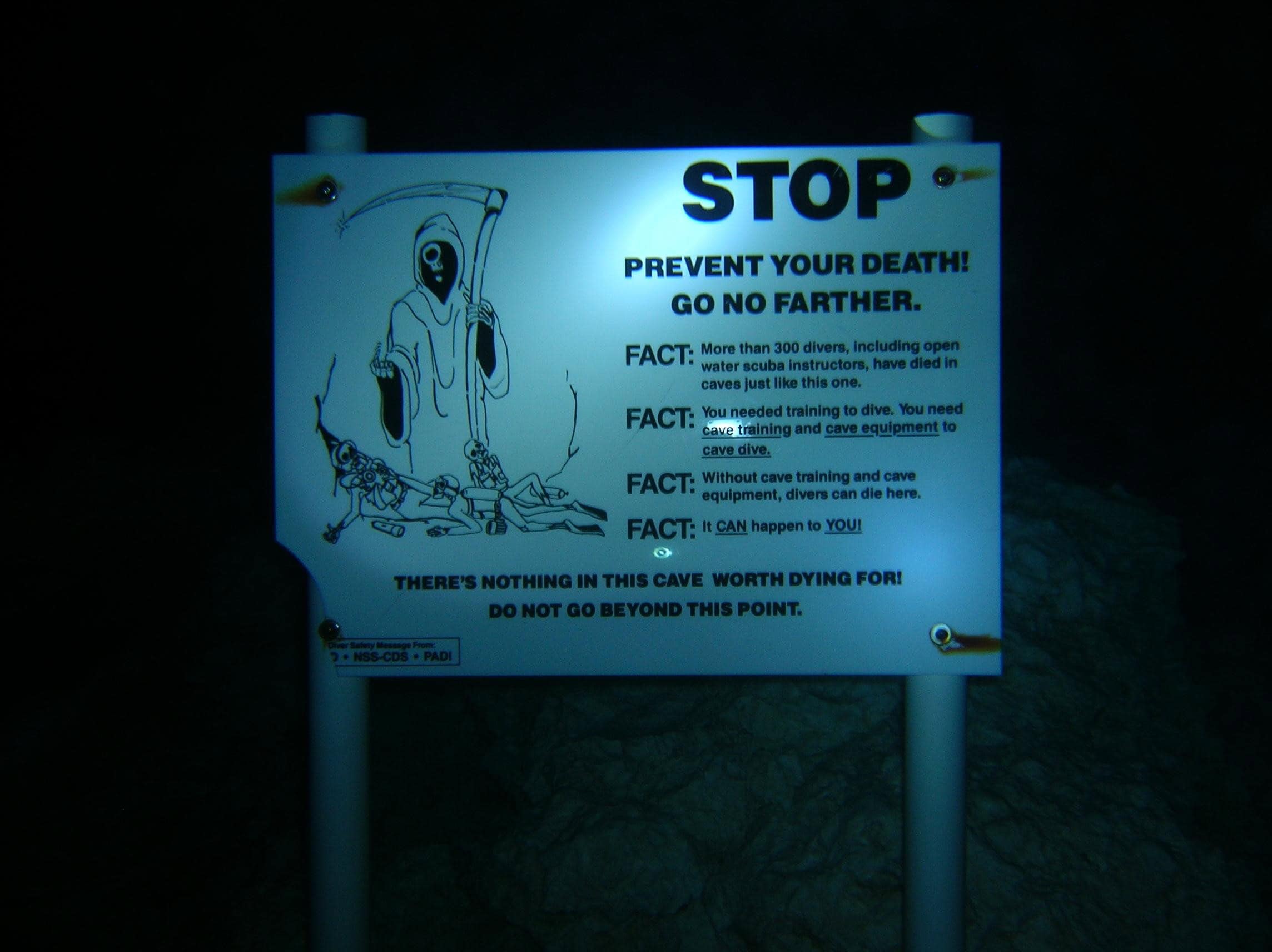
The risks associated with cave diving are significantly greater than open water or cavern diving. Without proper training, entering a cave system can quickly become disorienting, dangerous and even deadly.
Several factors make caves particularly hazardous:
No direct access to the surface
In open water diving, divers can ascend directly to the surface in an emergency. Inside a cave, the only exit may be hundreds or even thousands of feet away.
Total darkness
Once inside the cave system, natural light disappears. Divers rely entirely on dive lights for visibility.
Complex navigation
Cave passages often branch into multiple tunnels and chambers. Divers must lay or follow permanent guidelines to navigate safely.
Limited space
Some cave passages narrow significantly, requiring precise buoyancy control and careful movement.
Silt disturbance
Fine sediment on the cave floor can be easily stirred up by careless fin kicks. When disturbed, silt can reduce visibility to zero in seconds.
Because of these hazards, proper cave diving training teaches divers how to manage gas reserves, maintain guideline contact, navigate safely, and respond to emergencies in a confined underwater environment.
The Golden Rule of Cave Diving (really, diving in general)
One of the most widely known principles in diving safety is:
“Never dive beyond your training.”
This rule is especially important in Florida springs where cavern entrances are often clearly visible and sometimes tempting to explore. Even experienced recreational divers should never enter cave systems without proper training and certification.
The cave diving community follows strict safety protocols that have evolved over decades of exploration. These procedures help ensure divers can safely navigate these extraordinary environments. Even so, accident still occur in these environments and can turn deadly.
How Recreational Divers Can Safely Enjoy Florida Springs
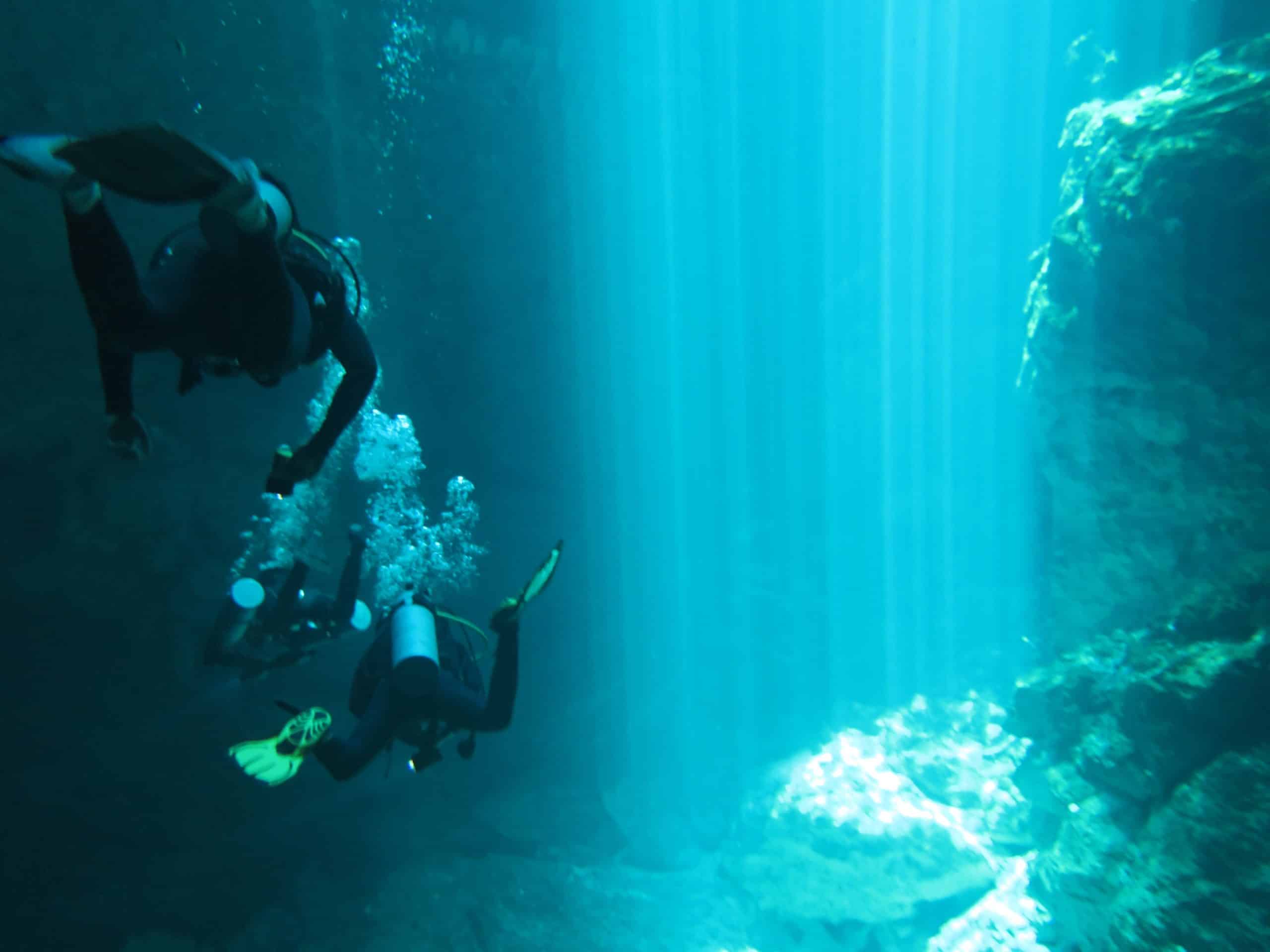
Dive within Recreational Limits
The good news is that many of Florida’s most beautiful spring dive sites can be enjoyed safely without entering cave systems. Cavern zones and open spring basins offer incredible visibility, dramatic rock formations, and fascinating freshwater wildlife.
Divers can safely enjoy the beauty of Florida’s underwater landscapes and experience all of the spectacular freshwater diving at sites I’ll go over in this article by staying within recreational limits and respecting posted guidelines.
Respect the Springs
Florida’s freshwater springs are delicate ecosystems that require careful protection. Divers visiting these sites should always follow responsible diving practices, including maintaining good buoyancy control and avoiding contact with fragile underwater formations. Graffiti is never clever or cute, so please respect these environments and keep your dive knife sheathed.
Many parks enforce strict rules regarding entry and diver access to help protect both visitors and the environment. By respecting these guidelines, divers help ensure that Florida’s springs remain one of the most unique and accessible freshwater dive destinations in the world.
10 Best Florida Springs for Scuba Diving
1. Ginnie Springs
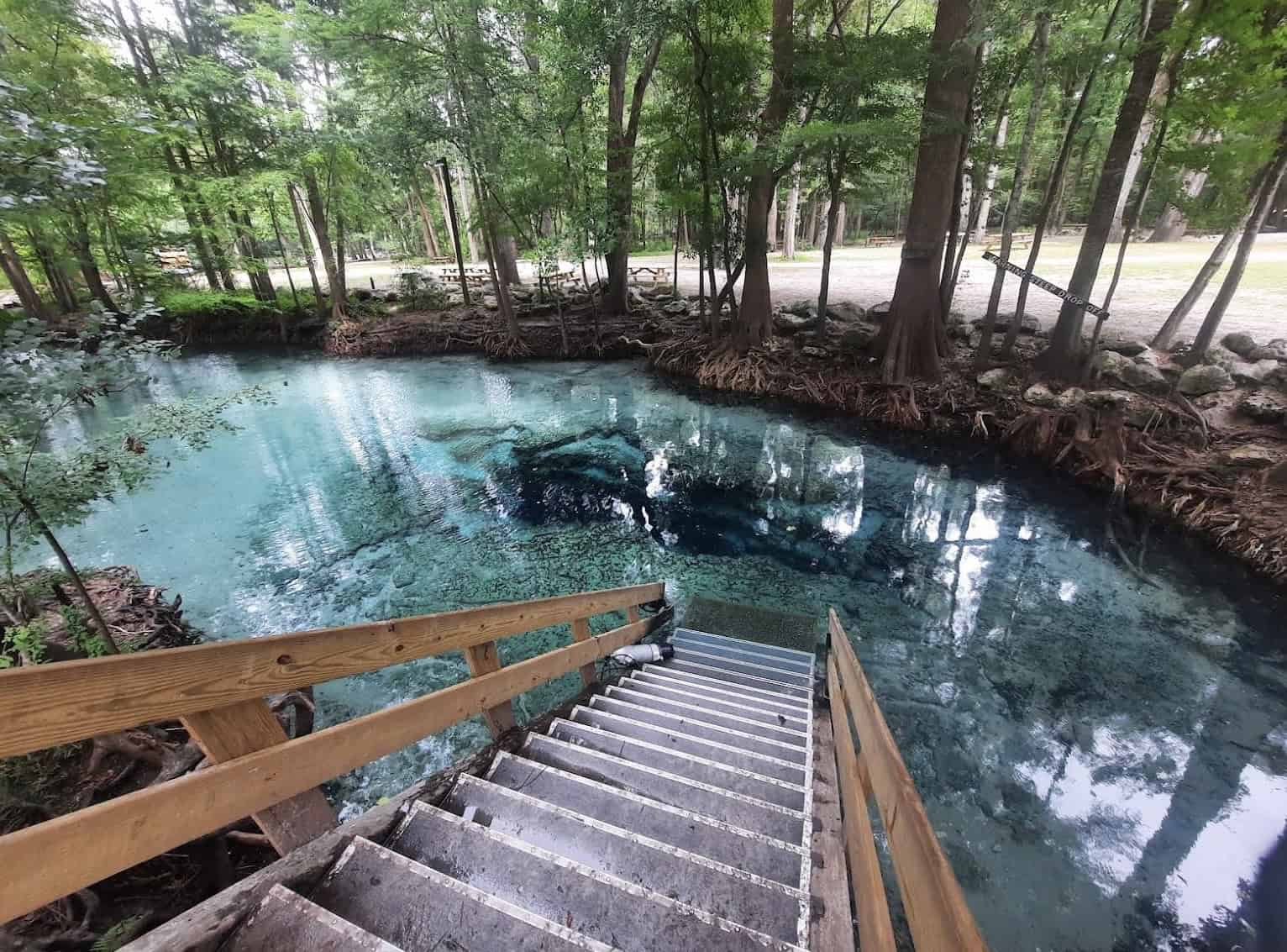
Ginnie Springs is widely considered one of the most famous freshwater diving destinations in the world. Located near the small town of High Springs in North Florida, this privately owned spring complex sits along the Santa Fe River and attracts divers, cave explorers, and underwater photographers from across the globe.
Ginnie Springs is not just one spring. The property includes seven individual vents, each offering slightly different underwater environments. What truly makes this location famous among divers, however, is the Devil’s Spring system, a series of underwater caverns and caves that form one of the most studied cave diving systems in the United States.
What Makes Ginnie Springs Unique
The most famous dive features within the Devil’s Spring system include:
- Little Devil: a crystal clear fissure, like a mini Silfra, that guides divers down river
- Devil’s Eye: a circular spring vent where water surges powerfully from the aquifer. Here you can find a high flow cave system that should only be attempted by experienced cave-certified divers
- Devil’s Ear: a canyon-like opening where divers can observe strong spring flow. Here tannin-stained water from the Santa Fe River mixes with the clear spring water to create a ghostly visual effect
- The Ballroom: a massive cavern chamber accessible to recreational divers
The Ballroom is one of the most popular cavern dives in Florida. Divers descend into a wide chamber with dramatic limestone ceilings and natural rock formations that create a cathedral-like underwater environment. Sunlight streaming through the spring opening above produces striking beams of light that make this a lovely location for underwater photography.
Beyond the cavern zone lies a network of cave passages extending for miles underground. These areas are strictly reserved for trained cave divers due to their complexity and overhead environment.
What Divers Can Expect
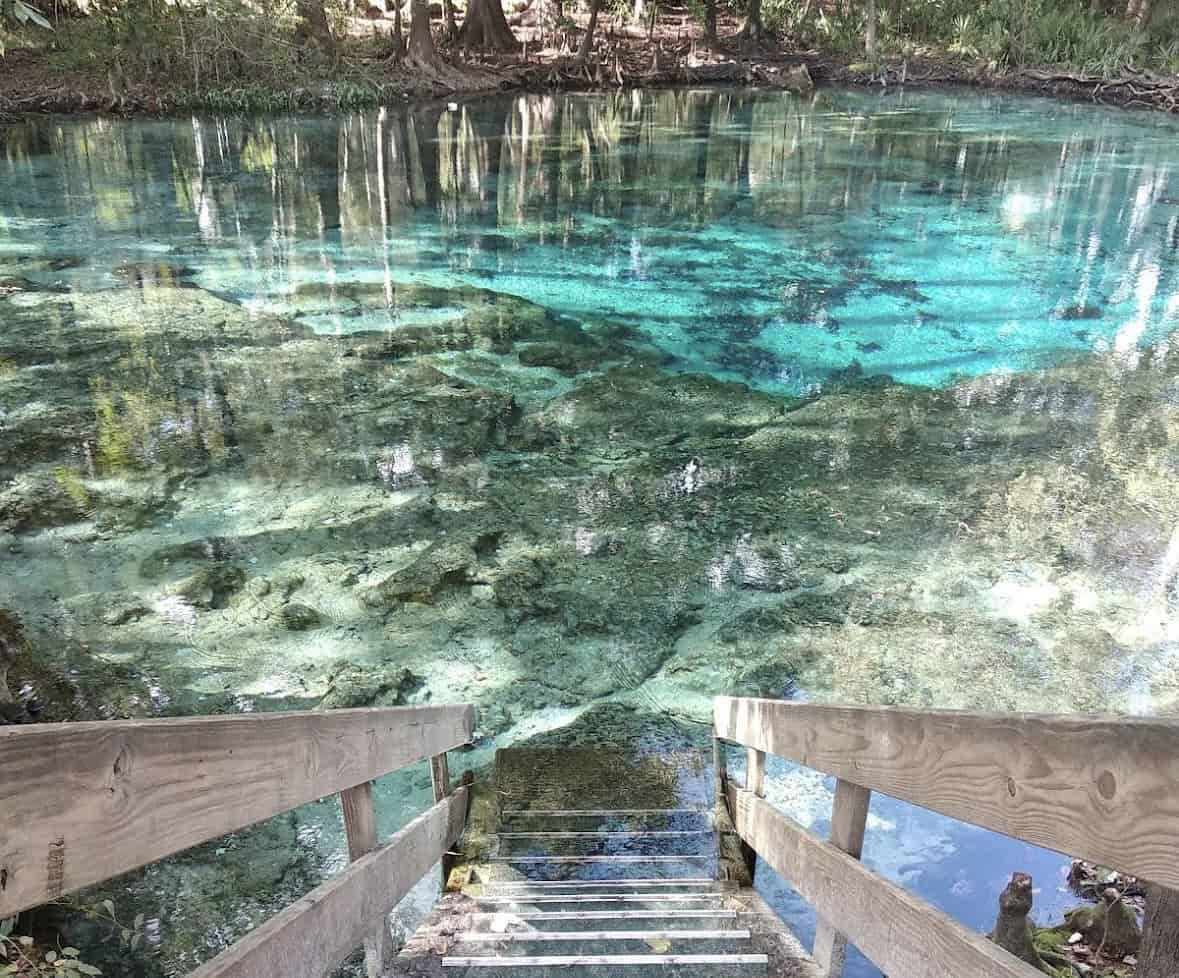
Recreational divers visiting Ginnie Springs will encounter:
- Daily entrance fee (~$36 at time of writing)
- All divers must sign a waiver
- Onsite dive shop with a variety of rental equiptment
- Stair entrance for easy access into the system
- Exceptional visibility
- Limestone cavern formations
- Strong spring vents pushing water upward from the aquifer
- Freshwater fish and turtles
- Large cavern chambers
- Camping sites available for multi-day stays (~$30-$40 per person, per day)
Experience Level
Ginnie Springs can accommodate a wide range of divers depending on the area being explored.
Recreational divers can enjoy the open basin and Ballroom cavern, as well as shallow water drifts at Little Devil or on the Santa Fe River between the Devils Ear and the main spring. You can even experience night diving in the Ballroom cavern, but only if you have previously dived the site during the day.
Best For
• Recreational divers
• Cavern diving
• Cave diver training
• Underwater photographers
2. Blue Grotto
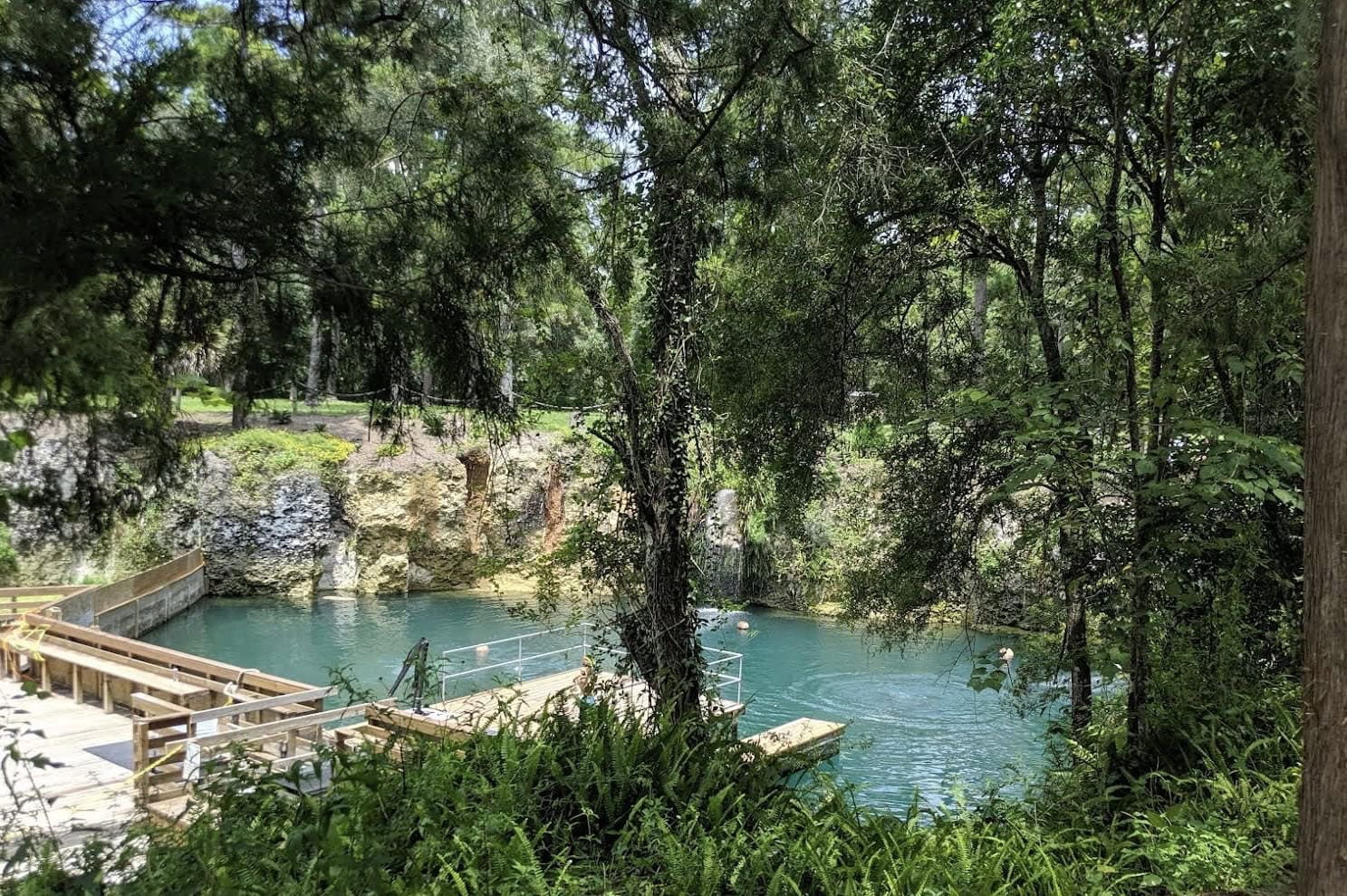
Blue Grotto is one of the most diver-friendly freshwater dive parks in Florida and an extremely popular location for certification training, skill development, and relaxed recreational dives.
Located near Williston in Central Florida, Blue Grotto is essentially a massive sinkhole that descends into a clear spring basin surrounded by towering limestone walls. The site has been carefully developed with divers in mind, featuring gear facilities, training platforms, and easy water entry points.
Because of its controlled environment and calm conditions, Blue Grotto is often the first spring dive many divers experience. It’s also often used for night dive training.
What Makes Blue Grotto Unique
The spring basin gradually descends to a depth of around 60 feet, with training platforms at around 35-40 feet, making it deep enough to feel like a real dive while still remaining accessible for newer divers.
One of the site’s most distinctive features is the large cavern chamber at depth, where trained divers can explore dramatic limestone formations and experience an overhead environment while remaining within recreational diving limits.
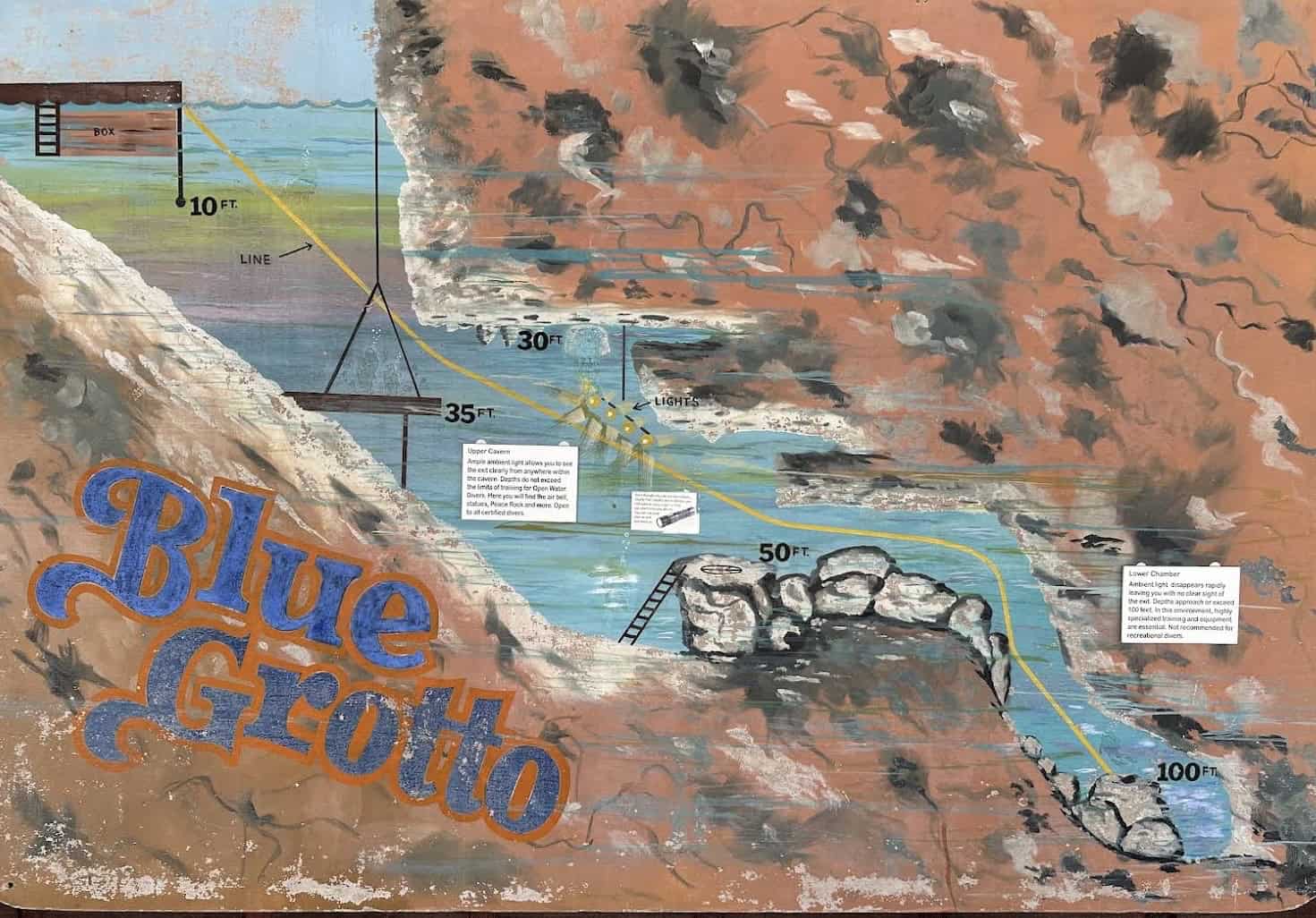
From about 60 foot, the cavern does extend down further to about 100 feet, however, this is considered an overhead, cave diving experience and you must be cave diver certified to enter this last stretch of the cavern.
At approximately 30 feet deep sits an air bell, a dome filled with trapped air (fresh air is pumped into the bell from the surface) where divers can remove their regulators and speak to each other. This unusual feature often surprises first-time visitors and adds an element of fun to the dive.
What Divers Can Expect
Divers entering Blue Grotto will encounter:
- Daily entrance fee for day or night diving (~$57, or $87 for both)
- All divers must sign a waiver
- Dive shop on premises with gear rental, air fills or instruction if booked ahead
- Instructors can gain access to a 12 foot on-site training pool
- Large deck and stairs for easy access
- Limestone cavern walls
- Sunken training platforms
- Clear blue water with excellent visibility, although there is a silty bottom that can be stirred up on a crowded day if divers’ buoyancy and finning are under par
- Underwater statues used for navigation training
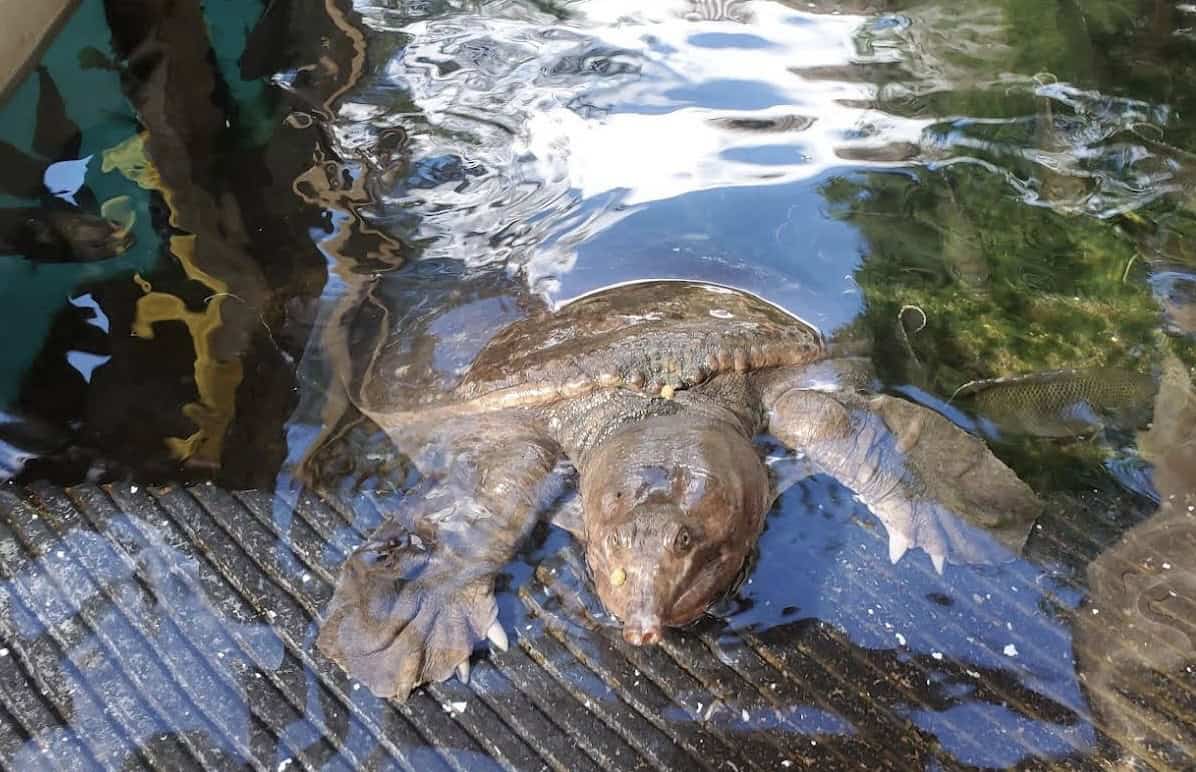
- Freshwater fish and turtles, including one of the most famous residents of Blue Grotto, Virgil the turtle, who is known for calmly swimming among divers
- Cabins and tent camping sites available for multi-day trips (starting at $22 per night)
Experience Level
Blue Grotto is suitable for all experience levels, from newly certified open water divers to advanced divers practicing buoyancy and navigation skills.
The site is also frequently used for advanced open water, rescue diver, and technical training courses.
Best For
• Beginner divers
• Training dives
• Cavern introduction dives
• Skills practice
3. Devil’s Den
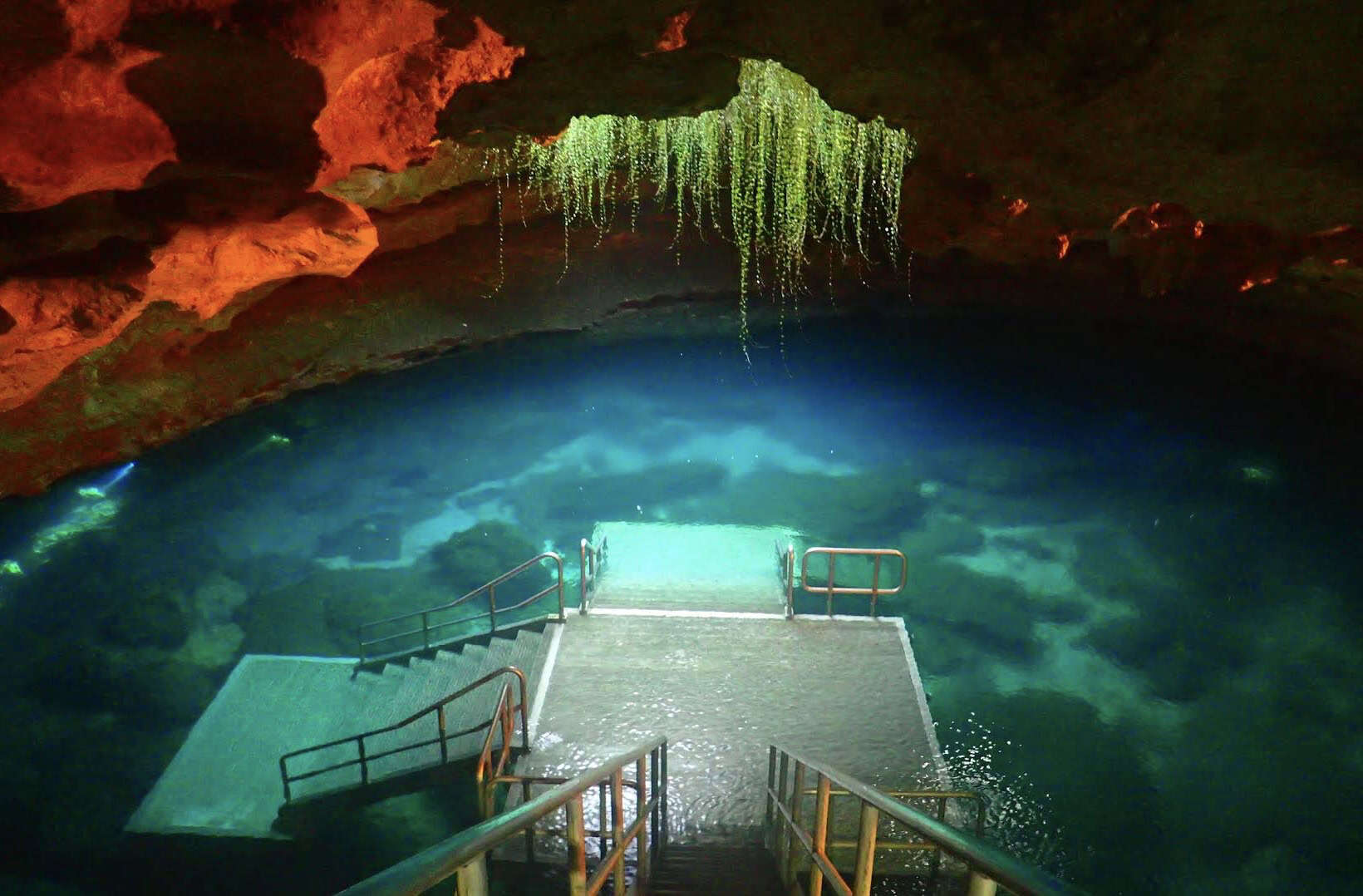
Devil’s Den is one of the most visually striking dive sites in Florida. Unlike most springs where divers enter through a pool or river, Devil’s Den requires descending through a cave opening (by stairwell) into a prehistoric underground chamber.
Located near Williston (practically across the street from Blue Grotto), Devil’s Den is a karst window, a collapsed cave that reveals an underground spring basin below. From above, the site looks like a mossy hole in the ground. Once inside, however, divers find themselves surrounded by towering limestone walls and glowing blue water.
The name “Devil’s Den” dates back to the 1800s, when early settlers noticed steam rising from the cave opening on cold mornings. The sight of vapor emerging from the earth led them to believe something supernatural was happening below.
What Makes Devil’s Den Unique
Devil’s Den is often considered one of the most photogenic freshwater dive sites in Florida. The main dive basin sits inside a 120-foot-wide underground cavern with a circular opening in the ceiling. Sunlight pours through this opening and illuminates the water below, creating a surreal environment where beams of light penetrate the cavern.
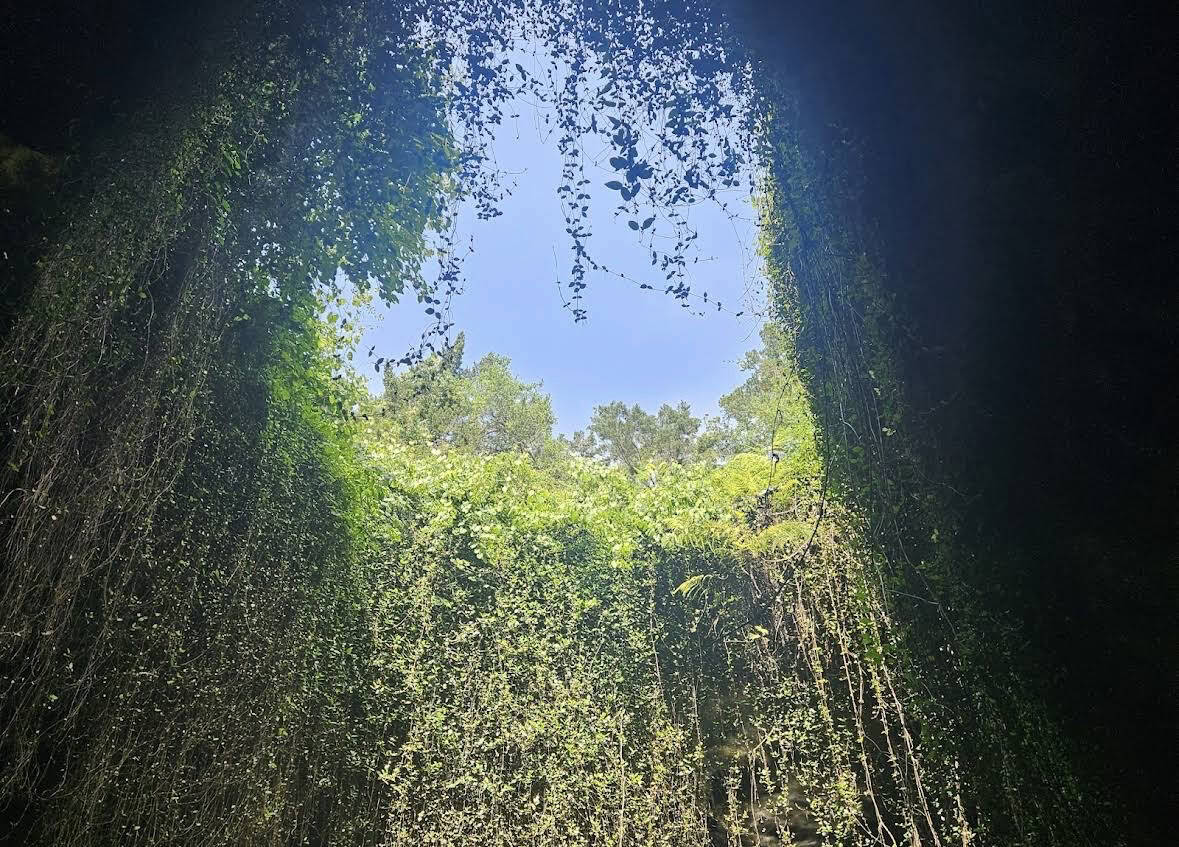
The spring itself reaches depths of around 54 feet, with rock ledges and small swim-throughs along the cavern walls. Fossil beds dating back 33 million years make this a dive back in time and one you won’t soon forget.
Aside from the main diving attraction, the grounds are stunningly maintained with full facilities and impeccable safety guidelines.
What Divers Can Expect
Divers entering Devil’s Den will experience:
- Daily entrance fee for day diving ($48); Night diving ($480 for a group of 10 or less)
- All divers must sign a waiver
- Dive shop on premises with gear rental, and air fills (no nitrox)
- A cavern dive environment with overhead rock formations
- Diving deck with easy entry points
- Dramatic lighting created by sunlight filtering through the cave ceiling
- Fossilized limestone rock walls gives the dive an almost prehistoric atmosphere
- Clear freshwater visibility
- Small freshwater fish and turtles
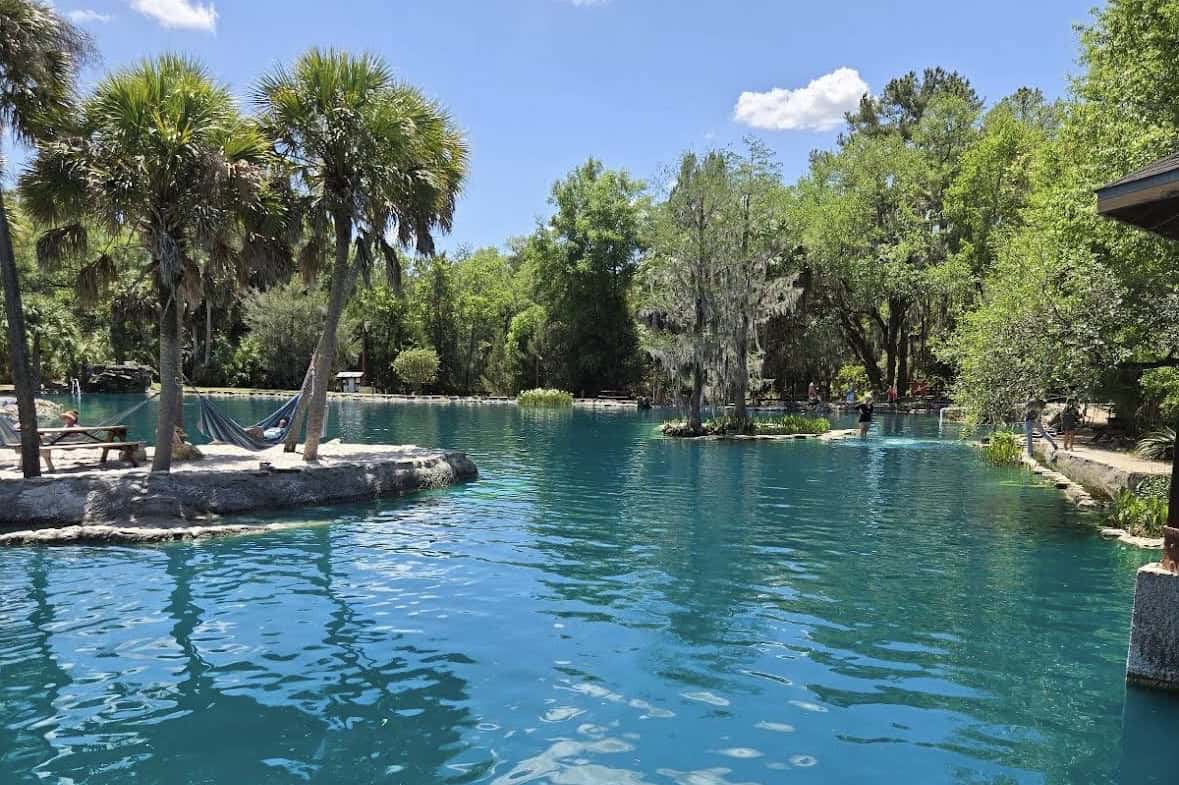
- John’s Oasis, a brand new man-made swimming and diving paradise (an additional $10 entry fee if you are already diving the den)
- Cabins (~$115-160 per night) and primitive camp sites ($22 per night) available for multi-day visits
Experience Level
Devil’s Den is accessible to open water recreational divers, although the cavern environment makes it slightly more advanced than open basin springs.
The owners and dive shops require a brief orientation before entering the water.
Best For
• Recreational divers
• Cavern environment exploration
• Underwater photographers
• Unique geological formations
4. Rainbow River
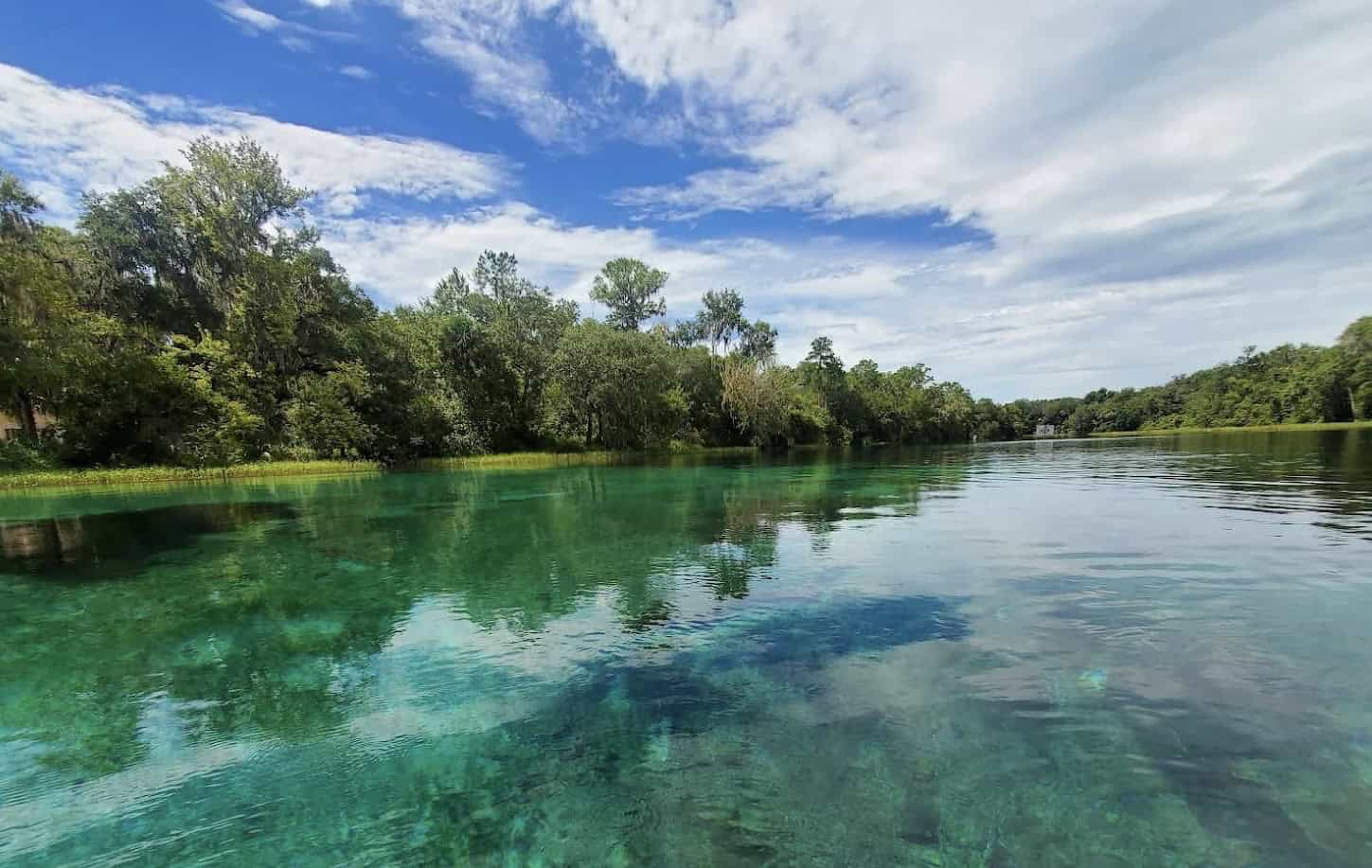
Rainbow River offers a completely different diving experience compared to most Florida springs. Instead of descending into a deep sinkhole or cavern, divers explore a spring-fed river system filled with aquatic vegetation and freshwater wildlife.
Located near Dunnellon, Florida, Rainbow River is known for its gentle current and incredible water clarity. The river originates from Rainbow Springs, a first-magnitude spring system that pumps millions of gallons of freshwater into the river each day.
Because the river is relatively shallow, sunlight penetrates easily, creating bright underwater scenery that feels almost tropical, and with the constant 72°F water temperature you can explore this site year round.
What Makes Rainbow River Unique
Rainbow River is one of the few places in Florida where divers can enjoy a freshwater drift dive. Instead of swimming against current, divers typically take a boat up river and then allow the gentle flow of the river to carry them downstream while they observe the underwater landscape. Depth can range from 5 feet to 25 feet, so remain diligent in equalizing your ears as you go.
The river bottom is covered with sand and limestone formations, along with thick beds of eelgrass that sway in the current. Keep your eyes peeled for sand boils, bubbling sand caused by micro springs along the bottom of the river.
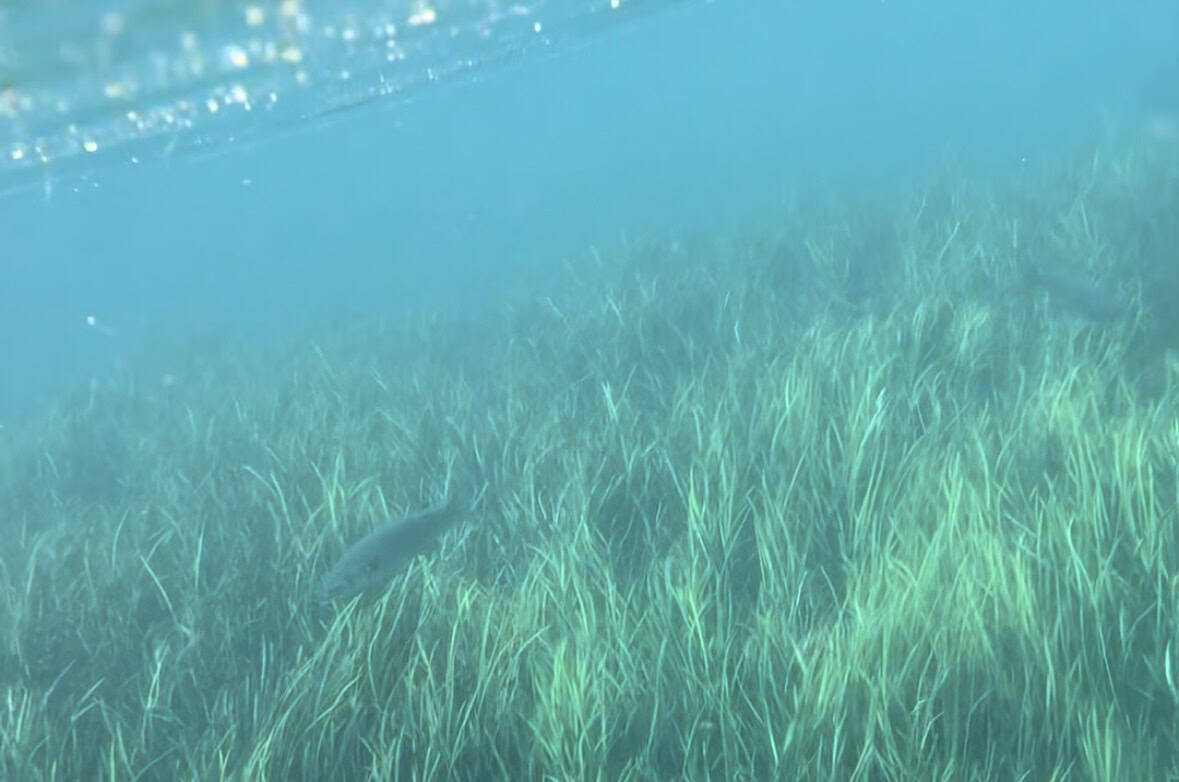
Florida gar and freshwater turtles are only a few of the species found in this river system. I’ve personally even been surprised by a diving anhinga (water bird) in this river, and when I say it’s a shock to see a bird swimming past you on a dive, I mean it.
If you plan your dive in the cool winter months, you can pair your trip with a manatee snorkel experience in Crystal River.
What Divers Can Expect
Divers drifting along Rainbow River often encounter:
- All excursions typically start from KP Hole Park
- Divers can use a local dive shop to get up river and guide you through the drift, or if you want to go it alone, just book a (~$15) ride up river with the Rainbow River Water Taxi. There is also a (~$20) fee paid to the park
- A dive flag is required for this drift
- Constant depth changes throughout the drift from 5 feet to over 20 feet, be aware of boats, kayaks and tubers sharing the river
- Bluegill, sunfish, gar, mullet and turtles, but also keep on the lookout for diving birds or river otters
- Schools of freshwater fish and lots of eel grass beds
- Sand boils where spring water rises from underground vents
- As you near KP Hole Park at the end of the drift you’ll find a small cavern
- While there are no onsite campgrounds or cabins there are plenty of nearby motels, homestays and campgrounds
Experience Level
Rainbow River is suitable for beginner divers, as the depths typically range between 10 and 30 feet. However, proper buoyancy control is important to avoid disturbing the delicate eelgrass beds, and diver should be able to manage their air spaces comfortably.
Best For
• Beginner divers
• Drift diving
• Wildlife observation
• Relaxed scenic dives
5. Manatee Springs
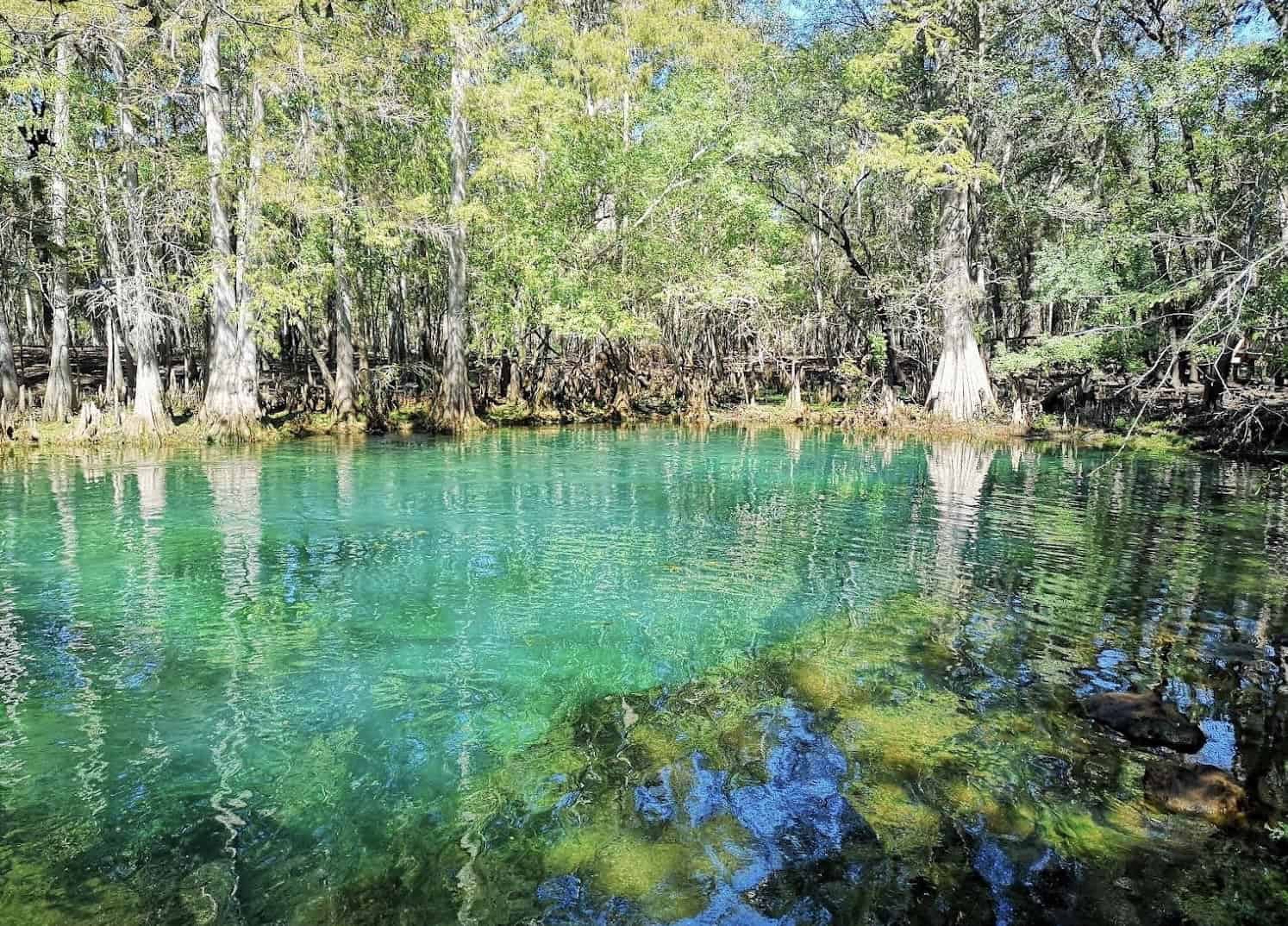
Manatee Springs State Park is one of North Florida’s most unique freshwater dive sites. Located along the Suwannee River, this spring system produces millions of gallons of crystal-clear water each day.
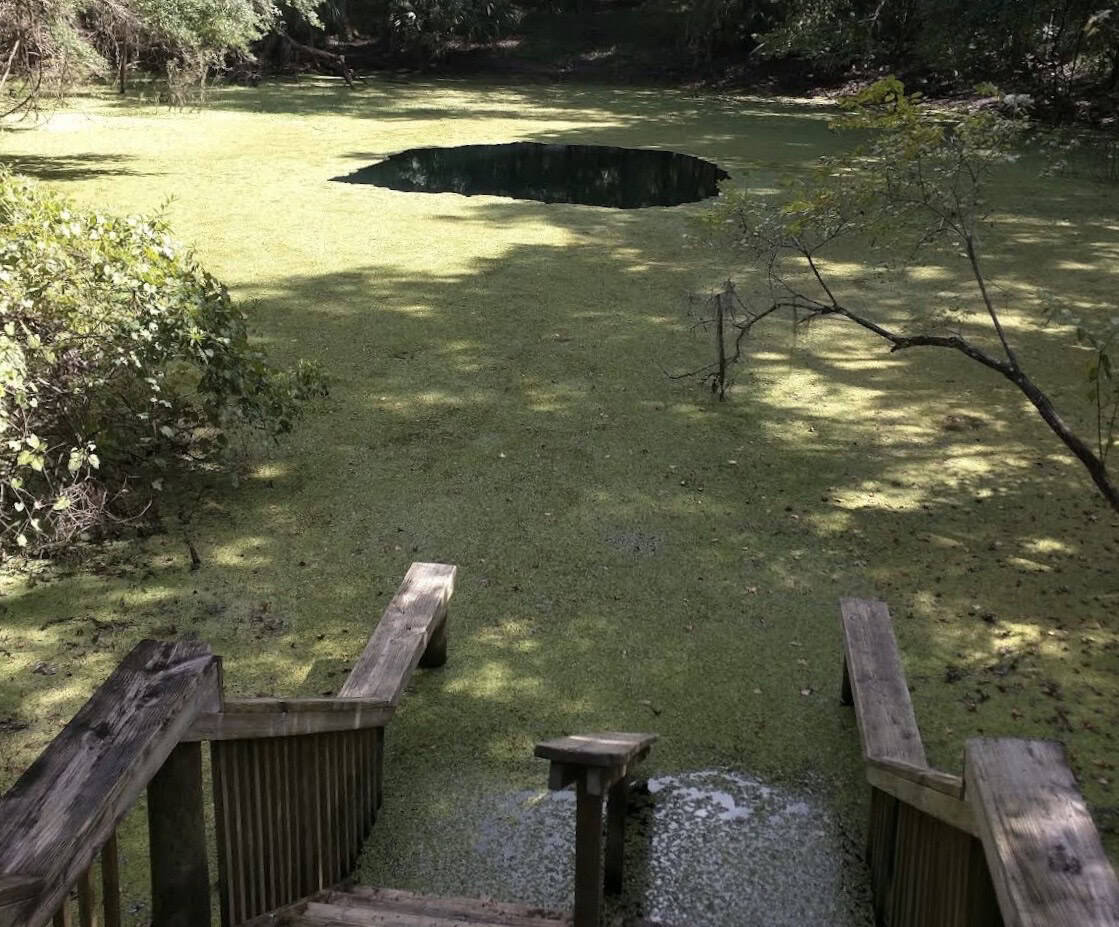
While the spring basin itself is beautiful, the real draw for divers is a cavern known as Catfish Hotel, a 60-feet deep, rather wide limestone sinkhole that leads into an extensive cave system. The floating duck weed at the surface of this pool creates an otherworldly ambiance below as the sunlight fights to penetrate holes opened up by divers bubbles.
Manatee Springs offers a fantastic combination of geology, wildlife, and cavern exploration.
What Makes Manatee Springs Unique
Catfish Hotel is a cavern entrance filled with massive limestone formations and, yes, a few resident catfish. The real draw for most is the sun beams breaking through the duck weed at the pool’s surface.
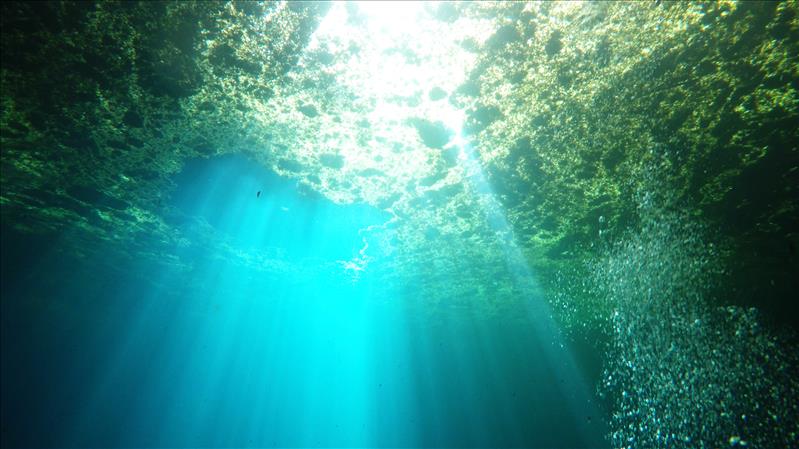
Although the deeper cave passages extend far underground, recreational divers can safely explore the cavern zone without entering the restricted cave system on the far side.
Catfish hotel is connected to manatee springs by a small cave system that creates a “suck” zone on the catfish side and a vent on the spring side. I would not recommend getting too close to this cave, but you can grab onto an overhead ledge and experience the pull of the water through this vent. I do not recommend diving through this short vent system, as the water flows very fast and it is possible to get lodged in the passage, not to mention this would be considered a cave dive and requires proper training.
Instead, a short walk on land will take you to Manatee Springs proper, a shallow, crystal clear pool where it is possible to see manatees during certain times of the year.
The combination of dramatic rock formations and abundant fish life on either side makes this one of the most interesting cavern dives in Florida.
What Divers Can Expect
Divers exploring Manatee Springs may encounter:
- The park charges $6 per vehicle to enter.
- 2 separate dive sites, each with their own highlights and personalities
- Limestone cavern formations and catfish on the Hotel side, and schools of freshwater fish, turtles and possible manatee or otter sightings on the spring side
- Clear freshwater visibility
- Seasonal manatee sightings in winter months (although the park may close the spring when they are around)
- Onsite bathrooms, rinse stations and benches for setting up your gear
- Camping within the park (starts at $20 per night) and nearby glamping (~$150 per night) available for multi-day trips
Experience Level
The spring basin is suitable for open water recreational divers, while the cavern area requires additional training and awareness of overhead environments. Beware of the suction zone in Catfish Hotel and see a local dive shop of tips or guiding.
Best For
• Beginning (spring) to Intermediate (hotel) divers
• Cavern diving
• Freshwater wildlife observation
6. Paradise Springs
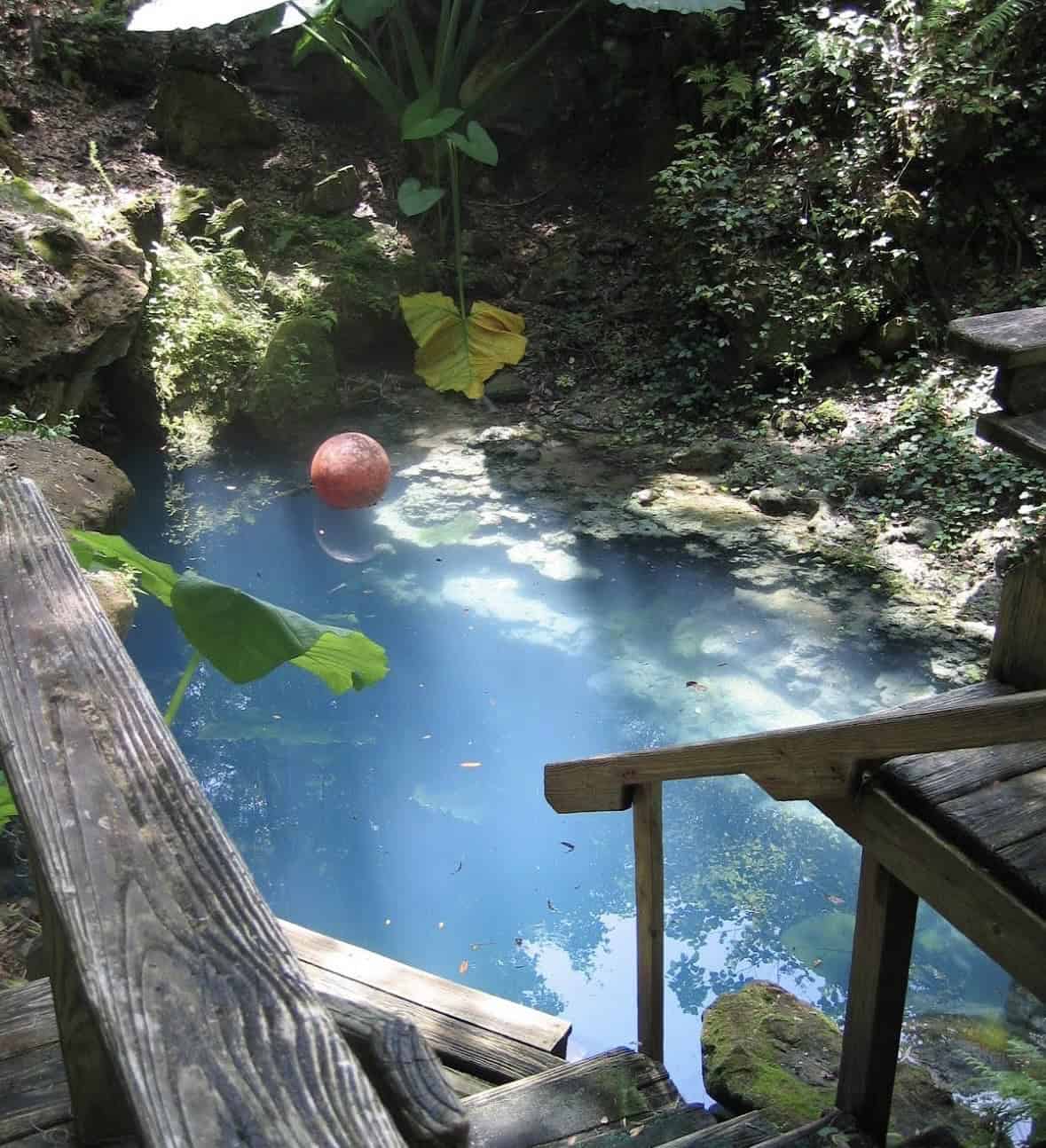
Hidden among the forests near Ocala, Florida, Paradise Springs feels like stepping into a secret jungle oasis. Off the highway, you’ll follow a dirt road to the site. A short walk through the jungle will take you to what appears to be a small, blue swimming hole.
The depth in the main sinkhole is about 30 feet where there is plenty to explore. A wooden platform sits at 15 feet if you need to practice skills or get your bouyancy in check. It can also serve as a safety stop at the end of your dive.
At depth there is a guideline that will take you through a large passageway leading you as far as 100-feet deep. While this is still technically considered a cavern dive, only experienced divers with advanced certification should descend into the passageway with the aid of a flashlight.
What Makes Paradise Spring Unique
Paradise Springs is a hidden gem for divers seeking a quieter and more adventurous freshwater dive site. This privately owned site is much quieter than some of Florida’s more famous springs, but it offers one of the most dramatic sinkhole dives in the region.
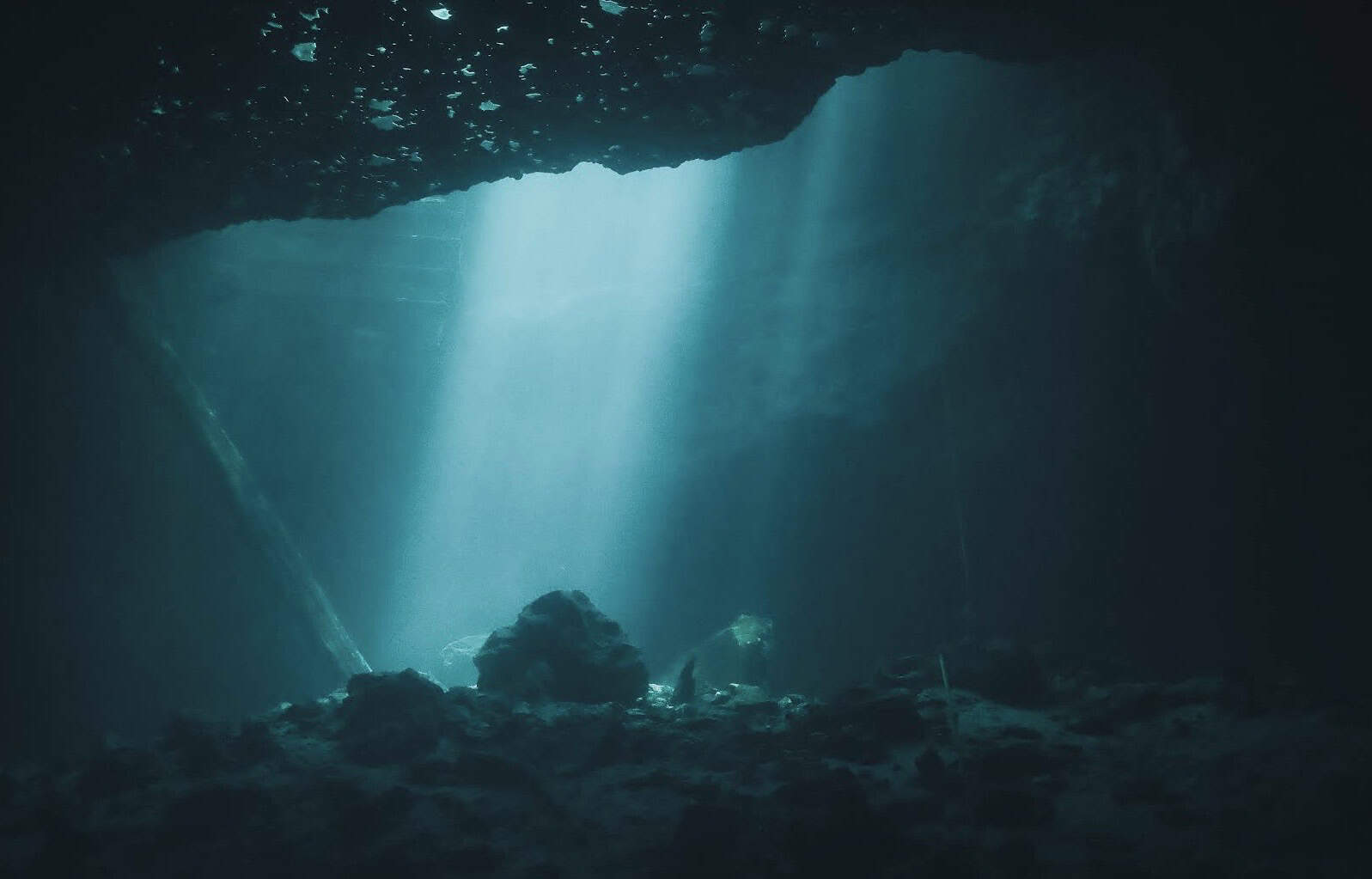
Divers enter the water by descending a wooden staircase into a circular sinkhole, or karst window, surrounded by dense vegetation and limestone rock. It truly feels as though you are exploring uncharted territory. Below the surface you’ll find a geological treasure trove, the limestone walls are teeming with fossils and other interesting formations.
The surrounding rock walls create a dramatic descent that feels almost like diving into a natural well. The basin reaches depths of approximately 100 feet, making it one of the deeper recreational spring dives in Florida.
What Divers Can Expect
Divers exploring Paradise Springs should expect:
- Entry fee is $30 per diver and must be paid in cash
- A minimum certification level of advanced open water is required to dive this site
- The site is closed, except by appointment, on Mondays and Tuesdays
- There is a wooden deck and stairway for easy entry and exit
- Vertical limestone walls and naturally carved archways
- A silty bottom requires proper buoyancy to maintain visibility
- Fossilized rock formations
- A deep blue sinkhole environment
- Bathrooms and changing facilities are available
Experience Level
Because of its depth, Paradise Spring is best suited for advanced open water divers. You must show this cert level and at least 15 dives for entry.
Many divers visit specifically for deep diving practice and advanced training courses.
Best For
• Advanced divers
• Deep dive training
• Cavern exploration
7. Alexander Springs
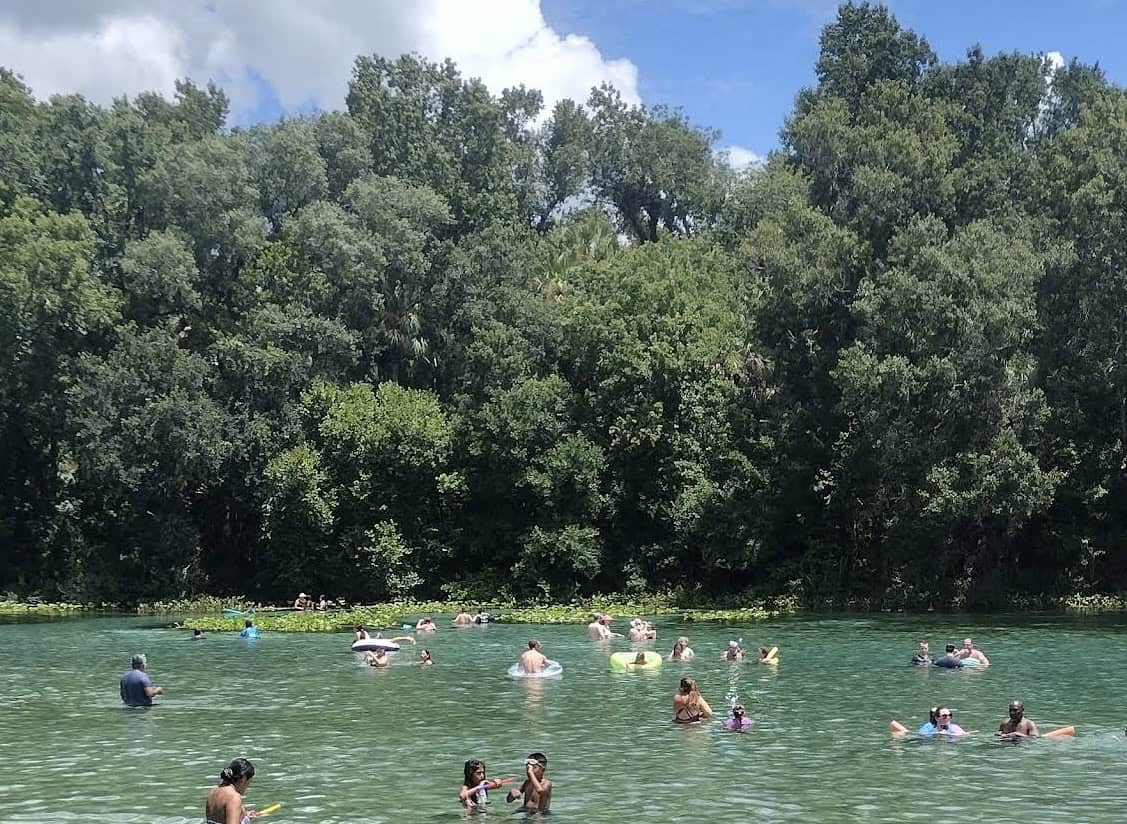
I argued with myself on whether to include Alexander Springs because of how crowded this small, shallow recreation area can get. However, Alexander Springs is one of the most accessible spring dive sites in Florida and, crowded or no, is a fantastic location for beginner divers, divers looking for an easy refresh, or for testing out new gear.
That being said, if you intend to dive this very popular site I recommend getting there early, especially in the summer months (I’m talking, before park open). Once the parking lot is full the recreation area will close.
Located in the Ocala National Forest, this spring features a large sandy-bottomed basin that gradually deepens to around 25 feet, making it much shallower than most springs. The sink is near perfection and houses the magnitude-1 spring, spilling out over 64-million gallons of fresh water each day.
What Makes Alexander Springs Unique
Unlike many springs that have steep sinkholes or cavern environments, Alexander Springs has a wide open basin with gentle slopes and clear water. You’ll probably be sharing this space with several divers, mermaid photoshoots, free divers and swimmers.
Outside of the main sink there is a large shallow area, less than 10 feet deep, that you can also explore. Here you’ll find a majority of the springs wildlife including freshwater fish, turtles and possible otter, bird or alligator sightings. There is even a large area of lily pads that create a maze like experience and are great for practicing photographers to play with the light.
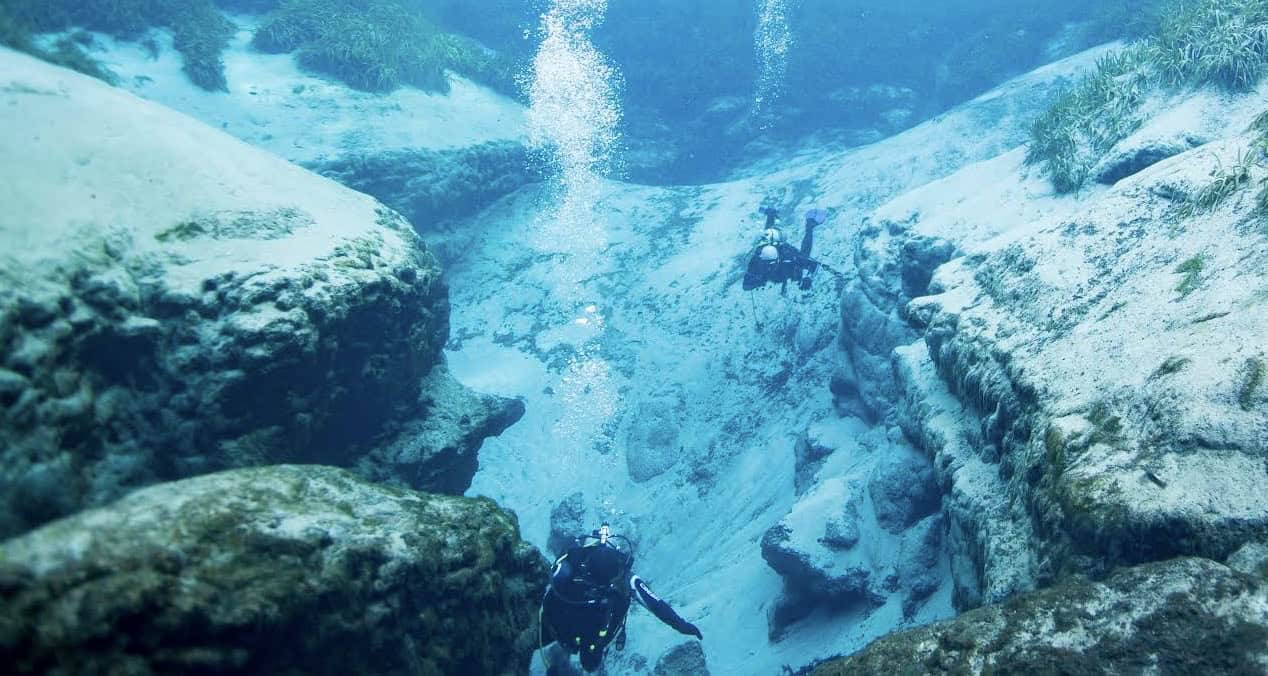
The sandy bottom allows divers to easily observe the spring vents where groundwater bubbles up from the aquifer. However, proper finning technique is important to avoid kicking up the bottom in such a shallow environment.
What Divers Can Expect
Divers exploring Alexander Springs can expect:
- Entry fee (~$12)
- Bring an actual dive card or print out of your dive cert for the front desk to hold while you are in the water. Its how they track divers in and out of the spring
- There is a little bit of a walk (~.25 mile) from parking to the water, so if you do not want to make the trek in your gear bring a cart
- Stone step entry way with a steep-ish drop off at the bottom step. Sometimes this causes issues getting out of the water in your gear, so if you are struggling just take the gear off in the water and lift it out
- Crystal-clear, sandy spring basin
- Freshwater fish and turtles
- Possible alligator or otter sightings, but typically only happens in the winter when the spring is quieter
- Small underwater vents releasing groundwater around the main spring
- Bright penetrating sunlight and excellent visibility, especially around the spring basin
- Excellent on-site facilities including a snack shop, bathrooms and a fresh water shower
- On-site camping is available, but generally books up early in the summer and on the weekends (~$36 per night)
Experience Level
Alexander Springs is ideal for beginner divers and training dives.
Best For
- Beginner divers
- Open water certification dives or dive skill refreshes
- Relaxed underwater exploration
- Testing out new gear
8. Blue Hole Spring (Ichetucknee)
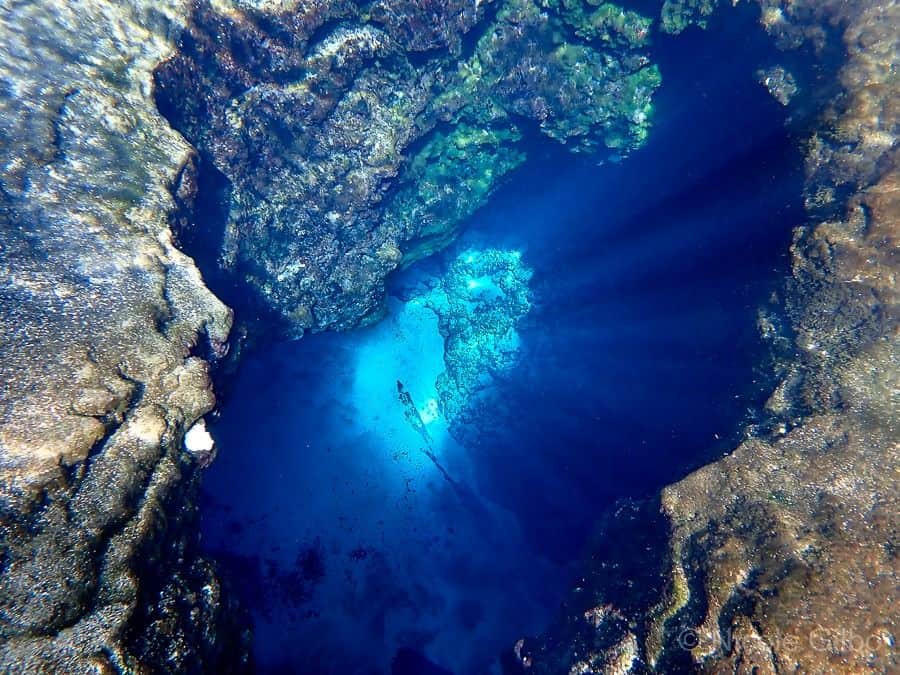
Blue Hole Spring or Jug Hole is one of the most powerful and visually striking freshwater dive sites in Florida, and it serves as the crown jewel of Ichetucknee Springs State Park. Tucked away in a forested area of North Florida, this spring offers a pristine and almost untouched diving environment that feels worlds away from the busier, more developed spring parks.
As a first-magnitude spring, Blue Hole produces an immense volume of water, as in millions of gallons per day, flowing up from deep within the Floridan Aquifer. This constant flow not only keeps the water crystal clear but also creates a dynamic underwater environment where divers can actually feel the power of groundwater rising from beneath the earth.
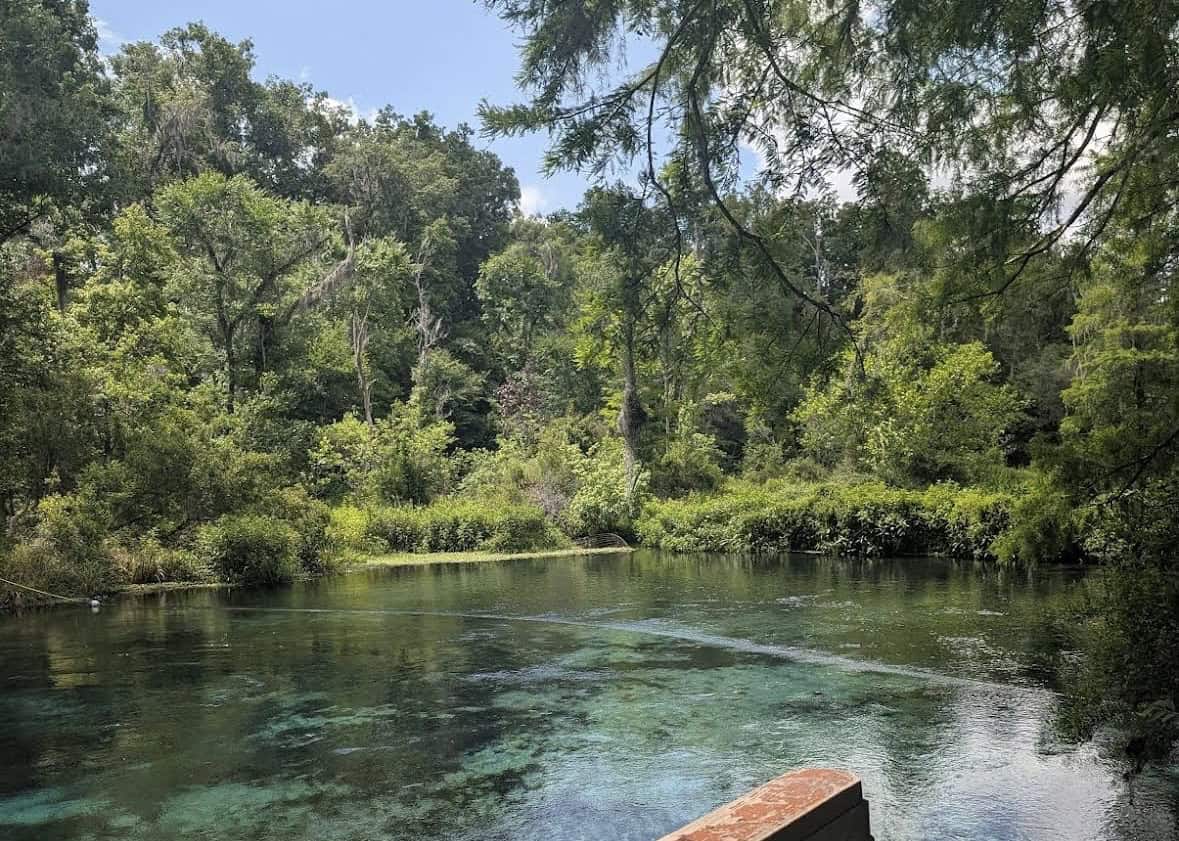
Unlike some of the more recreationally developed dive sites in Central Florida, Blue Hole has a more natural, rugged feel. Access requires a short walk through shaded forest trails, adding to the sense that you’re discovering something hidden and special. Once you arrive at the spring it is well-curated with a deck and stairs for easy access.
What Makes Blue Hole Unique
The defining feature of Blue Hole Spring is its deep, circular basin, which descends to approximately 35-40 feet before opening into a cavern system below.
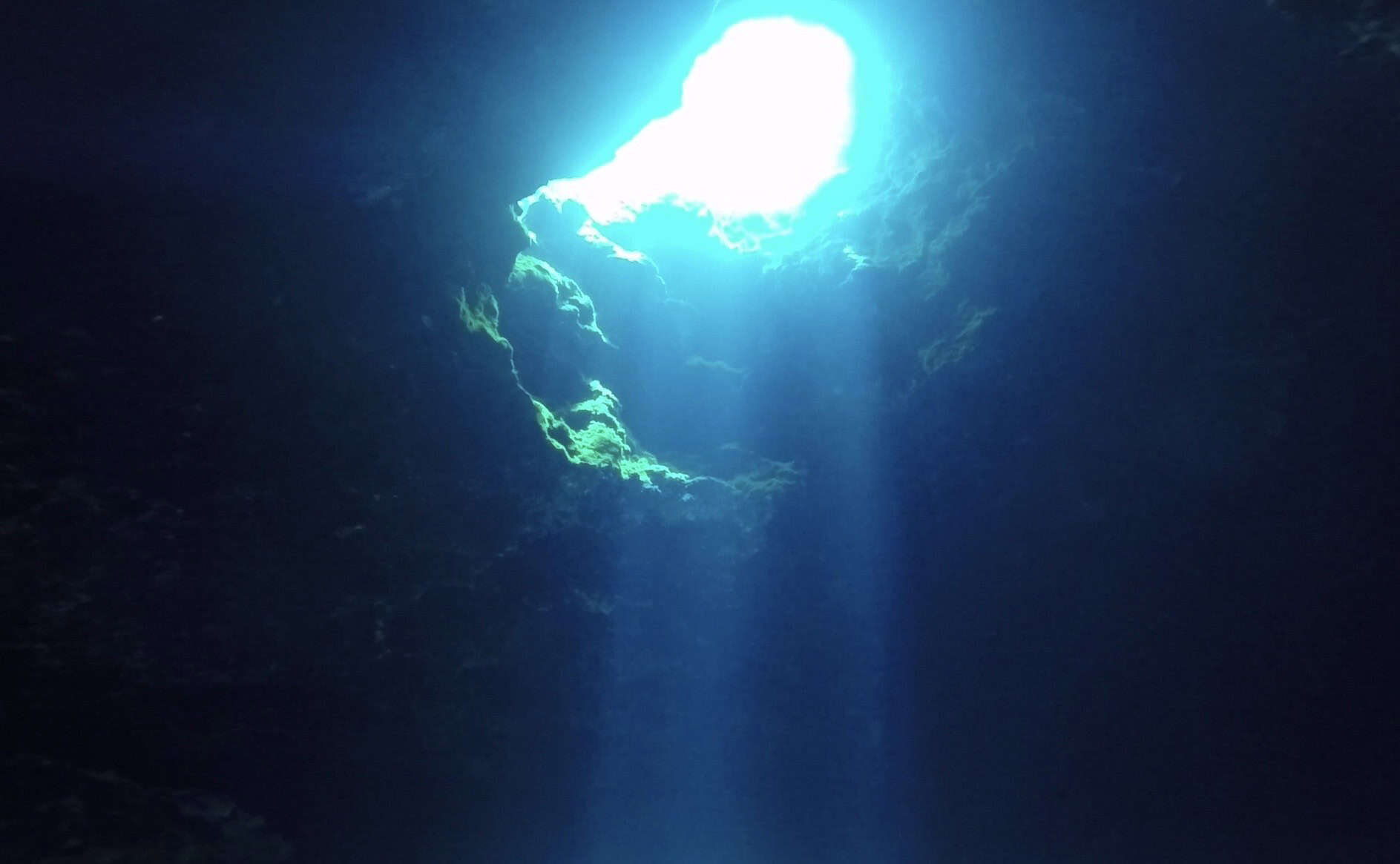
As divers descend, the water takes on an increasingly rich blue hue, giving the spring its name. The clarity is often exceptional, and on a good day, you can clearly see the limestone formations and the cavern opening below. The descent into the basin is gradual at first, then becomes more dramatic as the bottom slopes toward the cavern opening. Light penetration is excellent in the upper layers, but the area near the cavern entrance becomes darker, creating a striking contrast that is ideal for underwater photography.
At the bottom of the basin lies a somewhat small cavern entrance, where water surges upward from underground passages. This opening marks the beginning of a much larger cave system that extends for miles beneath the surface. The cavern, because of it’s small opening and strong spring flow, should only be accessed by advanced a cavern trained divers.
What makes Blue Hole particularly fascinating is the visible movement of water. Unlike still spring basins, you can often observe currents pushing upward from the vent, especially as you get closer to the cavern entrance. It’s a subtle but powerful reminder that you’re diving directly above an active aquifer system.
What Divers Can Expect
Divers exploring Blue Hole will encounter encounter:
- A $6 entry fee per vehicle to enter the state park
- You must register at the North Ranger Station and show that you are a cavern certified diver
- About a half-mile hike from the parking area to the spring (a cart is recommended)
- A deep, open spring basin surrounded by forest
- Sand and sediment slopes leading into the basin
- A defined cavern opening that should only be accessed by trained divers
- A mix of dramatic geology and peaceful freshwater scenery
- Strong spring flow near the vent
- Freshwater fish such as sunfish, bass, and mullet, as well as occasional turtles
The dramatic coloration and strong flow make this one of the most visually impressive spring dives in Florida.
Experience Level
Recreational divers can explore the basin, while the cavern requires advanced certification and the deeper cave system requires a cave diving certification.
Best For
- Advanced recreational divers
- Cavern training
- Underwater geology enthusiasts
- Underwater photographers
9. Cherokee Sink (Wakulla Springs State Park)
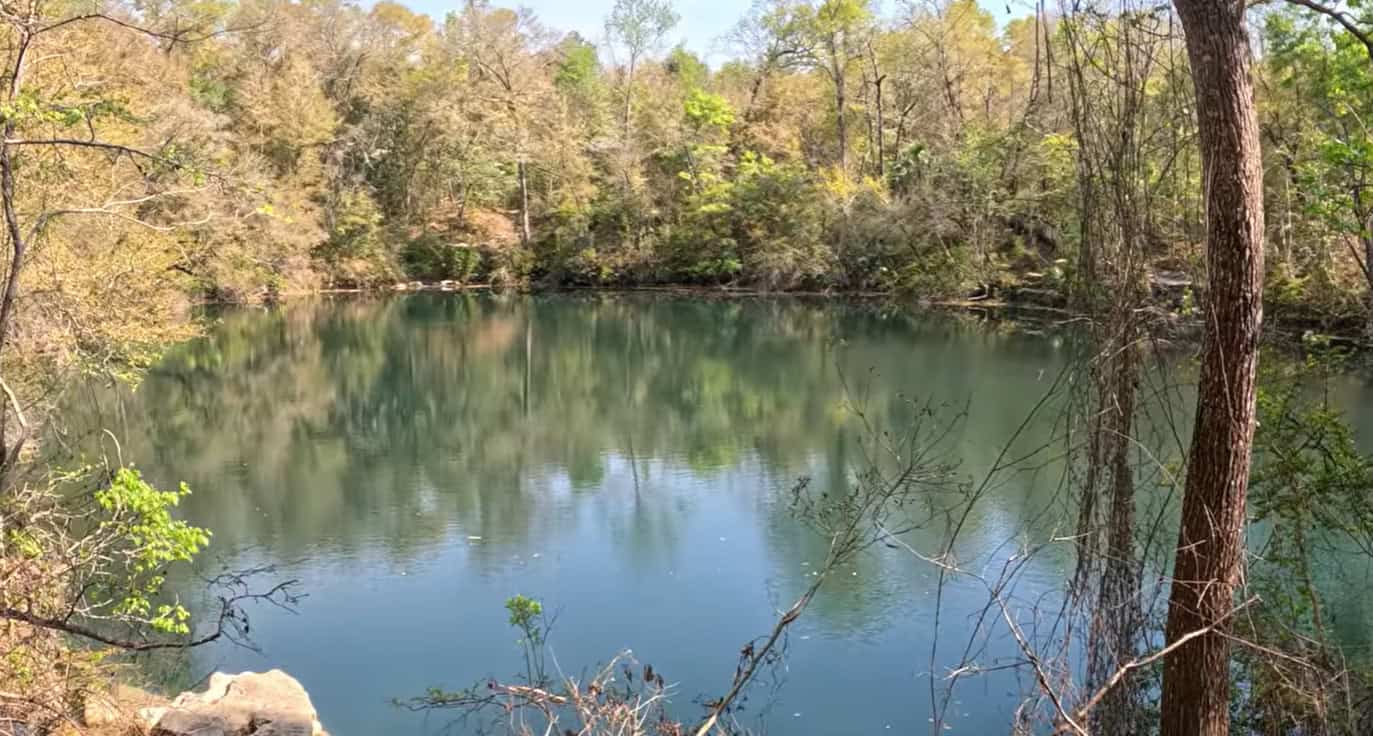
Cherokee Sink is one of North Florida’s most underrated dive sites and a true hidden gem within Florida’s famous cave country. Located in the Apalachicola National Forest, within Edward Ball Wakulla Springs State Park, this remote sinkhole offers a peaceful, uncrowded diving experience surrounded by dense forest and natural beauty.
Unlike more developed spring parks, Cherokee Sink has a rugged, untouched feel. There are no dive shops, platforms, or built-up facilities here, just a quiet trail leading to a dramatic limestone sinkhole filled with clear freshwater. For divers looking to escape the crowds and experience Florida’s springs in a more natural setting, Cherokee Sink delivers something truly special.
What Makes Wakulla Springs Unique
Cherokee Sink offers a glimpse into the dramatic geology that defines Florida’s cave country, without requiring technical cave diving certification. It’s the kind of place that reminds you how wild and untouched parts of Florida still are. No crowds, no noise, just clear water, ancient limestone, and the quiet feeling of descending into one of the state’s hidden underwater worlds.
Cherokee Sink is a large, open sinkhole basin with steep limestone walls that descend into deep, clear water. The basin reaches depths of approximately 70-80 feet, making it a comfortable dive profile for experienced recreational divers.
What makes this site particularly interesting is its connection to the region’s extensive underground cave systems. Recreational divers are not allowed to dive the main Wakulla Spring, but at the bottom of this sinkhole lies a cavern entrance to that same cave system.
While the cave passages are reserved for trained cave divers, recreational divers can safely explore the basin and observe the cavern opening from a distance. The surrounding rock walls and circular shape of the sink create a dramatic underwater landscape that feels both enclosed and expansive at the same time, like descending into a natural amphitheater. Because the site is less trafficked than other springs, and divers can enjoy a peaceful, uninterrupted dive.
What Divers Can Expect
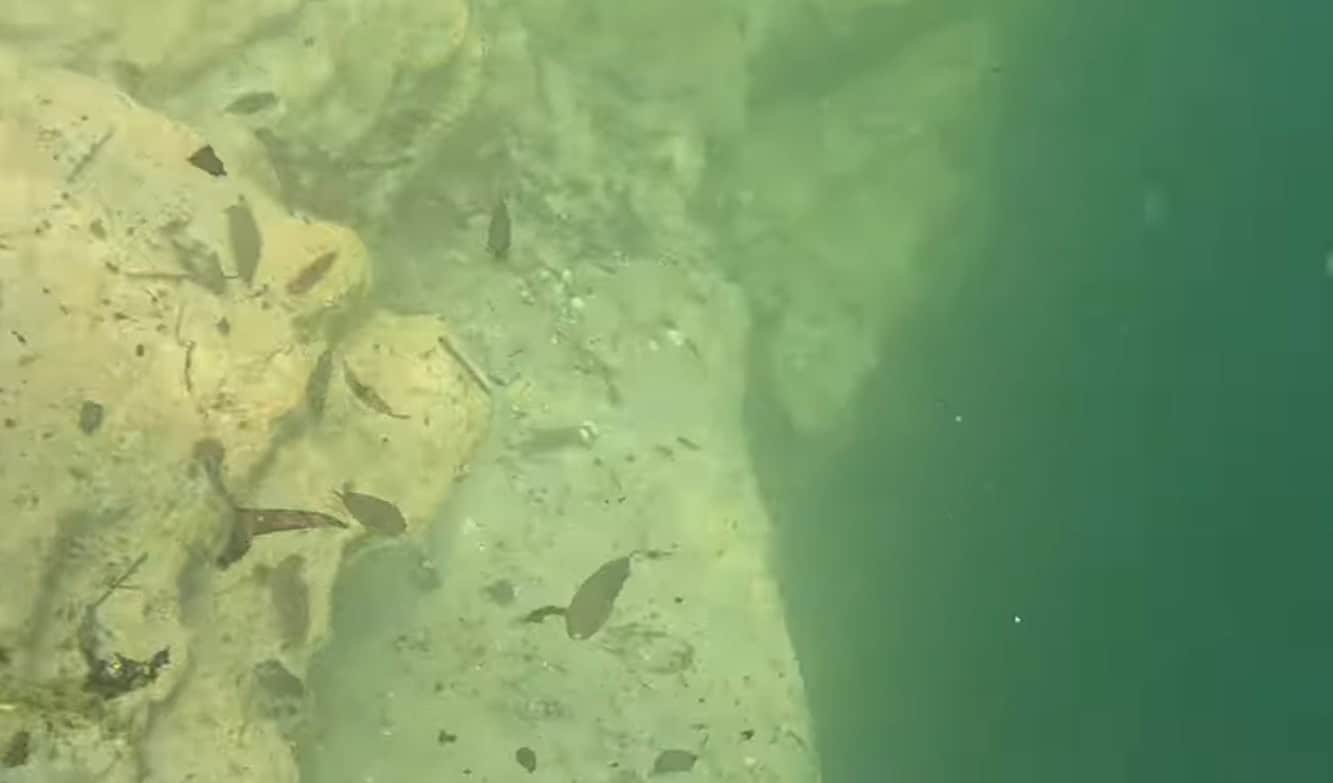
Diving Cherokee Sink offers a raw and immersive freshwater experience. Here is what you can expect:
- Entry fee to the state park is $4 per vehicle, paid at a kiosk in the parking area
- You’ll have to hike a roughly 1-mile trail from parking to the sink (carts are recommended to carry your gear)
- Aside from a porta-potty there are no facilities
- The entry point is natural, but shallow
- Steep limestone walls dropping into the basin
- Clear freshwater, but turbid visibility (I would venture about 15-20 feet). Stick to the walls and avoid the center where you could get disoriented by the lack of clarity
- A wide, open sinkhole environment
- Minimal crowds and a quiet dive atmosphere
- Freshwater fish and turtles call this protected sink home
Because Cherokee Sink is located in a natural, undeveloped area, divers should plan ahead. Bring all of the gear and tanks you will need, and dive with caution and always with a buddy.
Experience Level
Cherokee Sink is best suited for intermediate to advanced recreational divers.
While the basin itself is within recreational limits, the depth, visibility and proximity to a cavern environment mean divers should be comfortable with:
• Deeper recreational dives
• Maintaining good buoyancy control
• Navigating natural (non-developed) dive environments
Best For
• Cave diving exploration
• Scientific research diving
• Geological and hydrological interest
• Advanced technical divers
10. Blue Spring State Park
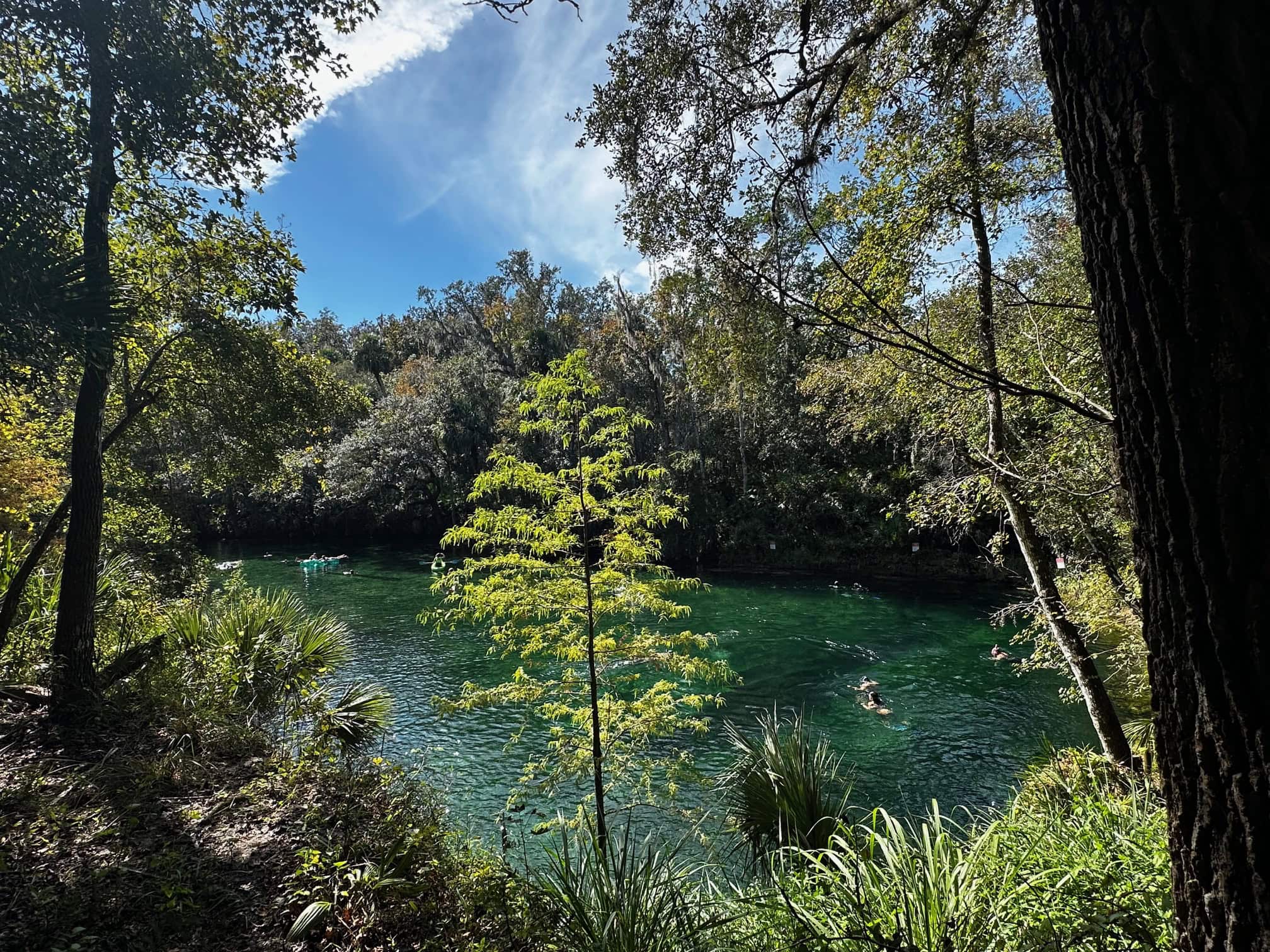
Blue Spring State Park is one of Florida’s most famous freshwater springs and a unique dive site that combines crystal-clear spring water, abundant wildlife, and a fascinating underwater landscape shaped by centuries of groundwater flow. Located near Orange City along the St. Johns River, this spring is best known as one of the largest winter refuges for manatees in the state, but it is also an incredible destination for scuba divers interested in freshwater environments.
The spring itself discharges more than 100 million gallons of water per day, making it a powerful first-magnitude spring. The constant flow creates exceptionally clear water that emerges from deep underground before flowing down the spring run into the St. Johns River.
While the park is famous for manatee viewing during the winter months, scuba diving is permitted in designated areas during other times of the year, allowing divers to explore the spring run and surrounding waters.
What Makes Blue Spring Unique
Unlike many Florida springs that are circular sinkholes or cavern basins, Blue Spring features a long spring run that stretches roughly one-third of a mile from the main spring vent to the St. Johns River.
The main vent lies approximately 30 feet below the surface, where powerful currents push water upward from underground. From there, the spring water flows downstream through a sandy channel bordered by limestone formations and submerged vegetation.
The strong flow creates an interesting dive environment where divers can observe the powerful movement of groundwater rising from deep within the aquifer.
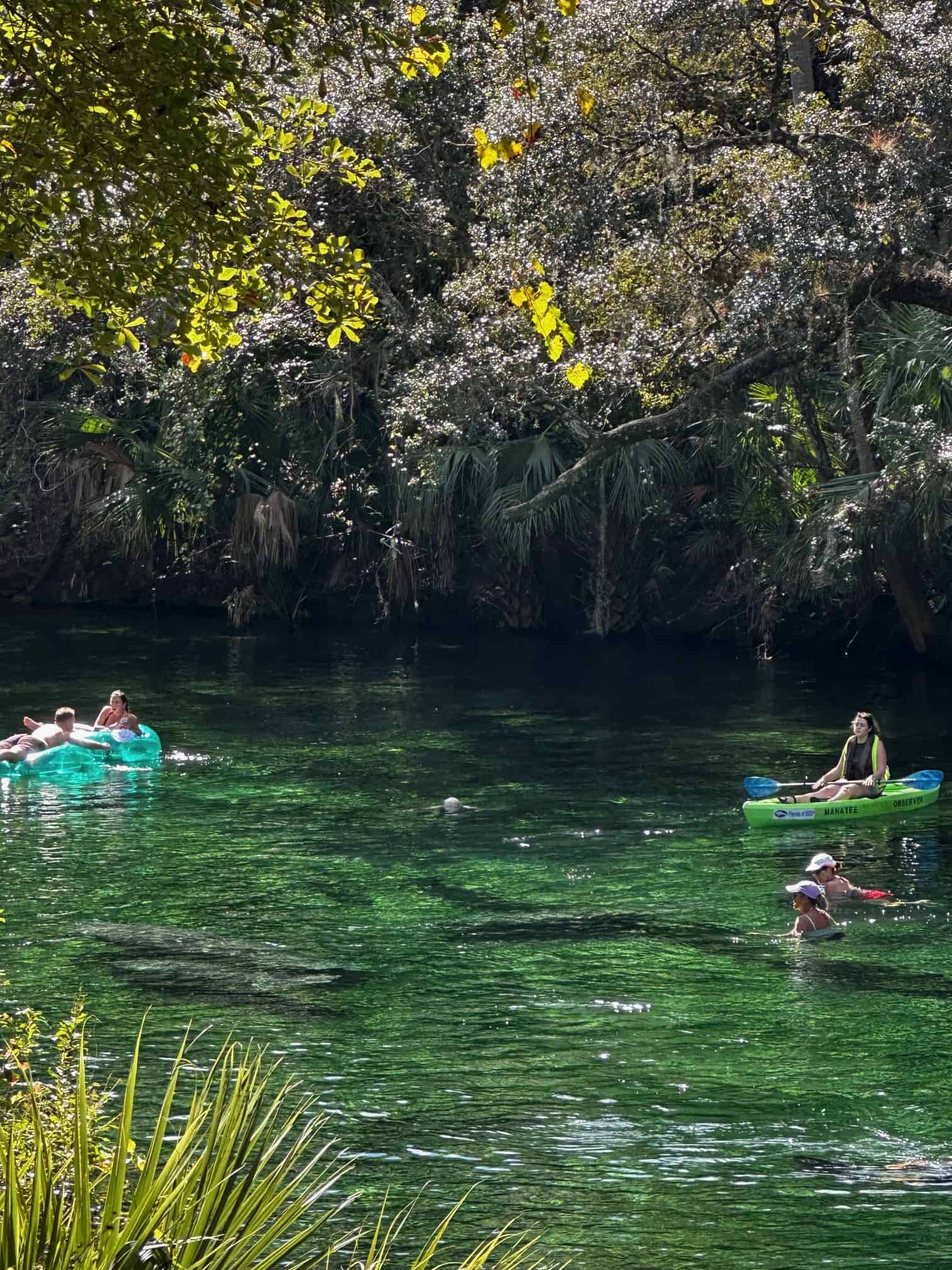
It is also very possible to dive with manatee. If you are so lucky please keep your distance, and in the unlikely chance one approaches you keep your hands to yourself, let them be curious and then swim away. The park staff are diligent and unforgiving when it comes to protecting their resident manatees.
What Divers Can Expect
Divers exploring Blue Spring may encounter:
- State park entry fee is between $4-$6 per vehicle
- Florida Dive Company is the exclusive provider of dive services for the park and any and all dives must be booked through them
- Easy entry/exit points with docks and stairs
- Crystal-clear freshwater visibility
- Gentle current flowing toward the St. Johns River
- Limestone formations surrounding the spring vent
- Sand boils where groundwater rises through the riverbed
- Near the spring vent, divers may feel a noticeable upward push from the aquifer
- Freshwater fish including gar, mullet, and sunfish
- Freshwater turtles
- The spring is closed to in water activities between November and March when manatee activity is at it’s peak
- Cabins and campgrounds are available for multi-day trips (starting at ~$24)
Experience Level
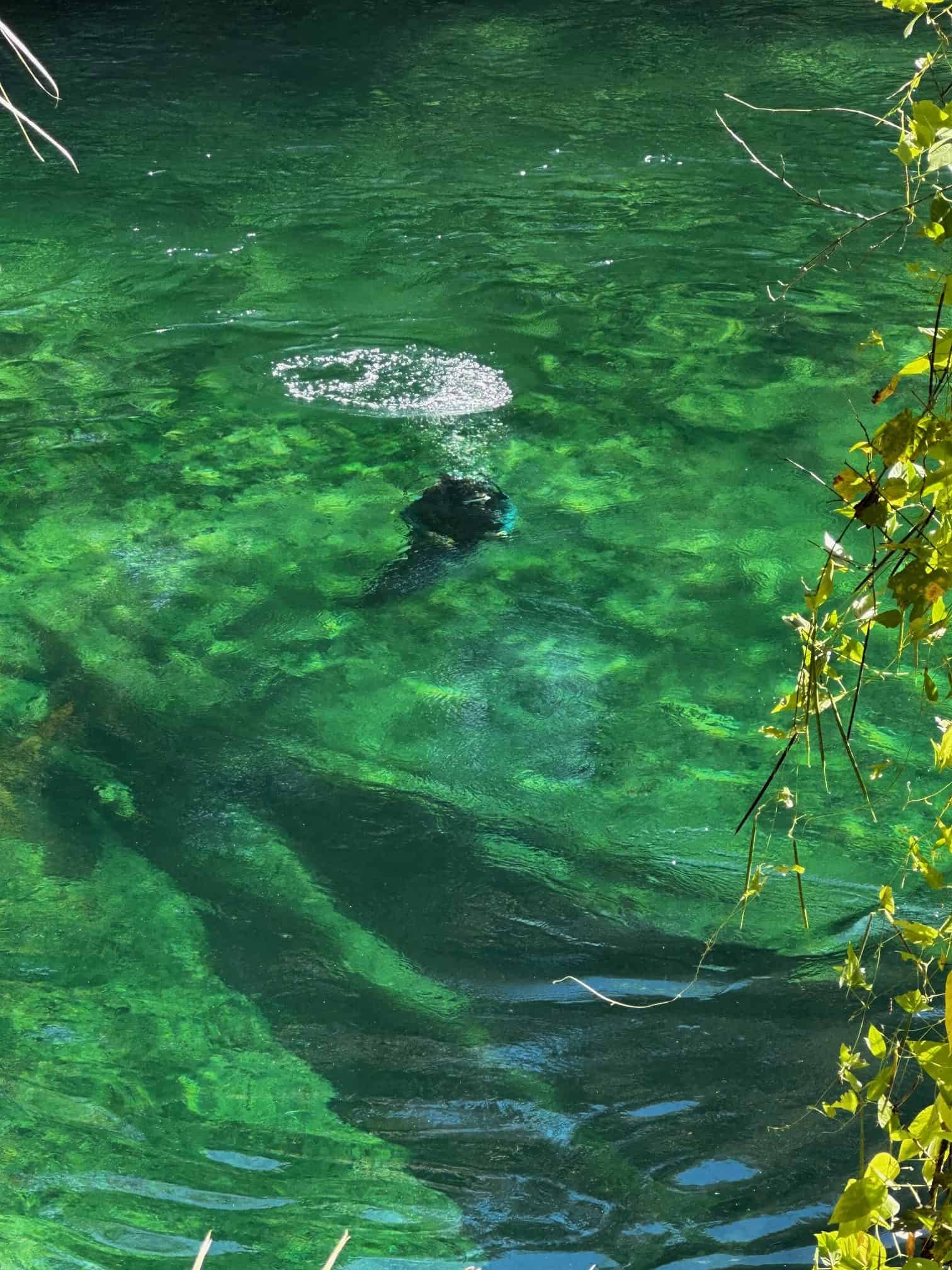
Blue Spring is generally suitable for open water recreational divers, particularly those comfortable with mild current conditions created by the spring flow.
Because the spring run is relatively shallow and well-lit, it is also a good location for divers interested in freshwater wildlife observation and underwater photography.
Best For
• Experienced open water divers, although Florida Dive Company does offer Discover diving programs
• Wildlife observation
• Freshwater ecosystem exploration
• Underwater photography
Bonus: Buford Spring (Sink)
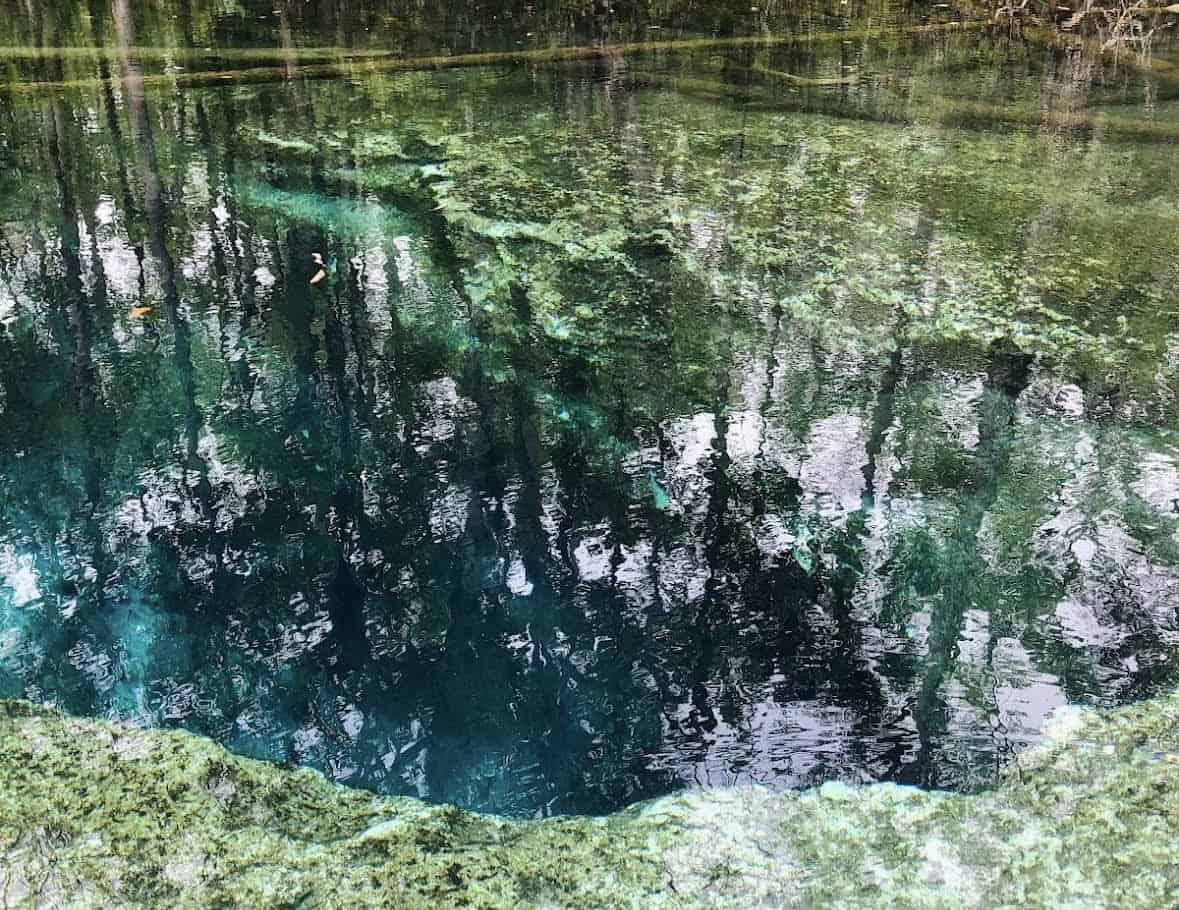
Tucked within the greater Weeki Wachee Springs State Park system, Buford Sink is one of the most intriguing and lesser-known freshwater dive sites in Central Florida. While this area is better known for its cave diving, like the infamous Eagles Nest, and shallow, scenic river drifts, Buford Sink offers something completely different. Tucked into the Chassahowitzka Wildlife Management Area, this is a true cavern-style environment hidden within the spring system.
This site combines the best of both worlds: the crystal-clear water and vibrant ecosystem of Weeki Wachee with the dramatic limestone formations and overhead features that make Florida spring diving so unique.
Because it’s less developed and less trafficked than popular dive parks like Blue Grotto or Devil’s Den, Buford Sink feels like a hidden discovery, ideal for divers looking to go beyond the usual stops. It is personally one of my favorite spring dives, so I may end up kicking myself if adding it brings more attention and traffic to this gem.
What Makes Buford Sink Unique
Buford Sink is essentially a collapsed cavern formation, creating a steep-sided sinkhole that drops into a clear freshwater basin. Unlike the shallow spring runs nearby, this site features a more vertical profile, with stunning white limestone walls descending into a deep and dark cavern.
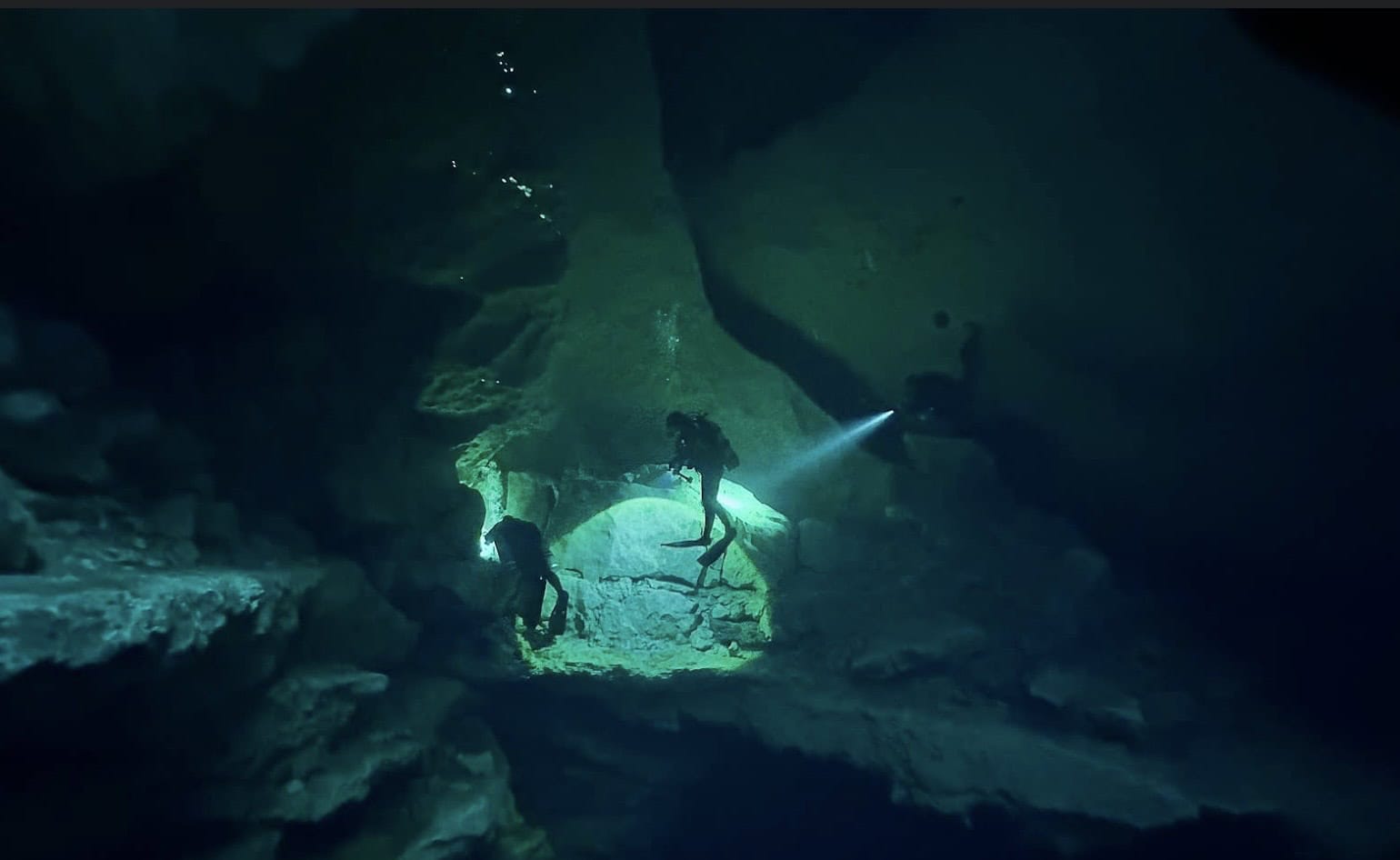
At the base of the sink lies a cavern entrance, where groundwater emerges from the aquifer and flows outward into the surrounding spring system. This cavern opening connects to a larger underground network, though like most Florida cave systems, it is strictly off-limits to recreational divers beyond the light zone.
What makes Buford Sink especially compelling is the contrast between environments. You move from a typical spring-fed system near he surface into a more dramatic, open cavern that drops to a staggering 80 feet deep, before less-dramatically slopping further into an enclosed cavern system that bottoms out beyond recreational limits at about 165 feet, all within the same general area.
What Divers Can Expect
Diving Buford Sink offers a mix of geological drama and classic Florida spring clarity:
- No fee to ender this park, but all divers must register (Finding the form is not for the faint of heart: First, go the the FWC licensing webpage and login or create an account, next click “Click Here to Get a License”, then scroll down to “Chassahowitzka WMA SCUBA Diving Registration” and add to your cart and check out. It is free, you just have to go through the rigmarole)
- Use google maps to find the Buford Spring Trailhead. The park is not well marked and the roads are unpaved and bumpy so take it slow
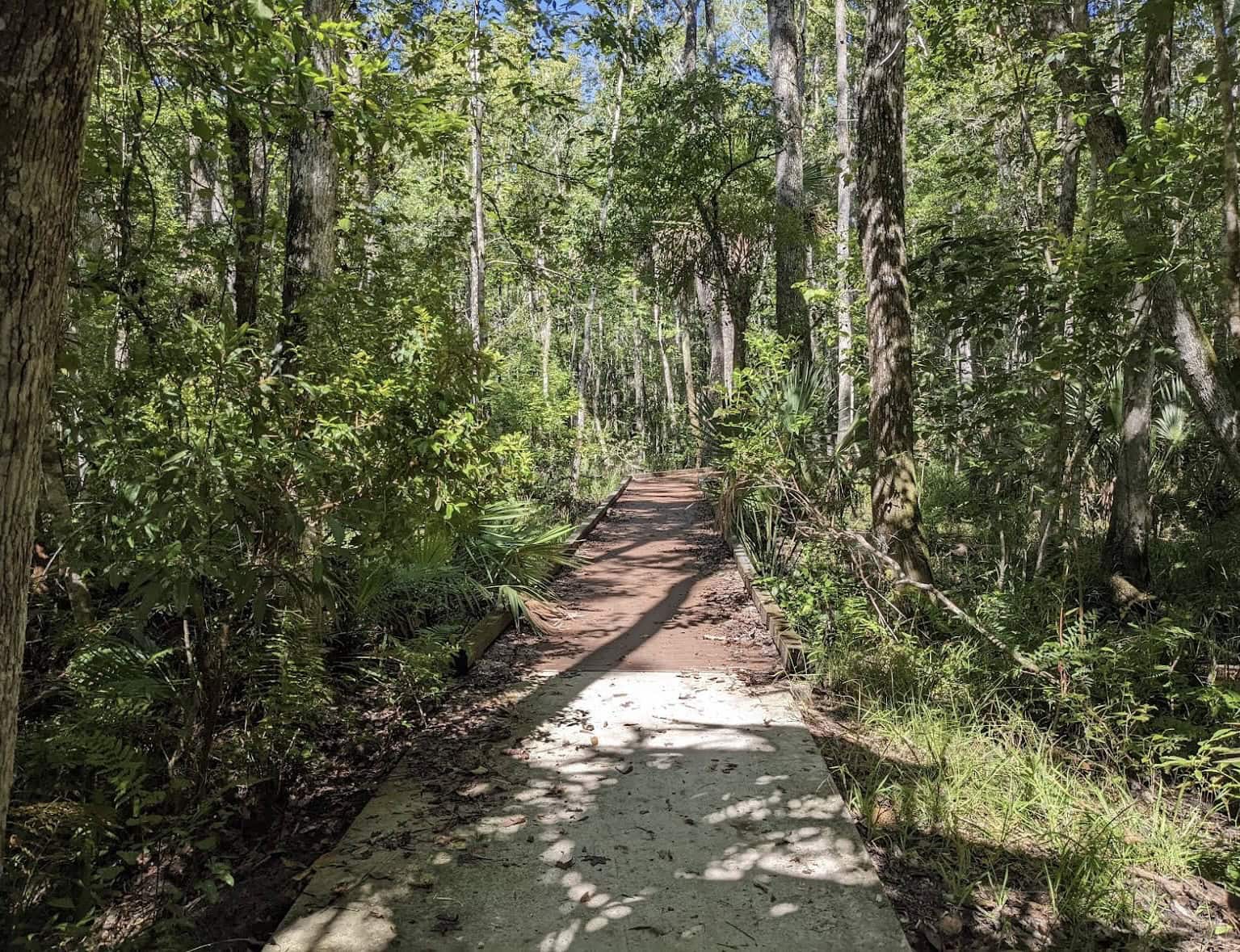
- Once you park there is about a half mile walk to the sink, partially sandy path and partially boardwalk over the wetlands (recommended to bring a cart for your gear, but only bring the essentials since there is not a lot of room at the end of the boards near the sink)
- A well maintained dock and ladder available for easy entry and exit
- There are benches available to set up your gear, but that is where the facilities end
- Clear freshwater with impeccable visibility, often 50–80+ feet
- Freshwater fish occasionally passing through the area
- Steep limestone walls forming a natural sinkhole basin – there is plenty to explore in the zone for the advanced recreational diver
- A cavern entrance at depth with darker, shadowed areas from about 70 feet to 110 feet (only experienced cavern divers should enter this area with a lamp)
- Sand and rock slopes from 110 feet to 165 leading into the basin (this area is very dark, only highly trained cavern and cave divers should go into this zone with light)
- There is no camping permitted in the park, but Weeki Wachee Springs is only about10 minutes south and has plenty of accommodation options.
Experience Level
Buford Sink is best suited for intermediate to advanced recreational divers.
While the basin itself remains within recreational limits, the environment requires:
• Strong buoyancy control
• Comfort in deeper water
• Awareness of overhead environments near the cavern entrance
As always, entering the cave system beyond the visible cavern zone requires proper cave diving certification.
Best For
• Intermediate and advanced recreational divers
• Cavern observation dives
• Divers seeking lesser-known, off-the-beaten-path sites
• Underwater photographers interested in light contrast and geology
Tips for Diving Florida Springs
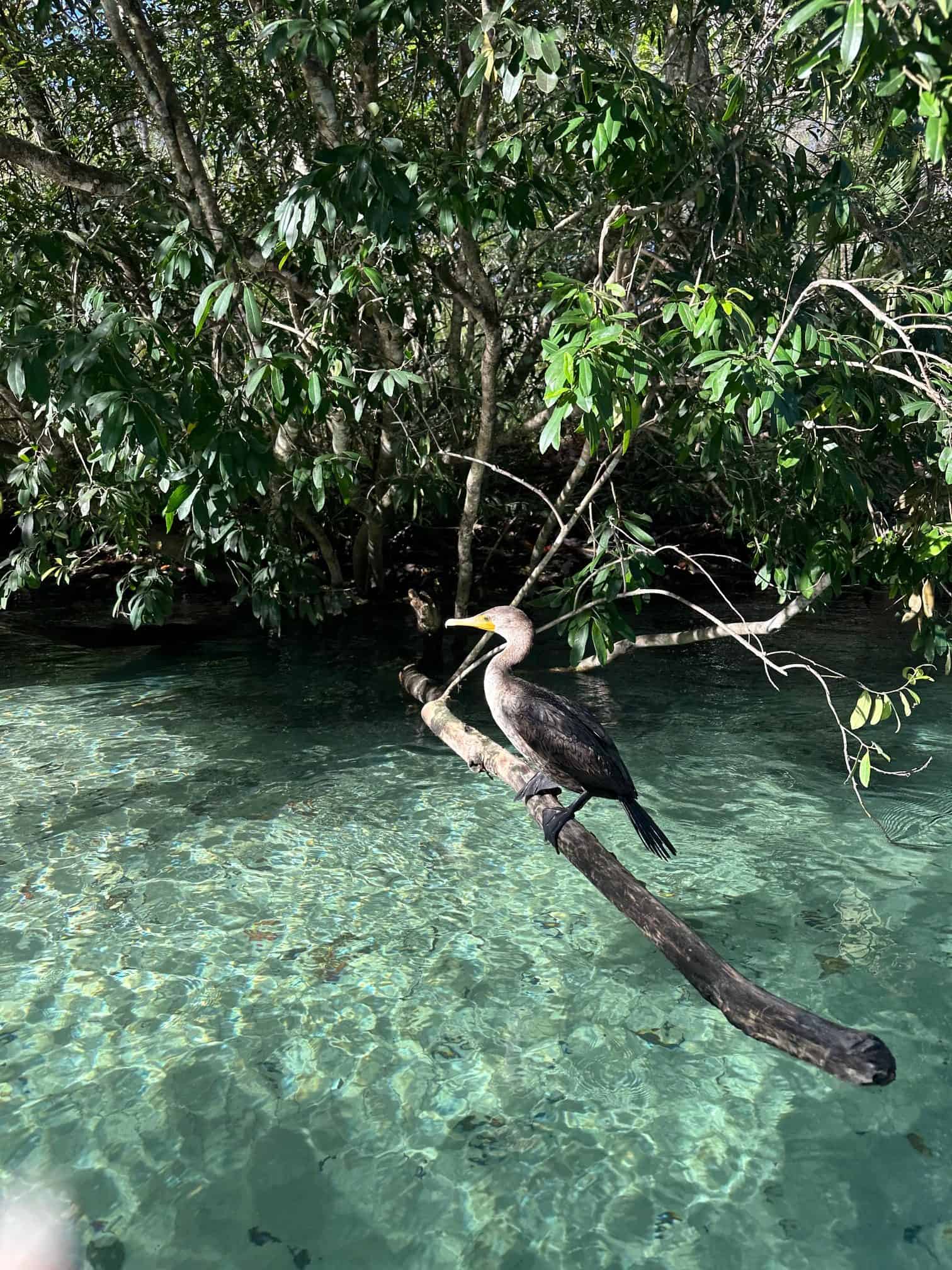
If you are planning a spring diving trip, here are a few things to keep in mind.
Wear Adequate Thermal Protection
Although 72°F water sounds warm, divers often feel cold after multiple dives. Most divers wear:
- 3-5mm wetsuit in summer
- 5-7mm wetsuit in winter
Respect Cave Diving Rules
Never enter cave systems unless properly trained and certified. Cave diving requires specialized equipment and training.
Bring Lights
Even cavern zones can become dark due to overhangs and limestone formations. However, be sure to check with the provider first; some do not allow recreational divers to carry lights as a deterrent to entering the cave system.
Watch for Currents
Some springs have strong flow, particularly near the vent openings. As mentioned, Catfish Hotel actually has a relatively strong suction zone.
Take Only Pictures, Leave Only Bubbles
Please be respectful of these incredible, natural spaces. I’ve seen too many carvings in limestone walls to count. Please do not ruin the experience for anyone else.
Make It an Adventure
Many of these springs are within driving distance of one another. Make a trip out of it and knock several off the list in a single trip. Rent a car using discovercars.com and choose a central location like Williston or Dunnellon to camp or grab a hotel.

Final Thoughts: Why Every Diver Should Experience Florida Springs
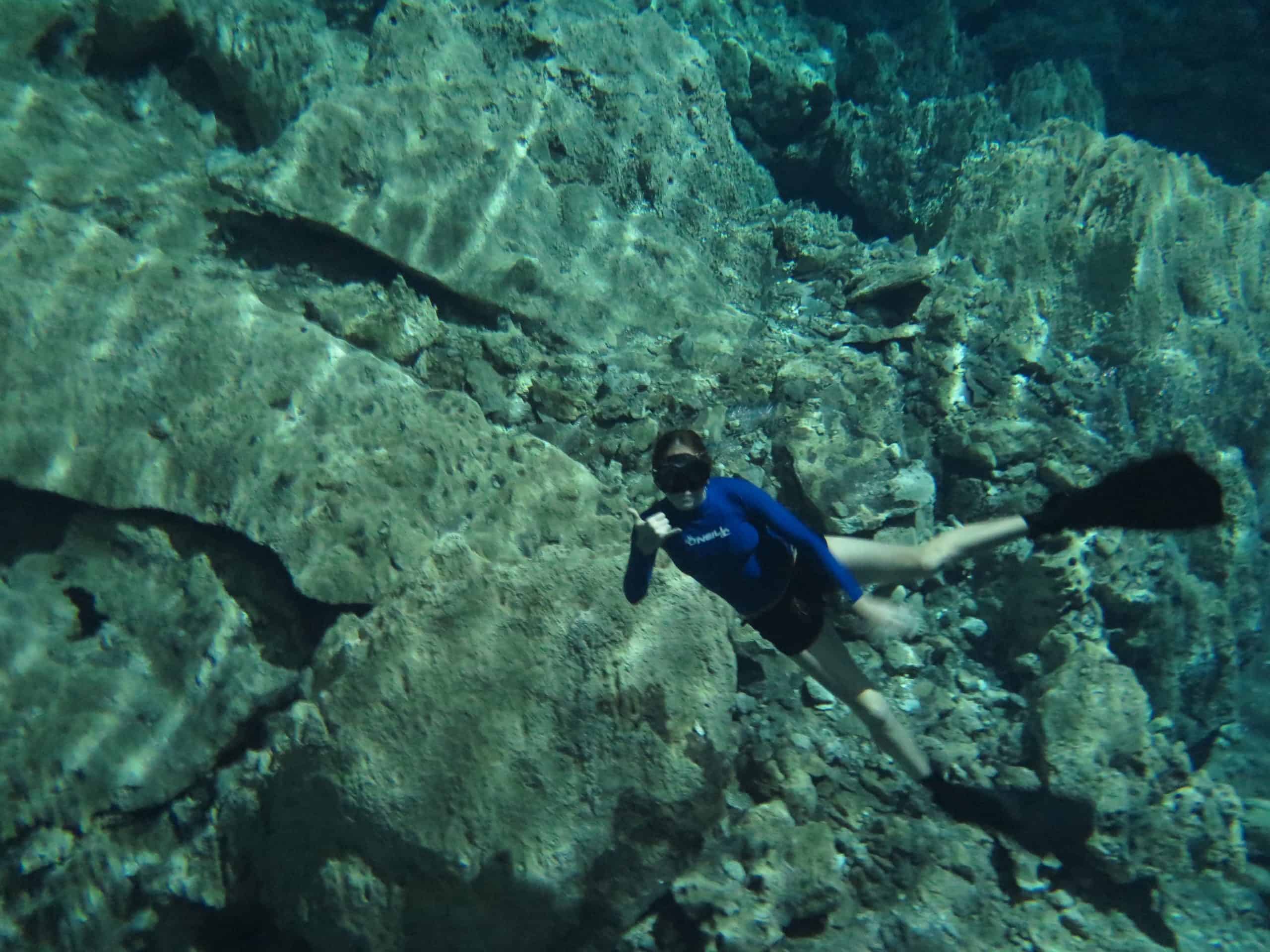
Florida’s freshwater springs offer a completely different type of diving experience compared to ocean reefs.
Instead of coral and saltwater fish, you encounter:
- Crystal-clear freshwater
- Ancient limestone caverns
- Fossilized rock formations
- Mysterious underground cave systems
- Freshwater creatures
For many divers, spring diving feels almost surreal. The water is so clear it can feel like flying through air, and the geological features create dramatic underwater landscapes unlike anywhere else in the world.
Whether you are a new diver looking for calm training environments or an experienced diver interested in cavern exploration, Florida’s springs offer something truly special. Ff you already love ocean diving, spring diving will give you a whole new appreciation for the incredible underwater environments hidden inland across the Sunshine State.
If you’d like my help planning your own Florida spring diving road trip click the banner below and get in touch!

If you loved learning all about Florida’s freshwater spring diving experience, the next step is to explore Mexico’s underground cenotes.